As the autumn season settles in, heavy training blocks demand nutritional options that not only meet strict physiological thresholds for recovery but also provide comforting, seasonal flavor profiles without compromising body composition goals. Mainstream seasonal treats are typically laden with refined sugars and saturated fats that blunt post-workout insulin sensitivity and delay gastric emptying.
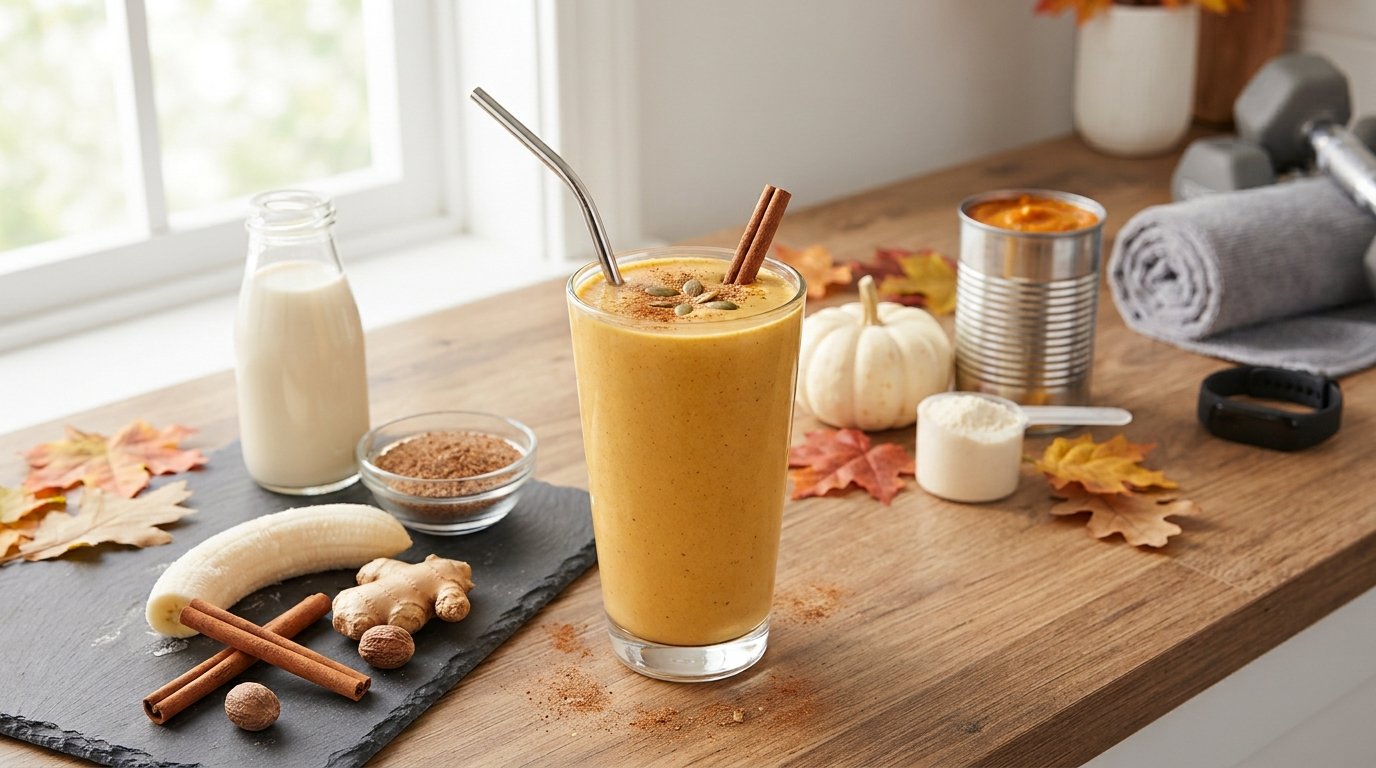
This high-protein autumn pumpkin spice smoothie is engineered to deliver elite-level post-workout recovery. Formulated with real organic pumpkin puree, a clean pea and brown rice protein isolate blend, slow-burning complex starches, and blood-glucose-regulating ceylon cinnamon, this shake provides the precise macronutrient density required to replenish liver and muscle glycogen while hitting the 3.0g leucine threshold necessary to drive muscle protein synthesis (MPS).
Bioenergetics: Seasonal Carbs & Glycogen Resynthesis
                 AUTUMNAL GLYCERIDE & GLYCOGEN REPLENISHMENT
│                                                                         │
│  Post-Training Window      ──► Depleted Intramuscular Glycogen Stores   │
│                                           │                             │
│                                           ▼                             │
│  Pumpkin Puree (Beta-Carotene) ──► Provides Clean Starch & Antioxidants │
│                                           │                             │
│                                           ▼                             │
│  Ceylon Cinnamon Synergy    ──► Improves Insulin Receptor Sensitivity   │
The physiological demands of heavy resistance training or long endurance sessions require strategic carbohydrate restoration:
Restoring Glycogen Reserves: Organic pumpkin puree is naturally rich in complex carbohydrates and beta-carotene, providing a low-glycemic, gut-friendly starch source that tops off glycogen stores without spiking reactive inflammation.
Insulin Sensitivity & Ceylon Cinnamon: True Ceylon cinnamon acts as an insulin mimetic, slowing gastric emptying slightly while enhancing glucose uptake into skeletal muscle cells, ensuring incoming carbohydrates are stored as energy rather than fat.
Rapid Hyperaminoacidemia: Utilizing a liquid pea and brown rice protein blend ensures rapid amino acid entry into the bloodstream, immediately halting muscle protein breakdown (MPB).
Macro & Micronutrient Profile (Per Serving)
Calories: 360 kcal
Protein: 41.2 g
Carbohydrates: 42 g (9.5 g Fiber | 14 g Natural Sugars)
Fat: 4.2 g
Key Bioactives: Leucine (3.3 g), Beta-Carotene (>200% DV), Iron (40 DV), Potassium (720 mg), Manganese & Cinnamon Polyphenols
Ingredients List (Yields 1 Large Anabolic Serving)
The Autumn Protein & Carbohydrate Base
1.5 scoops (approx. 42g) Organic Pea & Brown Rice Protein Isolate Blend (Vanilla Flavor)
1/2 cup (120g) Pure Organic Canned Pumpkin Puree (Ensure it is 100% pumpkin, not pie filling)
1 cup (240ml) Unsweetened Soy Milk or Oat Milk (Soy milk adds high-quality complementary plant protein)
1/2 cup (120ml) Pure Coconut Water or Filtered Water
The Seasonal Spice & Micronutrient Matrix
1/2 medium (60g) Frozen Banana (supplies smooth texture and potassium)
1 tsp (3g) Ceylon Cinnamon Powder
1/4 tsp Ground Ginger & Ground Nutmeg
1 tbsp (10g) Ground Flaxseeds or Chia Seeds (delivers anti-inflammatory Omega-3 ALA)
Step-by-Step Preparation Protocol
                     PUMPKIN SMOOTHIE BLENDING WORKFLOW
│                                                                        │
│  1. Liquids & Puree First ──► Add soy milk, coconut water & pumpkin    │
│  2. Protein & Spices      ──► Layer protein isolate, cinnamon & spices │
│  3. Frozen Matrix         ──► Top with frozen banana & flaxseeds       │
│  4. High-Speed Blend      ──► Purée on high for 60 seconds until silky │
Liquid & Puree Foundation: Pour the unsweetened soy milk, coconut water, and organic pumpkin puree directly into the high-speed blender.
Incorporate Protein & Spices: Add the vanilla pea/brown rice protein isolate powder, Ceylon cinnamon, ground ginger, and nutmeg directly on top of the liquid base.
Add Frozen Elements: Layer the frozen banana slices and ground flaxseeds over the mixture to ensure an ice-cold, creamy consistency.
High-Velocity Pulverization: Blend on high speed for 60 seconds until completely smooth and velvety. Pour into a chilled glass, dust with a light pinch of extra cinnamon, and consume post-workout.
Integrating Seasonal Nutrition with Training & Performance
Pairing seasonal recipes with evidence-based training and nutrition strategies ensures year-round body composition progress:
Pairing With Muscle Overload: Fuel your strength gains by combining this shake with training guidelines from How to Build Vegan Muscle: The Complete Science-Backed Guide.
Optimizing Intermittent Fasting Windows: Use this recipe to break an autumn fasting window efficiently via Plant-Based Fueling Strategies for Intermittent Fasting.
Daily Protein Science: Review your complete amino acid targets in How Much Protein Do Plant-Based Athletes Really Need?.
Explore Other Performance Recipes: Discover more whole-food options in our High-Fiber Vegan Recomp Chili Recipe or High-Protein Berry-Spinach Anabolic Recovery Smoothie.
Ready to optimize your seasonal nutrition, macro ratios, and athletic performance with evidence-based coaching? Explore how Online Fitness Coaching can help you achieve your goals today!
References
Anderson, R. A., Broadhurst, C. L., Polansky, M. M., Schmidt, W. F., Khan, A., Flanagan, V. P., Schoene, N. W., & Graves, D. J. (2004). Isolation and characterization of polyphenol type-A polymers from cinnamon with insulin-like biological activity. Diabetes Care, 27(3), 730–734.
Jäger, R., Kerksick, C. M., Campbell, B. I., Cribb, P. J., Wells, S. D., Skwiat, T. M., Purpura, M., Ziegenfuss, T. N., Ferrando, A. A., Arent, S. M., Smith-Ryan, A. E., Stout, J. R., Arciero, P. J., Ormsbee, M. J., Taylor, L. W., Wilborn, C. D., Kalman, D. S., Kreider, R. B., Willoughby, D. S., … Antonio, J. (2017). International Society of Sports Nutrition position stand: Protein and exercise. Journal of the International Society of Sports Nutrition, 14(1), Article 20.
Morton, R. W., Murphy, K. T., McKellar, S. R., Schoenfeld, B. J., Henselmans, M., Helms, E., Aortic, A. A., Rebello, C., Devries, M. C., Banfield, L., Phillips, S. M., & Phillips, S. M. (2018). A systematic review, meta-analysis and meta-regression of the effect of protein supplementation on resistance training-induced gains in muscle mass and strength in healthy adults. British Journal of Sports Medicine, 52(6), 376–384.
Phillips, S. M. (2014). A brief review of critical processes in exercise-induced muscular hypertrophy. Sports Medicine, 44(Suppl 1), 71–77.
Slavin, J. L. (2005). Dietary fiber and body weight. The American Journal of Clinical Nutrition, 82(1), 280S–285S.