
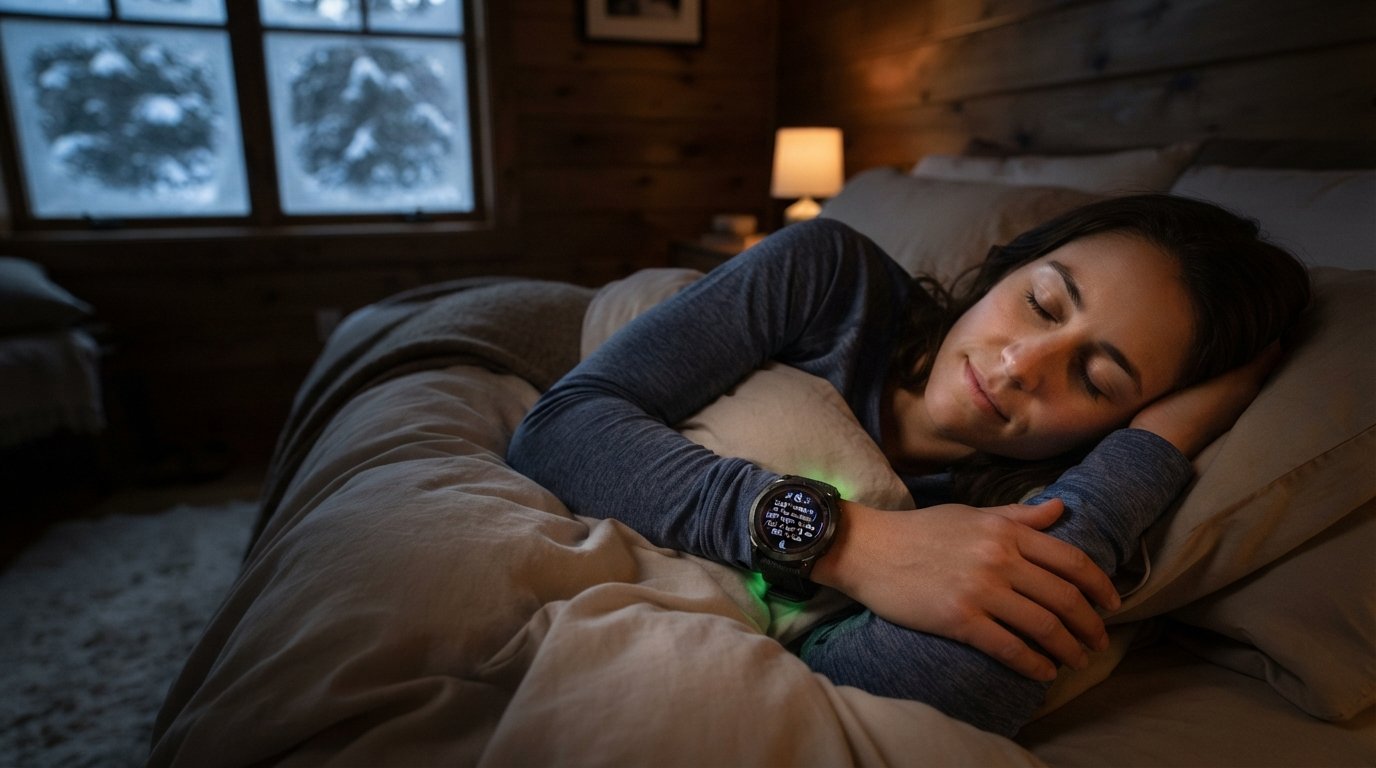
As dark, cold mornings and heavy off-season training volumes set in, tracking recovery becomes as critical as monitoring workload. Utilizing smartwatch sleep tracking in winter provides athletes with real-time biometric feedback, helping prevent central nervous system (CNS) exhaustion, overtraining syndrome, and systemic immunodepression.
Winter presents unique physiological challenges to sleep architecture: reduced natural sunlight disrupts melatonin secretion, while indoor heating and seasonal immune strain alter autonomic nervous system (ANS) balance. Modern wrist-worn wearables—equipped with optical photoplethysmography (PPG) and advanced heart rate variability (HRV) telemetry—allow plant-powered athletes to accurately decipher deep sleep duration, parasympathetic recovery trends, and automated overtraining alerts before physiological burnout occurs.
Exercise Telemetry: Slow-Wave Sleep, HRV Kinetics & CNS Recovery
                     WINTER SLEEP TELEMETRY & RECOVERY MAP
│                                                                             │
│  Nightly PPG & Pulse Oximetry ──► Tracks Slow-Wave Sleep (SWS / Deep Sleep) │
│                                           │                                 │
│                                           ▼                                 │
│  rMSSD & HRV Baseline Shift  ──► Evaluates Parasympathetic / CNS Recovery   │
│                                           │                                 │
│                                           ▼                                 │
│  Automated Wearable Alert    ──► Signals Overtraining & Suppressed Readouts │
Decoding wearable sleep data requires an understanding of how distinct sleep stages and cardiac autonomic markers reflect training adaptation:
Slow-Wave Sleep (SWS) & Somatotropin Release: Deep sleep (SWS) is the primary window for physiological repair. During SWS, brain waves slow to delta frequencies (0.5-4 Hz), muscle blood flow increases, and the anterior pituitary releases growth hormone (GH) to repair skeletal muscle micro-trauma.
Nocturnal HRV (rMSSD) as a CNS Indicator: The root mean square of successive differences (rMSSD) measures beat-to-beat parasympathetic vagal activity. Elevated or baseline nightly rMSSD reflects strong autonomic recovery, whereas a persistent downward baseline shift indicates high sympathetic stress, incomplete CNS recovery, or impending immune illness.
Deciphering Overtraining Alerts: Modern smartwatches flag overtraining using multi-day rolling averages. A suppressed HRV combined with an elevated resting heart rate (RHR) over 3-5 consecutive nights indicates that training load exceeds systemic adaptive capacity.
Head-to-Head: Summer vs. Winter Sleep Architecture Factors
| Sleep Architecture Metric | Summer Environmental Conditions | Winter Environmental Conditions |
| Circadian Phase Alignment | Strong morning light exposure optimizes melatonin timing | Reduced sunlight can delay circadian phase & melatonin onset |
| Thermoregulation Impact | High ambient temperatures can disrupt REM sleep | Overheated indoor rooms impair slow-wave sleep (SWS) |
| Autonomic Stress Drivers | Heat stress and high sweat rate elevate nocturnal RHR | Cold air exposure, immune stress, & heavy volume alter HRV |
| Optimal Ambient Bedroom Temp | Difficult to cool (>70-degrees F/ 21-degrees C) | Easier to optimize (62-67-degrees F / 16-19-degrees C) |
| Deep Sleep Target (SWS) | 15-20% of total sleep duration | 20-25% of total sleep duration (ideal for off-season) |
—–
The Plant-Based Athlete Advantage: Optimizing Sleep Architecture
Enhancing slow-wave sleep and parasympathetic recovery requires pairing wearable telemetry with targeted nutritional habits:
                    NUTRITIONAL SLEEP OPTIMIZATION MATRIX
│                                                                            │
│  1. Evening Tryptophan Matrix ──► Pumpkin Seeds, Oats, & Soy for Serotonin │
│  2. Tart Cherry Anthocyanins  ──► Natural Melatonin Exogenous Boost        │
│  3. Magnesium Bisglycinate   ──► GABA Receptor Agonism & Muscle Relaxation │
Evening Whole-Food Tryptophan Sourcing: Consuming intact plant proteins rich in L-tryptophan (such as pumpkin seeds, oats, and soy) 2-3 hours before bed facilitates cross-blood-brain barrier transport, synthesizing serotonin and melatonin for improved sleep efficiency.
Tart Cherry Concentrate: Tart cherry juice contains natural exogenous melatonin and high concentrations of anti-inflammatory anthocyanins that reduce muscle soreness and extend total sleep duration.
Magnesium Bisglycinate Synergy: Supplementing with highly bioavailable plant-friendly magnesium bisglycinate supports GABA receptor agonism, easing parasympathetic activation prior to sleep.
Actionable Winter Smartwatch Tracking Protocol
Establish a 28-Day Rolling HRV Baseline: Allow your wearable device to calculate your personalized weekly HRV baseline band rather than relying on arbitrary population averages.
Adjust Training Based on Overtraining Flags: If your 7-day rolling HRV drops below your baseline and RHR rises by >3-5 bpm, swap intense interval training for a low-intensity Zone 2 recovery session or total rest.
Optimize Winter Bedroom Environment: Maintain a cool bedroom temperature (62-66-degrees F / 16-19-degrees C) and eliminate artificial blue light exposure 60 minutes prior to bed to preserve slow-wave sleep duration.
Integrating Sleep Telemetry with Science & Training
Combining wearable recovery tracking with structured nutrition and training protocols ensures long-term progress:
Deep-Dive HRV Analysis: Understand the underlying autonomic mechanisms in Heart Rate Variability: Useful Metric or Overhyped Tech?.
Winter Micronutrient Support: Safeguard your sleep and muscle function using Vitamin D3 Supplementation in Autumn and Winter: Supporting Immunity and Muscle Function.
Autumn Immune Resilience: Protect your nervous system and immune barrier via Autumn Immune Resilience: Whole-Food Protocols to Prevent Training Disruptions.
Fall Base Building Protocol: Balance your sleep scores with aerobic training in Fall Base Building & Fat Oxidation: Transitioning from High-Intensity Racing to Long Zone 2 Blocks.
Warming Recovery Fuel: Support evening recovery with our nutrient-dense High-Protein Autumn Squash and Lentil Recovery Stew.
Ready to optimize your sleep tracking, master your recovery metrics, and achieve peak performance with evidence-based coaching? Explore how Online Fitness Coaching can help you achieve your goals today!
References
Altini, M., & Plews, D. (2021). What is behind changes in resting heart rate variability? A review of the physiological mechanisms and practical applications for training monitoring. Sensors, 21(18), Article 6158.
Nedelec, M., Halson, S., Abaidia, A. E., Ahmaidi, S., & Dupont, G. (2015). Stress, sleep and recovery in elite sports: A critical review of the literature. Sports Medicine, 45(10), 1387–1400.
Plews, D. J., Laursen, P. B., Stanley, J., Kilding, A. E., & Buchheit, M. (2013). Training adaptation and heart rate variability in elite endurance athletes: Opening the door to effective monitoring. International Journal of Sports Physiology and Performance, 8(3), 273–281.
Sargent, C., Lastella, M., Halson, S. L., & Roach, G. D. (2021). How much sleep does an elite athlete need? International Journal of Sports Physiology and Performance, 16(12), 1746–1757.