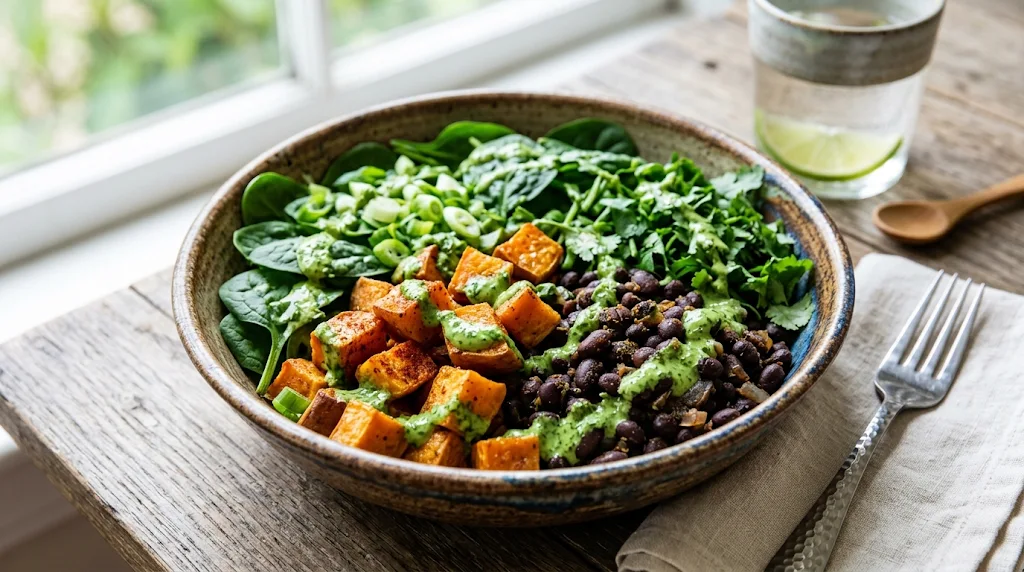
For endurance athletes and strength competitors alike, finding a pre-training meal that delivers explosive energy without causing gastrointestinal distress can be a challenge. A clean, delicious, and easy-to-digest high-carb pre-workout bowl packed with complex carbs to fuel heavy training sessions without stomach discomfort is essential for sustaining high power outputs.
Exercise physiology demonstrates that strategic pre-exercise carbohydrate ingestion maximizes endogenous glycogen stores and delays fatigue during prolonged bouts. By combining roasted sweet potatoes—which supply fast-digesting amylopectin starches—with black beans for sustained amino acid release and a zesty, electrolyte-rich cilantro-lime dressing, athletes can optimize gastric emptying while supporting peak physical performance.
Nutritional Architecture: Amylopectin Starches & Amino Acid Kinetics
         PRE-WORKOUT CARBOHYDRATE & AMINO ACID FUELING CASCADE
│                                                                        │
│  Roasted Sweet Potatoes (Rapid Amylopectin Starches)                   │
│                               │                                        │
│                               ▼                                        │
│  Rapid Gastric Emptying & Portal Glucose Influx                        │
│                               │                                        │
│                               ▼                                        │
│  Black Beans (Sustained Amino Acids & Complex Fiber Matrix)            │
│                               │                                        │
│                               ▼                                        │
│  Sustained ATP Resynthesis & Stable Pre-Exercise Blood Glucose         │
The bio-mechanical and metabolic principles that make this power bowl an ideal pre-training meal involve distinct physiological pathways:
Amylopectin vs. Amylose Digestion Kinetics: Sweet potatoes are rich in branched-chain amylopectin starches, which exhibit a higher surface area for digestive enzymes than linear amylose. Research shows that these starches hydrolyze rapidly into blood glucose, topping off hepatic and muscle glycogen stores without triggering reactive hypoglycemia.
Sustained Amino Acid Delivery via Legumes: While simple sugars cause rapid glycemic spikes, the inclusion of black beans provides a slow-release matrix of complex carbohydrates and plant-based amino acids. A 2011 clinical investigation noted that blending fast-acting starches with moderate-digestion legumes stabilizes circulating amino acid availability throughout intense training blocks.
Electrolyte and Vitamin C Perfusion: The zesty cilantro-lime dressing supplies natural sodium, potassium, and ascorbic acid. Investigations by Murray (2007) confirmed that maintaining adequate electrolyte balance and antioxidant status prior to exercise preserves neuromuscular function and counters exercise-induced oxidative stress.
Head-to-Head: Traditional Pre-Workout Meals vs. Plant-Powered Sweet Potato & Black Bean Bowl
The Plant-Powered Twist: Electrolytes, Vitamin C, and Gut Motility
            ZINGY CILANTRO-LIME DRESSING ELECTROLYTE PATHWAY
│                                                                        │
│  Fresh Lime Juice & Cilantro (Vitamin C & Natural Phytonutrients)      │
│                               │                                        │
│                               ▼                                        │
│  Enhanced Non-Heme Iron Absorption & Vascular Protection               │
│                               │                                        │
│                               ▼                                        │
│  Sea Salt Electrolytes (Sodium & Chloride Balance)                     │
│                               │                                        │
│                               ▼                                        │
│  Optimized Fluid Retention & Smooth Gastric Transit                    │
Fueling with whole-plant ingredients offers unique advantages for pre-workout digestion and systemic hydration:
Vitamin C and Iron Bioavailability: Fresh lime juice is packed with ascorbic acid, which significantly enhances the absorption of non-heme iron from the black beans. A 2010 review demonstrated that pairing vitamin C with iron-rich plant foods maximizes oxygen-carrying capacity during endurance and strength training.
Gastric Comfort and Low Residue: Unlike heavy, high-fat pre-workout meals that sit stagnant in the stomach, steamed and roasted root vegetables clear the upper gastrointestinal tract efficiently. Research emphasized that low-fat, high-carbohydrate meals prevent exercise-related nausea and cramping.
Hydration and Electrolyte Synergy: Adding unrefined sea salt to the cilantro-lime dressing ensures proper extracellular fluid balance, preventing cramping during high-heat or long-duration training sessions.
Recipe: High-Carb Sweet Potato and Black Bean Power Bowl
Ingredients
Base: 2 medium sweet potatoes, cubed and roasted ()
Protein & Complex Carbs: 1 cup cooked black beans, rinsed and warmed
Greens: 2 cups baby spinach or shredded lacinato kale (lightly steamed)
Garnish: 2 tbsp fresh cilantro, chopped; 1 green onion, sliced
Cilantro-Lime Dressing:
Juice of 2 fresh limes
1 tbsp unrefined olive oil or tahini
1 small clove garlic, minced
Pinch of unrefined sea salt and black pepper
Instructions
Roast the Sweet Potatoes: Preheat oven to 400°F (200°C). Toss cubed sweet potatoes lightly with sea salt and roast for 25–30 minutes until tender and caramelized.
Prepare the Base: In a large bowl, layer the lightly steamed spinach or kale as the foundational bed.
Assemble the Bowl: Add the warm roasted sweet potatoes and black beans over the greens.
Whisk the Dressing: In a small bowl, combine fresh lime juice, tahini or olive oil, minced garlic, and sea salt. Whisk until emulsified.
Finish and Serve: Drizzle the zesty cilantro-lime dressing over the bowl, garnish with fresh chopped cilantro and green onion, and consume 90–120 minutes prior to training.
Actionable Pre-Workout Nutrition Protocol
Time Your Ingestion Window: Consume your Sweet Potato and Black Bean Power Bowl 90 to 120 minutes before your workout to allow complete gastric emptying while maintaining peak blood glucose.
Customize Carb Ratios for Training Intensity: For heavy endurance sessions exceeding 90 minutes, increase the sweet potato portion to 300g; for shorter, high-intensity strength workouts, maintain a balanced 1:1 carbohydrate-to-bean ratio.
Hydrate Alongside Your Meal: Pair your pre-workout bowl with 16–20 ounces of water and electrolytes to ensure optimal cellular hydration before stepping into the gym or onto the trail.
Integrating Pre-Workout Fueling with Training & Recovery
Combine your high-carb pre-workout nutrition strategy with target protocols across our site library:
Post-Training Recovery Nutrition: Learn how to replenish glycogen and repair muscle tissue after your session in Eating After Exercising.
General Pre-Exercise Fueling Guidelines: Review foundational timing principles in Eating Before Exercising.
Plant-Based Protein Optimization: Explore how to combine plant amino acid sources effectively in Where Do Vegans Get Their Protein?.
Endurance Performance Enhancement: Optimize your daily training capacity with Supplements for Vegan Endurance Athletes.
References
Burke, L. M., Hawley, J. A., Wong, S. H., & Jeukendrup, A. E. (2011). Carbohydrates for training and competition. Journal of Sports Sciences, 29(S1), S17–S27.
Hurrell, R., & Egli, I. (2010). Iron bioavailability and dietary reference values. The American Journal of Clinical Nutrition, 91(5), 1461S–1467S.
Jeukendrup, A. E. (2011). Nutrition for endurance sports: Marathon, triathlon, and road cycling. Journal of Sports Sciences, 29(S1), S91–S99.
Jeukendrup, A. E. (2017). Training the gut for athletes. Sports Medicine, 47(S1), 101–110.
Murray, B. (2007). Hydration and physical performance. Journal of the American College of Nutrition, 26(5), 542S–548S.
Phillips, S. M., & van Loon, L. J. (2011). Dietary protein for athletes: From requirements to metabolic advantage. Journal of Sports Sciences, 29(S1), S39–S48.
Thomas, D. T., Erdman, K. A., & Burke, L. M. (2016). Position of the Academy of Nutrition and Dietetics, Dietitians of Canada, and the American College of Sports Medicine: Nutrition and athletic performance. Journal of the Academy of Nutrition and Dietetics, 116(3), 501–528.