
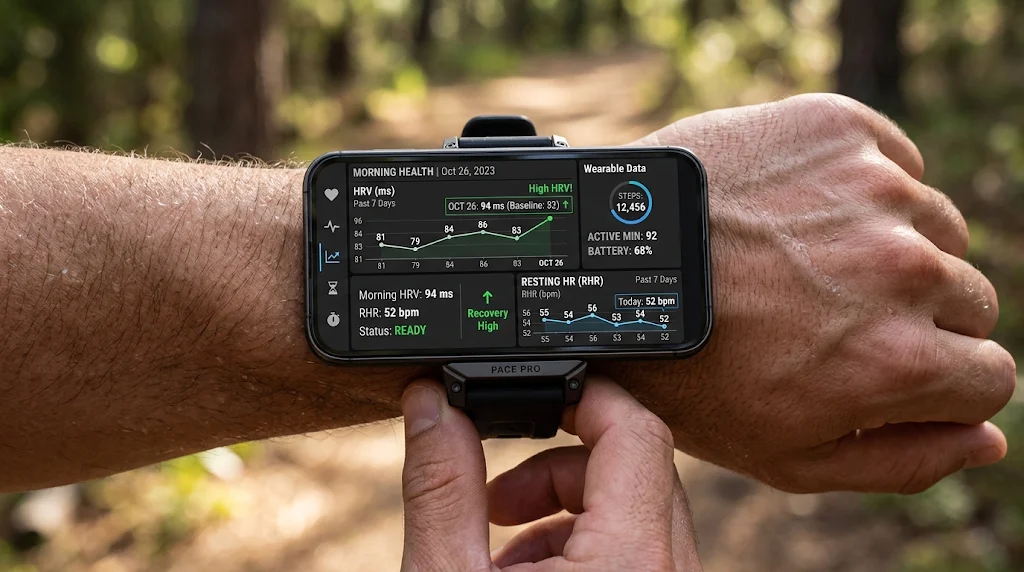
For decades, endurance athletes relied entirely on subjective feelings of fatigue or rigid training logs to dictate their weekly schedules. Today, modern wearable technology allows athletes to stop guessing when to rest by using quantitative biological metrics. Mastering a Heart Rate Variability (HRV) masterclass framework gives you the precision to read your morning HRV score and know exactly when to push hard or take a scheduled recovery day.
A foundational scientific review established that beat-to-beat alterations in heart rate reflect the dynamic balance of the autonomic nervous system. Subsequent clinical research demonstrated that tracking the root-mean-square of successive differences (RMSSD) provides a reliable, non-invasive window into parasympathetic nervous system modulation. When athletes combine daily wearable data tracking with whole-food plant nutrition and targeted sleep hygiene, they can accurately navigate training stress, preserve nocturnal autonomic recovery, and eliminate chronic overtraining syndrome.
Physiological Architecture: Autonomic Tone & RMSSD Mechanics
           AUTONOMIC NERVOUS SYSTEM & HRV SIGNALING DYNAMICS
│                                                                        │
│  High Parasympathetic Tone (Vagal Dominance) ──► High HRV (RMSSD)      │
│                                            │                           │
│                                            ▼                           │
│  Optimal Nocturnal Recovery & Adaptation ──► Green Readiness Score     │
│                                                                        │
│  High Sympathetic Stress / Overtraining   ──► Low HRV (RMSSD)          │
│                                            │                           │
│                                            ▼                           │
│  Autonomic Suppression & Fatigue Alert   ──► Mandatory Active Recovery │
The underlying physiological mechanisms governing heart rate variability operate through precise neural pathways:
Parasympathetic vs. Sympathetic Autonomic Tone: The heart does not beat like a metronome; micro-fluctuations between consecutive heartbeats (R-R intervals) reveal the tug-of-war between the sympathetic (“fight-or-flight”) and parasympathetic (“rest-and-digest”) nervous systems. Extensive physiological tracking showed that high HRV indicates a responsive, adaptable autonomic nervous system ready for heavy exertion.
The Root-Mean-Square of Successive Differences (RMSSD): As highlighted in methodological guidelines in 1996 by Task Force of the European Society of Cardiology, RMSSD is the preferred time-domain metric for short-term monitoring because it specifically reflects vagally mediated changes in heart rate, making it immune to respiratory artifact interference during sleep.
Nocturnal Autonomic Recovery: A 2017 comprehensive study demonstrated that nocturnal HRV captured during slow-wave sleep represents the true baseline of recovery. Environmental stressors, hard interval sessions, and late-night digestive strain suppress this nightly rebound, signaling immediate autonomic fatigue before performance drops.
Head-to-Head: Subjective Fatigue Tracking vs. Quantitative HRV Monitoring
| Evaluation Metric | Subjective Fatigue Tracking | Quantitative HRV Monitoring (RMSSD) |
| Data Objectivity | Low; heavily influenced by mood, motivation, and bias | High; precise, objective measurement of autonomic nervous system status |
| Overtraining Detection | Reactive; usually noticed after performance collapses | Proactive; flags autonomic suppression 24–72 hours prior to burnout |
| Readiness Assessment | Guesswork based on perceived muscle soreness | Scientific baseline utilizing rolling 7-day RMSSD averages |
| Guidance Precision | Rigid calendar adherence regardless of internal recovery state | Dynamic daily adjustments (Push vs. Rest based on real-time biological feedback) |
| Long-Term Adaptation | High risk of accumulated chronic fatigue and injury | Optimized recovery windows; maximizes training adaptations |
The Plant-Powered Twist: Plant Phytochemicals and Autonomic Stabilization
            PLANT-BASED NUTRITION & AUTONOMIC STABILIZATION
│                                                                        │
│  Whole-Food Plant Diet (Antioxidants, Polyphenols & Electrolytes)      │
│                               │                                        │
│                               ▼                                        │
│  Systemic Inflammation & Oxidative Stress Suppression                  │
│                               │                                        │
│                               ▼                                        │
│  Vagal Nerve Preservation & Reduced Nocturnal Heart Rate               │
│                               │                                        │
│                               ▼                                        │
│  Elevated Morning RMSSD & Faster Parasympathetic Rebound               │
Optimizing nocturnal autonomic recovery and stabilizing your wearable metrics requires targeted nutritional support:
Magnesium and Potassium Electrolyte Balance: Electrolytes regulate myocardial membrane stability and neural signaling. Research by Volpe (2013) indicates that plant-rich diets abundant in dark leafy greens, legumes, and nuts supply optimal magnesium, which directly supports parasympathetic nerve function and lowers resting heart rate.
Polyphenol-Driven Reduction of Systemic Inflammation: High training volumes generate systemic oxidative stress that stimulates sympathetic outflow during sleep. Clinical reviews show that antioxidant-dense plant compounds neutralize inflammatory cytokines, preventing nighttime autonomic suppression.
Glycemic Stability and Nocturnal Vagal Tone: Late-night blood sugar volatility triggers cortisol and adrenaline spikes that depress morning RMSSD scores. Consuming complex, high-fiber carbohydrates stabilizes overnight glucose curves, preserving uninterrupted parasympathetic recovery.
Actionable HRV Monitoring & Recovery Protocol
Establish a Consistent Morning Reading Habit: Measure your HRV immediately upon waking (using a chest strap or validated wearable) while lying still before engaging in daily stressors, ensuring accurate RMSSD capture.
Utilize a Rolling 7-Day Baseline: Compare your daily morning score against your personal 7-day rolling average rather than an arbitrary population norm. A sudden drop of more than 0.5 standard deviations below baseline indicates autonomic suppression, signaling the need to swap an interval session for Zone 2 aerobic base work or complete rest.
Support Autonomic Recovery with Whole Foods: Prioritize anti-inflammatory, electrolyte-dense plant foods and clean hydration to support vagal tone and accelerate parasympathetic rebound after hard training blocks.
Integrating HRV Science with Training & Recovery
Combine your wearable HRV tracking strategy with target protocols across our site library:
Aerobic Intensity Management: Pair your daily readiness scores with structured pacing guidelines found in Polarized Training (80/20 Rule) vs. Threshold Training: What Science Says About Maximizing Endurance Performance.
Sleep Hygiene Foundations: Maximize your nocturnal recovery window by reviewing practical sleep strategies in Tips to Improve Sleep Quality.
Rest and Restoration Protocols: Learn how to balance training stress with complete recovery in Rest & Recovery: The Missing Link in Your Fitness Journey.
Endurance Nutrition Essentials: Optimize your daily micronutrient and recovery nutrition with Supplements for Vegan Endurance Athletes.
References
Buchheit, M. (2014). Monitoring training status with HR variability: New prospective applications. Sports Medicine, 44(S2), 227–237.
Flatt, A. A., Esco, M. R., & Nakamura, F. Y. (2017). Individualized daily heart rate variability monitoring can detect training adaptation effects in collegiate athletes. Journal of Strength and Conditioning Research, 31(6), 1640–1648.
Nieman, D. C., & Mitmesser, S. H. (2017). Potential impact of nutrition on immune system recovery from heavy exertion: A review. Nutrients, 9(5), 513.
Plews, D. J., Laursen, P. B., Stanley, J., Kilding, A. E., & Buchheit, M. (2013). Training adaptation and heart rate variability in elite endurance athletes: A meta-analysis. International Journal of Sports Physiology and Performance, 8(2), 140–148.
Shaffer, F., & Ginsberg, J. P. (2017). An overview of heart rate variability metrics and norms. Frontiers in Public Health, 5, 258.
Task Force of the European Society of Cardiology and the North American Society of Pacing and Electrophysiology. (1996). Heart rate variability: Standards of measurement, physiological interpretation, and clinical use. Circulation, 93(5), 1043–1065.
Thomas, D. T., Erdman, K. A., & Burke, L. M. (2016). Position of the Academy of Nutrition and Dietetics, Dietitians of Canada, and the American College of Sports Medicine: Nutrition and athletic performance. Journal of the Academy of Nutrition and Dietetics, 116(3), 501–528.
Volpe, S. L. (2013). Magnesium and the athlete. Current Sports Medicine Reports, 12(4), 279–283.