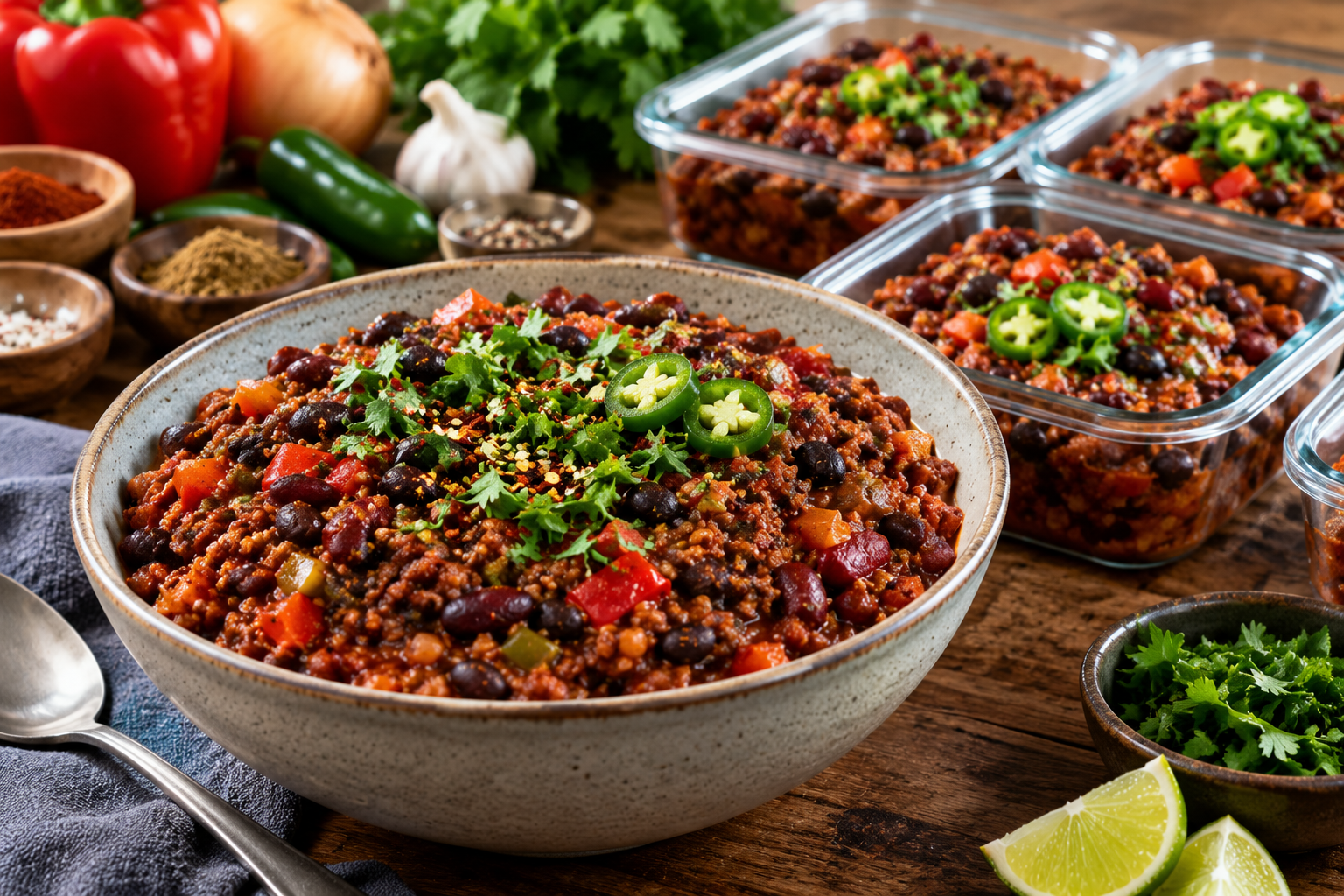
Achieving body recomposition—simultaneously building lean muscle tissue while reducing fat mass—requires precision nutritional chemistry. The primary challenge during a caloric deficit is maintaining elevated muscle protein synthesis (MPS) without overconsuming total energy. Introducing our high-fiber vegan recomp chili, a culinary strategy engineered specifically for active individuals navigating a recomposition or reverse dieting phase.
By strategically combining black lentils, dark red kidney beans, black beans, and textured pea protein, this recipe delivers an optimal protein-to-energy (P:E) ratio. Packing 38 grams of plant-derived protein and 18 grams of fermentable fiber per serving, it triggers maximal anabolic signaling while leveraging gut peptide release to keep hunger suppressed all day.
The Bioenergetics of Recomposition & The P:E Ratio
                     THE RECOMP NUTRITIONAL TRIAD
│                                                                        │
│  High Protein (38g)    ──► Hits Leucine Threshold & Spares Lean Mass   │
│  High Fiber (18g)      ──► Triggers GLP-1/PYY & Feeds Gut Microbiome   │
│  Low Sat Fat (<2g)     ──► Protects Insulin Sensitivity & Heart Health │
└────────────────────────────────────────────────────────────────────────┘
The success of a body recomposition protocol hinges on three physiological pillars:
Sustaining Nitrogen Balance: Providing 1.6-2.2g/kg of daily protein ensures that amino acid availability remains high, preventing the breakdown of skeletal muscle tissue when total caloric intake is restricted.
Optimizing the Satiety Index: Soluble and insoluble fiber expand inside the gastric vault, slowing stomach emptying and stimulating the secretion of satiety hormones—glucagon-like peptide-1 (GLP-1) and peptide YY (PYY)—from intestinal L-cells.
Cardiovascular & Metabolic Efficiency: Keeping saturated fat below 2 grams per serving protects peripheral insulin sensitivity, ensuring that circulating glucose and amino acids are preferentially shuttled into muscle cells rather than adipose tissue.
Macro & Micronutrient Profile (Per Serving)
Calories: 410 kcal
Protein: 38 g
Carbohydrates: 52 g (18 g Dietary Fiber | 34 g Net Carbs)
Fat: 3.5 g (0.6 g Saturated Fat)
Leucine Content: 2.9 g (Triggers mTORC1 phosphorylation)
Key Micronutrients: Iron (45% DV), Magnesium (38% DV), Folate (62% DV), Zinc (32%)
Ingredients List (Yields 6 Performance Servings)
The High-Protein Base
1 cup (190g) Dry Beluga Black Lentils (rinsed)
1 cup (180g) Dry Organic Textured Pea Protein (TVP/Pea Mince)
1 can (15 oz / 400g) Low-Sodium Dark Red Kidney Beans (drained & rinsed)
1 can (15 oz / 400g) Low-Sodium Black Beans (drained & rinsed)
The Aromatics & Fire
1 large Yellow Onion (diced)
2 large Red Bell Peppers (diced)
4 cloves Fresh Garlic (minced)
1–2 Jalapeño Peppers (seeded and finely diced)
The Tomato & Broth Matrix
1 can (28 oz / 800g) Fire-Roasted Crushed Tomatoes
2 tbsp (32g) Tomato Paste
3.5 cups (840ml) Low-Sodium Vegetable Bone-Style Broth
The Bioactive Spice Blend
2 tbsp Chili Powder
1 tbsp Ground Cumin (supports digestive enzyme secretion)
1 tbsp Smoked Paprika
1 tsp Dried Oregano
1/2 tsp Cayenne Pepper (capsaicin for thermogenesis)
1/2 tsp Sea Salt & Fresh Cracked Black Pepper
Step-by-Step Culinary Preparation
                         PREPARATION WORKFLOW
│                                                                        │
│  1. Aromatics Sauté    ──► Bloom spices in tomato paste (3-5 mins)     │
│  2. Combine & Hydrate  ──► Add lentils, pea protein, beans & broth     │
│  3. Slow Cook / Simmer ──► High for 3-4 hrs OR Low for 6-7 hrs         │
│  4. Season & Portion   ──► Divide into 6 glass meal-prep containers    │
Sauté the Aromatics: Heat a large non-stick pot (or slow cooker insert) over medium heat. Add diced onion, bell peppers, and jalapeños. Cook for 5–6 minutes until soft. Stir in minced garlic, tomato paste, and the bioactive spice blend for 60 seconds to bloom the aromatic oil compounds.
Combine Whole Foods & Proteins: Transfer the sautéed mixture to your slow cooker. Add rinsed black lentils, textured pea protein, kidney beans, and black beans.
Add Liquid & Tomatoes: Pour in fire-roasted crushed tomatoes and low-sodium vegetable broth. Stir thoroughly to ensure the textured pea protein and lentils are completely submerged.
Slow Cook: Cover and cook on HIGH for 3–4 hours or LOW for 6–7 hours until the black lentils are tender and the chili has thickened into a rich texture.
Portion & Store: Divide evenly into 6 meal-prep containers. Store in the refrigerator for up to 5 days, or freeze for up to 3 months.
Integrating Performance Nutrition with Training
A high-protein, high-fiber fueling strategy yields the greatest results when integrated with structured training and holistic recovery protocols:
Fueling Muscle Recovery & Protein Synthesis: Ensure your daily amino acid targets support lean mass retention using How Much Protein Do Plant-Based Athletes Really Need to Build Muscle?.
Evaluating Whole Foods vs. Analogues: Understand when to use whole legumes versus processed meat alternatives by reviewing Processed Vegan Meats vs Whole Foods: Performance & Health Audit.
Saturating Muscle Energy: Pair your meal prep with evidence-based ergogenic aids as detailed in Creatine Monohydrate Saturation for Plant-Based Athletes.
Supporting Endogenous Detoxification: Explore how fiber and antioxidants assist hepatic clearance in Dietary Detoxification: Supporting Endogenous Pathways Through Plant-Based Nutrition.
Ready to optimize your meal prep, macro ratios, and strength conditioning for peak performance? Explore how Online Fitness Coaching can help you achieve your goals today!
References
Jäger, R., Kerksick, C. M., Campbell, B. I., Cribb, P. J., Wells, S. D., Skwiat, T. M., … & Antonio, J. (2017). International Society of Sports Nutrition position stand: Protein and exercise. Journal of the International Society of Sports Nutrition, 14(1), Article 20.
Slavin, J. L. (2005). Dietary fiber and body weight. The American Journal of Clinical Nutrition, 82(1), 280S–285S.