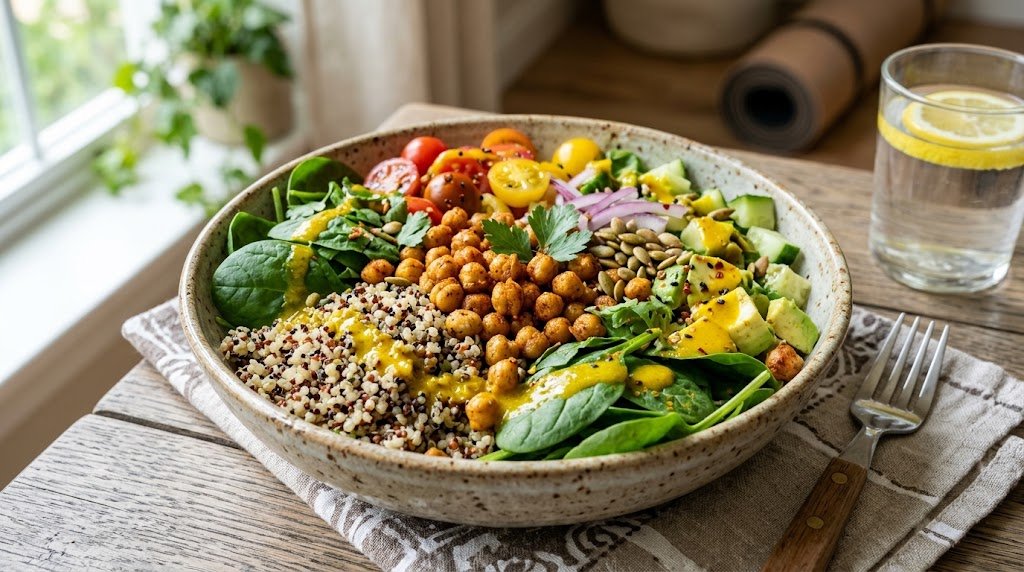
When heavy training blocks push your muscular and systemic limits, finding a vibrant, refreshing, and nutrient-dense meal to accelerate tissue healing is essential. This post-workout recovery salad combines complete-protein quinoa and roasted chickpeas with organic baby spinach, freshly grated ginger, and a cold-pressed olive-oil turmeric vinaigrette designed to suppress post-exercise cytokine spikes and fast-track muscle protein synthesis.
Intense resistance training and long endurance efforts induce micro-trauma in muscle fibers, triggering localized inflammatory cascades and oxidative stress. Rather than relying on synthetic supplements, utilizing whole-food phytochemicals—such as curcumin from turmeric and gingerols from ginger—provides a powerful, evidence-based mechanism to attenuate delayed-onset muscle soreness (DOMS) without compromising chronic training adaptations. Paired with the complete essential amino acid profile of quinoa and the sustained complex carbohydrates needed for glycogen resynthesis, this recovery bowl serves as the ultimate plant-powered refuel after demanding physical output.
Nutritional & Biochemical Architecture
                  POST-WORKOUT RECOVERY BIOCHEMICAL PATHWAY
│                                                                              │
│  Complete Quinoa & Chickpeas ──► Delivers Essential Amino Acids & Leucine    │
│                                           │                                  │
│                                           ▼                                  │
│  Turmeric (Curcumin) & Ginger ──► Inhibits NF-κB & Pro-Inflammatory Cytokines│
│                                           │                                  │
│                                           ▼                                  │
│  Cold-Pressed Olive Oil Vigor ──► Enhances Curcumin Bioavailability          │
The physiological efficacy of this recovery meal relies on three synergistic nutritional components:
Complete Amino Acid Delivery via Quinoa and Chickpeas: Quinoa is one of the few plant foods that qualifies as a complete protein, supplying all nine essential amino acids. Pairing it with legumes like chickpeas creates a dense pool of branched-chain amino acids (BCAAs), specifically leucine, which acts as the primary trigger for mammalian target of rapamycin (mTOR) pathway activation and myofibrillar protein synthesis.
Cytokine Suppression via Curcumin and Gingerols: Strenuous eccentric contractions elevate systemic inflammatory markers, including tumor necrosis factor-alpha (TNF-α) and interleukins. Bioactive compounds in turmeric (curcumin) and ginger (gingerols) modulate nuclear factor kappa B (NF-κB) signaling pathways, attenuating excessive secondary inflammation and reducing subjective muscle soreness.
Enhanced Bioavailability Through Healthy Lipids: Curcumin exhibits notoriously low oral bioavailability when consumed in isolation. Whisking turmeric directly into an unrefined extra-virgin olive oil vinaigrette provides medium-chain and long-chain fatty acids that form micelles, significantly boosting intestinal absorption.
Recipe Specifications & Nutritional Breakdown
Prep Time: 15 minutes
Cook Time: 20 minutes (for quinoa and roasting chickpeas)
Servings: 2 post-workout portions
Estimated Macros (Per Serving): ~520 kcal | 18g Protein | 68g Carbohydrates (12g Fiber) | 21g Healthy Fats
Ingredients
For the Salad Base:
1 cup organic quinoa, rinsed and cooked (approx. 3 cups cooked)
1.5 cups canned chickpeas (or cooked dry chickpeas), rinsed and drained
4 cups organic baby spinach, lightly chopped
1/2 cup grated raw carrots (for beta-carotene and structural crunch)
1/4 cup diced fresh parsley or cilantro
1/4 cup toasted pumpkin seeds (pepitas) for mineral density (magnesium and zinc)
For the Turmeric Ginger Vigor Vinaigrette:
1/4 cup cold-pressed extra-virgin olive oil
1 tablespoon freshly grated ginger root
1 teaspoon ground turmeric (or 1.5 teaspoons freshly grated turmeric root)
1 tablespoon fresh lemon juice (or apple cider vinegar)
1 tablespoon maple syrup or unrefined agave
1/2 teaspoon freshly cracked black pepper (piperine to enhance curcumin absorption)
Sea salt to taste
Step-by-Step Preparation Protocol
                        KITCHEN EXECUTION WORKFLOW
│                                                                        │
│  1. Roast Chickpeas ──► Toss with olive oil & spices; roast at 400°F   │
│                                           │                            │
│  2. Simmer Quinoa   ──► Cook in vegetable broth for enhanced flavor    │
│                                           │                            │
│  3. Whisk Dressing  ──► Emulsify olive oil, turmeric, ginger & pepper  │
│                                           │                            │
│  4. Toss & Serve    ──► Combine greens, grains, and dressing fresh     │
Roast the Chickpeas: Preheat your oven to 400°F (200°C). Toss the rinsed chickpeas with a light mist of olive oil, a pinch of sea salt, and a dash of cumin. Roast on a parchment-lined baking sheet for 20–25 minutes until crispy.
Cook the Quinoa: Combine 1 cup of rinsed quinoa with 2 cups of water or low-sodium vegetable broth in a saucepan. Bring to a boil, cover, reduce heat to low, and simmer for 15 minutes until liquid is absorbed. Fluff with a fork and let cool slightly.
Emulsify the Vinaigrette: In a small glass bowl or mason jar, whisk together the extra-virgin olive oil, grated ginger, ground turmeric, lemon juice, maple syrup, sea salt, and freshly cracked black pepper. The piperine in the black pepper is crucial for maximizing curcumin retention.
Assemble the Recovery Bowls: In a large mixing bowl, combine the bed of organic baby spinach, cooked quinoa, roasted chickpeas, grated carrots, and fresh herbs. Pour the turmeric ginger vinaigrette over the top and toss gently until the greens are evenly coated and slightly wilted.
Garnish and Serve: Top each bowl with toasted pumpkin seeds for an extra crunch and a rich supply of recovery-supporting minerals. Serve immediately post-training or store in an airtight container for meal-prep readiness.
References
Hewlings, S. J., & Kalman, D. S. (2017). Curcumin: A review of its effects on human health. Foods, 6(10), Article 92.
Mashhadi, N. S., Ghiasvand, R., Askari, G., Hariri, M., Darvishi, L., & Mofid, M. R. (2013). Anti-oxidative and anti-inflammatory effects of ginger in health and physical activity: Review of current evidence. International Journal of Preventive Medicine, 4(Suppl 1), S36–S42.
Nikbakht, M., Babaei, P., & Hosseini, S. (2019). The effects of ginger and turmeric supplementation on exercise-induced muscle damage and inflammation. Journal of Sports Medicine and Physical Fitness, 59(4), 602–607.
Young, V. R., & Pellett, P. L. (1994). Plant proteins in relation to human protein and amino acid nutrition. The American Journal of Clinical Nutrition, 59(5), 1203S–1212S.