For endurance athletes, triathletes, and high-intensity lifters training in challenging environmental conditions, fluid and electrolyte balance often dictates the boundary between peak output and acute performance breakdown. Traditional hydration guidelines rely on generic rules of thumb—such as drinking set volumes of water per hour—or post-workout weight scale measurements. However, these static methods fail to capture dynamic intra-workout fluctuations in sweat rate and individual sodium concentration (mg/L).
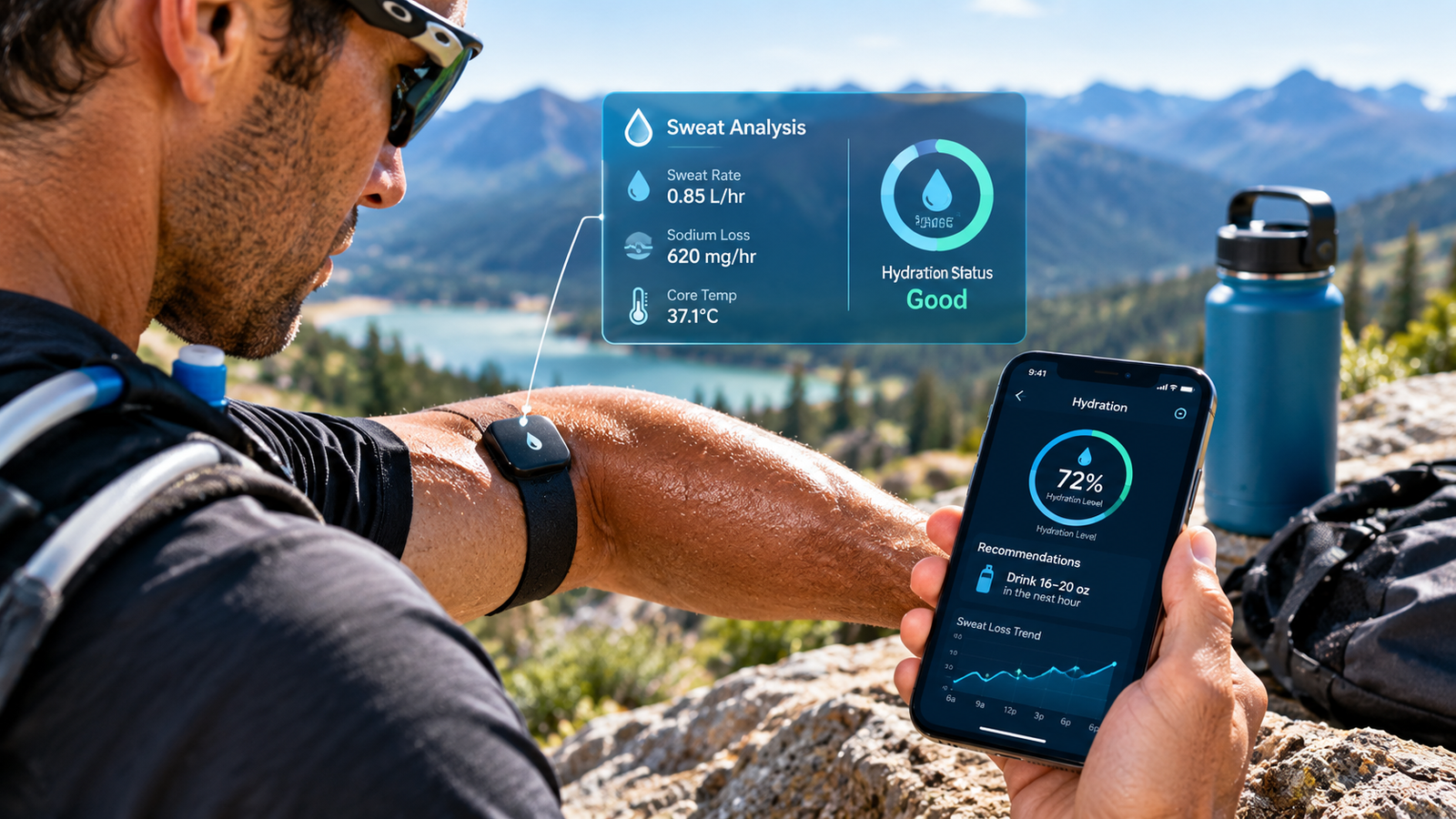
The emergence of wearable sweat sensors—utilizing flexible microfluidic channels and electrochemical sensors—has transformed hydration management from guesswork into real-time bio-telemetry. By capturing and analyzing sweat directly at the skin surface, these wearable microfluidic patches allow athletes to quantify real-time sodium loss, prevent exercise-induced hyponatremia, and execute a targeted, plant-based electrolyte replenishment strategy.
The Physiology of Sweat & Cardiovascular Drift
                   THERMOREGULATORY & HYDRO DYNAMICS
│                                                                        │
│  Unmatched Sweat Rate  ──► Blood Plasma Volume Contraction             │
│                                      │                                 │
│                                      ▼                                 │
│  Increased Heart Rate  ◄── Lower Stroke Volume (Cardiovascular Drift)  │
│                                      │                                 │
│                                      ▼                                 │
│  Unreplaced Sodium     ──► Neuromuscular Failure & Hyponatremia Risk   │
└────────────────────────────────────────────────────────────────────────┘
During prolonged exertion, body core temperature rises, triggering cutaneous vasodilation and eccrine sweat gland secretion to dissipate heat through evaporative cooling. This process exerts significant physiological demands on the body:
Plasma Volume Contraction: Sweat is derived from blood plasma. As sweating continues without adequate fluid replacement, circulating blood plasma volume decreases.
Cardiovascular Drift: To maintain cardiac output (Q = HR x SV) despite a declining stroke volume (SV), heart rate (HR) progressively drifts upward, increasing perceived exertion (RPE) for the same mechanical workload.
Neuromuscular Impairment & Hyponatremia: Sodium (Na+) is the primary extracellular cation responsible for maintaining osmotic pressure and propagating action potentials across neuromuscular junctions. Ingesting plain water during prolonged high-sweat sessions dilutes extracellular sodium levels, elevating the risk of exercise-associated hyponatremia (EAH) and muscle cramping.
How Microfluidic Sweat Sensors Capture Real-Time Telemetry
               MICROFLUIDIC SWEAT SENSOR ARCHITECTURE
│                                                                        │
│  Skin Interface ──► Capillary Inlets ──► Microchannels & Fluorophore   │
│                                                 │                      │
│                                                 ▼                      │
│  Smartphone Telemetry ◄── Optical Color / NFC ◄─┴─ Potentiometric Ion  │
│      Readout                Sensors                  Electrodes        │
Microfluidic sweat sensors operate using sophisticated micro-scale engineering placed directly against the epidermis:
Capillary Collection Inlets: Natural sweat gland pressure pushes fluid into microfluidic channels without requiring internal batteries or active suction pumps.
Potentiometric Electrochemical Sensing: Ion-selective electrodes measure the chemical activity of specific electrolytes—primarily sodium (Na+) and potassium (K+)—converting ion flux into measurable electrical voltage or colorimetric shifts.
Wireless Telemetry & Data Transmission: Using Near-Field Communication (NFC) or low-energy Bluetooth (BLE), sensors stream real-time data to cycling computers, smartwatches, or smartphone apps, displaying precise sweat rates (L/hr) and sodium losses (mg/L).
Decoding Sweat Telemetry: Salty vs. Dilute Sweaters
Sweat sodium concentration varies widely among trained athletes, ranging from 200 mg/L (dilute sweaters) to over 1,800 mg/L (salty sweaters). Understanding your specific profile allows you to tailor your fluid intake:
| Athlete Sweat Profile | Sodium Concentration (mg/L) | Sweat Rate (L/hr) | Primary Risk Factor | Recommended Intra-Workout Protocol |
| Low-Sodium / Dilute | 200-500 mg | 0.5-1.0 L | Fluid Overload / Bloating | Plain water + low-sodium whole food snacks |
| Moderate Sweater | 500-1,000 mg | 1.0-1.5 L | Moderate Fatigue & RPE Drift | Standard electrolyte drink (500-700 mg Na/L) |
| High-Sodium / Salty | 1,000-1,800 + mg | 1.5-2.5 + L | Acute Cramping, EAH, & Drop in Cardiac Output | High-potency sodium protocol (1,000-1,500 mg Na/L) |
Actionable Plant-Based Electrolyte Replenishment Strategy
Once your wearable sensor establishes your baseline sweat rate and sodium loss, structure a clean, whole-food plant-based intra-workout fueling strategy:
                  PRECISION PLANT ELECTROLYTE BLEND
│                                                                         │
│  Sodium (Extracellular)    ──► Pink Himalayan Sea Salt / Celery Juice   │
│  Potassium (Intracellular)  ─► Coconut Water / Tart Cherry Juice        │
│  Magnesium (Muscular)      ──► Dark Leafy Greens / Pumpkin Seed Extract │
Sodium Base (Extracellular Balance): For salty sweaters needing 800-1,200 mg of sodium per liter, add high-purity unrefined sea salt or celery juice concentrate to your water bottles.
Potassium Support (Intracellular Balance): Coconut water supplies abundant natural potassium (~600 mg/L), which works alongside sodium to regulate muscle cell membrane potential.
Magnesium & Calcium (Muscular Contraction): Incorporating tart cherry juice or leafy green powders supplies trace minerals that prevent involuntary muscle fasiculations and support muscular energy metabolism.
Integrating Wearable Tech with Training & Performance
Real-time hydration data delivers the greatest performance advantages when paired with smart wearables, targeted recovery, and structured nutrition:
Evaluating Wearable Metric Telemetry: Discover how to integrate sweat data with heart rate variability and strain tracking in How to Train Smarter with Fitness Wearables.
Monitoring Autonomic Strain: Learn how fluid status directly influences recovery scores in Heart Rate Variability: Useful Metric or Overhyped Tech?
Targeted Endurance Supplementation: Review evidence-based ergogenic aids for long training blocks in 10 Best Nutritional Supplements for Endurance Athletes.
Whole Food Hydration Beverages: Explore functional, low-sugar drinks that optimize gut absorption in our Anti-Inflammatory Turmeric Ginger Lemonade Recipe.
Ready to fine-tune your wearable telemetry, endurance hydration protocols, and personalized training plans? Explore how Online Fitness Coaching can help you achieve your goals today!
References
Baker, L. B. (2017). Sweating rate and sweat sodium concentration in athletes: A review of methodology and intra/inter-individual variability. Sports Medicine, 47(Suppl 1), 111–128.
Bandodkar, A. J., Gutruf, P., Choi, J., Lee, K. H., Sekine, Y., Reeder, J. T., Jeang, W. J., Aranyosi, A. J., Lee, S. P., Model, J. B., Ghaffari, R., Su, C. J., Leshock, J. P., Ray, T. R., Lu, A., & Rogers, J. A. (2019). Battery-free, skin-interfaced microfluidic/electronic systems for simultaneous electrochemical, colorimetric, and volumetric analysis of sweat. Nature Electronics, 2(1), 41–51.
Coyle, E. F., & González-Alonso, J. (2001). Cardiovascular drift during prolonged exercise: New perspectives. Scandinavian Journal of Medicine & Science in Sports, 11(3), 127–138.
Hew-Butler, T., Rosner, M. H., Fowkes-Godek, S., Dugas, J. P., Hoffman, M. D., Lewis, D. P., Mazerolle, S. M., Mercer, S. J., Mjaatvedt, P. G., Murray, K. O., Rogers, I. R., Siegel, A. J., Stuempfle, K. J., Verbalis, J. G., Weschler, L. B., & Verbalis, J. G. (2015). Statement of the 3rd International Exercise-Associated Hyponatremia Consensus Development Conference, Carlsbad, California, 2015. British Journal of Sports Medicine, 49(22), 1432–1446.