
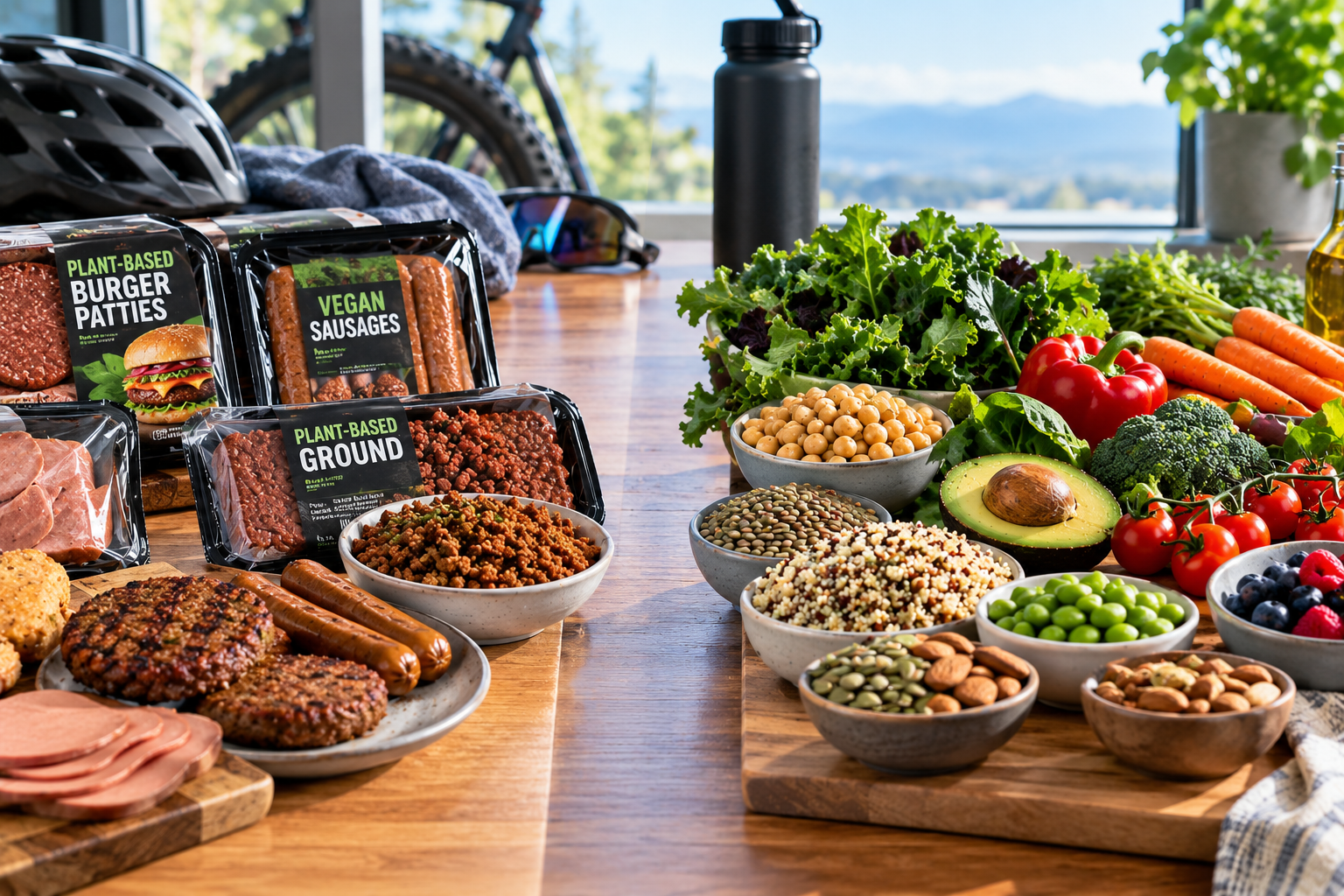
The rapid rise of plant-based eating has transformed grocery aisles, replacing traditional legumes and grains with high-tech processed vegan meats designed to mimic the texture, sizzle, and flavor of conventional animal protein. For active individuals and plant-based athletes, these meat analogues—such as soy- and pea-protein-based burgers, sausages, and grounds—offer an accessible way to hit daily macronutrient targets.
However, a fundamental question remains for those pursuing long-term athletic performance and longevity: How do processed plant-based meat alternatives (PBMAs) compare to intact whole plant foods like lentils, chickpeas, black beans, and tempeh?
Understanding the trade-offs between convenience, macronutrient density, sodium content, and micronutrient bioavailability allows athletes to strategically deploy both food groups without sacrificing metabolic health or athletic recovery.
The Spectrum of Plant Proteins: From Intact Seeds to Ultra-Processing
                   THE PLANT PROTEIN PROCESSING SPECTRUM
│                                                                         │
│  MINIMALLY PROCESSED          MODERATELY PROCESSED       ULTRA-PROCESSED│
│  Lentils, Beans, Edamame ──►  Tofu, Tempeh, Seitan  ──►  PBMA Burgers   │
│  (High Fiber + Matrix)        (High Protein / Low Fiber)  (High Sodium) │
Not all plant foods function identically within human digestion and bioenergetics. Nutritional science categorizes foods using the NOVA classification system, which evaluates the degree of physical, chemical, and industrial processing:
Unprocessed or Minimally Processed Foods: Whole legumes, grains, nuts, and seeds that retain their natural cellular matrix, dietary fiber, and intact micronutrient profiles.
Processed Food Staples: Cultured or traditional plant products like tempeh, extra-firm tofu, and seitan, which undergo minimal refinement to isolate protein while preserving digestibility.
Ultra-Processed Plant-Based Meat Alternatives (PBMAs): Formulated products utilizing isolated plant proteins (pea protein isolate, soy protein concentrate), extracted fats (coconut oil, canola oil), binders (methylcellulose), added sodium, and synthetic flavorings.
Head-to-Head Audit: Performance & Health Metrics
To determine where meat analogues fit into a structured athletic meal plan, we must evaluate them across four key physiological pillars:
| Nutritional Metric | Whole Plant Foods (Lentils, Beans, Tempeh) | Processed Vegan Meats (PBMAs) |
| Protein-to-Calorie Ratio | Moderate (15-25g per 300 kcal) | High (20-25g per 250 kcal) |
| Sodium Content | Very Low (5-30mg per serving) | High (350-600mg per serving) |
| Saturated Fat Profile | Extremely Low (0-1g unsaturated) | Moderate-High (4-8g via coconut oil) |
| Dietary Fiber Density | High (8-15g per cup) | Low-Moderate (2-5g per serving) |
| Micronutrients & Phytochemicals | High (Polyphenols, Folate, Iron, Magnesium) | Low (Reconstituted minerals, isolated compounds) |
—–
1. Macro Delivery & Protein Quality
From a purely macronutrient standpoint, ultra-processed vegan meats excel at delivering concentrated protein with minimal volume. For strength athletes struggling to meet higher intake goals (1.6-2.2g/kg), PBMAs offer a dense source of essential amino acids and leucine. However, high-quality plant protein isolates in PBMAs lack the synergistic “food matrix” of whole legumes, which slows glucose absorption and promotes steady energy release.
2. Sodium, Vascular Function, & Nitric Oxide
While sodium is a vital electrolyte lost during heavy sweat sessions, chronic overconsumption through ultra-processed meals can negatively affect baseline arterial compliance and resting blood pressure. Whole plant foods (like leafy greens and beets) actively support endothelial health by supplying inorganic nitrates that boost nitric oxide synthesis, whereas heavily salted meat analogues offer no such vascular advantage.
3. Saturated Fat & Insulin Sensitivity
Many commercial meat analogues utilize tropical oils (such as coconut or palm oil) to replicate the mouthfeel and cooking properties of animal fat. High intakes of isolated saturated fats can elevate low-density lipoprotein (LDL) cholesterol and impair muscular insulin sensitivity when consumed in excess. Whole food staples, by contrast, contain almost exclusively polyunsaturated and monounsaturated fatty acids that support cardiovascular health.
4. Gut Microbiome & Inflammation
The gut microbiome plays a central role in nutrient absorption, neurotransmitter synthesis, and systemic recovery. Whole plant foods supply diverse fermentable fibers and prebiotic compounds (like resistant starch) that nourish beneficial gut microbes. Ultra-processed options often lack this structural fiber diversity, offering fewer metabolic advantages for gut health.
Clinical Evidence: What the Research Shows
In the SWAP-MEAT Athlete trial (Study With Appetizing Plant-Food, Meat Eating Alternatives), researchers at Stanford University compared the effects of an omnivorous diet, a whole-food plant-based diet (WFPB), and a plant-based meat alternative diet (PBMA) on recreational athletic performance.
Performance Retention: The trial demonstrated that athletes maintained their 12-minute run distance, strength, and aerobic capacity across both plant-based protocols compared to the omnivorous baseline.
Adherence & Effort: While performance remained steady, athletes reported lower overall dietary satisfaction and higher effort required when adhering strictly to the PBMA-heavy protocol compared to whole plant foods.
Strategic Playbook: When to Use Each Option
┌────────────────────────────────────────────────────────────────────────┐
│                   THE 80 / 20 PLANT PROTEIN STRATEGY                   │
│                                                                        │
│  80% BASELINE: Intact Whole Foods (Beans, Lentils, Tofu, Tempeh)       │
│  • Optimizes healthspan, gut microbiome, & vascular nitric oxide       │
│                                                                        │
│  20% TACTICAL TOOL: Processed Vegan Meats (PBMAs)                      │
│  • Used for travel convenience, social ease, & hitting high macros     │
└────────────────────────────────────────────────────────────────────────┘
To maximize athletic capacity while protecting cardiovascular longevity, apply an 80/20 framework:
Use Whole Plant Foods for 80% of Daily Intake: Make intact legumes, edamame, tempeh, extra-firm tofu, grains, and seeds the foundation of your daily training meals. This ensures steady fuel, high micronutrient density, and optimal digestive health.
Deploy Processed Vegan Meats as a Tactical 20% Tool: Utilize meat analogues during busy travel schedules, social gatherings, or during acute high-calorie bulking phases when eating large volumes of whole beans causes gastrointestinal discomfort.
Integrating Nutrition with Training & Recovery
A balanced approach to plant protein works best when combined with smart training, rest, and supplementation:
Calculate Your Daily Protein Targets: Learn how to hit your amino acid requirements on a plant-based diet in Importance of Protein to Achieving Your Goals.
Optimize Intra-Workout Fueling: Explore targeted supplements that support training capacity in 10 Best Nutritional Supplements for Endurance Athletes.
Enhance Muscle Saturation: Discover the unique performance advantages of creatine for plant-based lifters in Creatine Monohydrate Saturation for Plant-Based Athletes.
Support Sleep & Hormone Balance: Protect your recovery and circadian health with our guide on Power of a Good Night’s Sleep: 10 Science-Backed Benefits.
Ready to fine-tune your meal plan, body composition, and athletic performance? Explore how Online Fitness Coaching can help you achieve your goals today!
References
Roberts, A. K., Busque, V., Robinson, J. L., Landry, M. J., & Gardner, C. D. (2022). SWAP-MEAT Athlete (study with appetizing plant-food, meat eating alternatives trial) – investigating the impact of three different diets on recreational athletic performance: a randomized crossover trial. Nutrition Journal, 21(1), Article 69.
Rizzolo-Brime, L., Orta-Ramirez, A., Puyol Martin, Y., & Jakszyn, P. (2023). Nutritional assessment of plant-based meat alternatives: A comparison of nutritional information of plant-based meat alternatives in Spanish supermarkets. Nutrients, 15(6), Article 1325.