
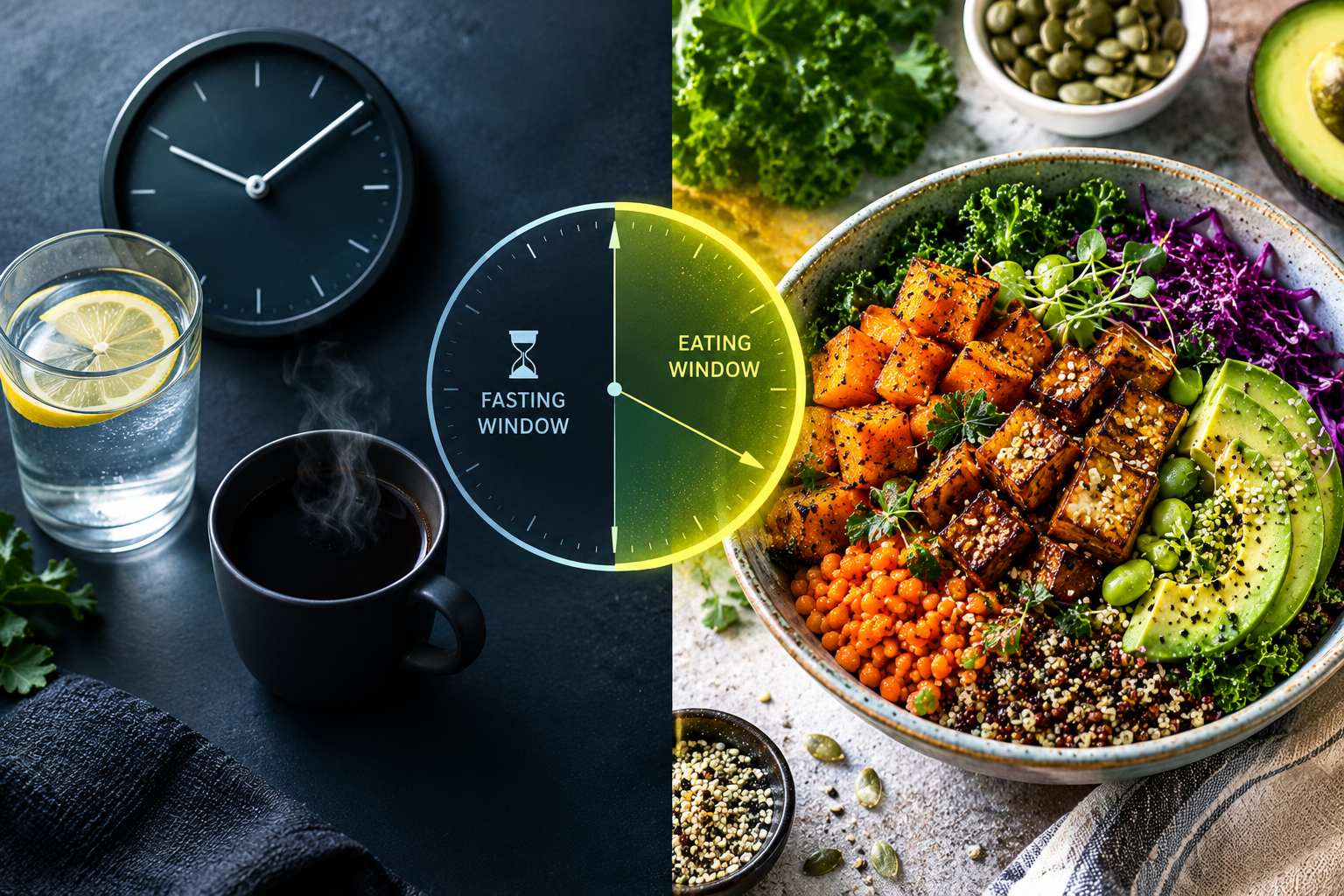
Intermittent fasting (IF)—particularly the popular 16:8 protocol—has surged in mainstream popularity as an efficient method for body fat reduction and metabolic health optimization. When compared to continuous calorie restriction, time-restricted feeding simplifies energy management, enhances insulin sensitivity, and promotes cellular autophagy. However, combining intermittent fasting with a plant-based diet introduces a unique physiological challenge: fitting large volumes of high-fiber, nutrient-dense plant foods into a condensed 8-hour feeding window without causing severe gastrointestinal distress or compromising daily muscle protein synthesis (MPS).
Implementing targeted plant-based fueling strategies for intermittent fasting allows active individuals to maximize fat oxidation during the fast while protecting hard-earned skeletal muscle mass during the eating window.
Intermittent Fasting vs. Continuous Caloric Restriction
                      METABOLIC PROFILE COMPARISON
│                                                                             │
│  CONTINUOUS CALORIC RESTRICTION  ──► Constant Baseline Insulin              │
│                                      • Moderate Lipolysis                   │
│                                      • Continuous Gastrointestinal Load     │
│                                                                             │
│  INTERMITTENT FASTING (16:8)     ──► Extended Hypoinsulinemia Phase         │
│                                      • Upregulated Free Fatty Acid Oxidation│
│                                      • Pulsatile Nutrient Delivery          │
Extended Hypoinsulinemia & Lipolysis: Fasting for 16 hours lowers circulating insulin levels, activating hormone-sensitive lipase (HSL) to mobilize stored fatty acids for fuel.
Autophagy & AMPK Activation: Lower energy availability triggers AMP-activated protein kinase (AMPK), stimulating autophagy—the cellular recycling process that removes damaged organelles and reduces systemic inflammation.
The Muscle Retention Hurdle: While fasting enhances fat loss, skeletal muscle retention requires maintaining a positive 24-hour net nitrogen balance. Plant-based lifters must ensure their condensed eating window provides enough leucine (2.7-3.5g per meal) to fully trigger the mTORC1 pathway during every meal.
Solved: The Fiber Density & Caloric Volume Dilemma
Whole plant foods (legumes, intact grains, vegetables) are naturally high in dietary fiber and low in caloric density. Attempting to consume 2,200-2,800 kcal and 150+g of plant protein in an 8-hour window using purely high-volume, low-calorie foods often leads to early gastric distension, bloating, and accidental under-fueling.
                      EATING WINDOW VOLUME MANAGEMENT
│                                                                        │
│  High-Volume Whole Foods (Beans/Broccoli) ──► Gastric Saturation Limit │
│                                                      │                 │
│                                                      ▼                 │
│  Strategic Caloric Density Blend           ──► Meets Calorie & Protein │
│  (Tempeh + Nut Butters + Rice/Pea Isolate)     Targets Without Bloat   │
To resolve this issue, structure your 8-hour feeding window around caloric and protein density management:
Break the Fast Gently (Meal 1 – Low Volume, High Leucine): Avoid overloading a rested digestive system with massive amounts of raw insoluble fiber right away. Break your fast with an easily digestible, leucine-rich blend—such as a pea and brown rice protein isolate smoothie paired with nut butter, berries, and chia seeds.
Anchor the Main Meal (Meal 2 – Dense Whole Foods): Consume a balanced whole-food meal 3 hours later featuring concentrated plant proteins like extra-firm tempeh or seitan, cooked grain bowls (quinoa/wild rice), and healthy fats (avocado/olive oil).
Close the Window (Meal 3 – High-Fiber & Slow-Digesting Protein): Finish your feeding window with a rich, fiber-dense recipe like our High-Fiber Vegan Recomp Chili to promote sustained amino acid release into the bloodstream throughout the overnight fast.
Sample 16:8 Fueling Schedule for Plant-Based Athletes
| Time Window | Operational Phase | Specific Fueling Strategy | Key Nutrient Focus |
| 08:00 – 12:00 | Fasted Training / Focus | Hydration, Black Coffee, Green Tea, Electrolytes | Zero Calories (<10 kcal) |
| 12:00 (Meal 1) | Fast Breaker (Anabolic) | Pea/Rice Protein Shake + Almond Butter + Banana | 35g Protein | 3.0g Leucine |
| 15:30 (Meal 2) | Whole Food Main Meal | Baked Tempeh + Quinoa + Roasted Vegetables + Avocado | 45g Protein | 18g Fiber |
| 19:30 (Meal 3) | Fasting Anchor Meal | High-Fiber Lentil & Pea Protein Chili + Seeds | 40g Protein | 20g Fiber |
—–
Optimizing Training Timing with Intermittent Fasting
                     FASTED vs. FED TRAINING PROTOCOLS
│                                                                        │
│  Option A: Fasted Morning Workout  ──► Intra-Workout Essential Amino   │
│                                        Acids (EAAs) or Break Fast Post │
│                                                                        │
│  Option B: Mid-Day Workout (Ideal) ──► Perform Lift Between Meal 1 &   │
│                                        Meal 2 for Peak Glycogen        │
Option A (Fasted Resistance Training): If training in the morning before breaking your fast, maintain intra-workout fluid balance using electrolytes or zero-calorie plant drinks like our Anti-Inflammatory Turmeric Ginger Lemonade Recipe.
Option B (Fed Resistance Training – Recommended): Schedule intense weightlifting sessions inside your eating window—ideally 1–2 hours after Meal 1. This ensures muscle glycogen stores are topped off, allowing you to execute progressive overload without early fatigue.
Integrating Fasting Strategies with Performance & Longevity
Navigating fasting protocols requires coordinating your nutrition with smart wearables, body recomposition science, and recovery:
Mastering Progressive Muscle Overload: Ensure your feeding window fuels strength adaptations by reading How to Build Vegan Muscle: The Complete Science-Backed Guide.
Evaluating Whole Foods vs. Analogues: Select the cleanest protein sources for your eating window in Processed Vegan Meats vs Whole Foods: Performance & Health Audit.
Daily Protein Target Science: Review the exact essential amino acid requirements for plant lifters in How Much Protein Do Plant-Based Athletes Really Need?
Tracking Autonomic Recovery & Fasting Stress: Monitor how fasting influences your heart rate variability in Heart Rate Variability: Useful Metric or Overhyped Tech?
Ready to optimize your fasting windows, macro distribution, and strength conditioning for peak athletic performance? Explore how Online Fitness Coaching can help you achieve your goals today!
References
Anton, S. D., Moehl, K., Donahoo, W. T., Marosi, K., Lee, S. A., Mainous, A. G., Leeuwenburgh, C., & Mattson, M. P. (2018). Flipping the metabolic switch: Understanding and applying the health benefits of fasting. Obesity, 26(2), 254–268.
Phillips, S. M. (2014). A brief review of critical processes in exercise-induced muscular hypertrophy. Sports Medicine, 44(Suppl 1), 71–77.
Tinsley, G. M., & La Bounty, P. M. (2015). Effects of intermittent fasting on body composition and clinical health markers in humans. Nutrition Reviews, 73(10), 661–674.