
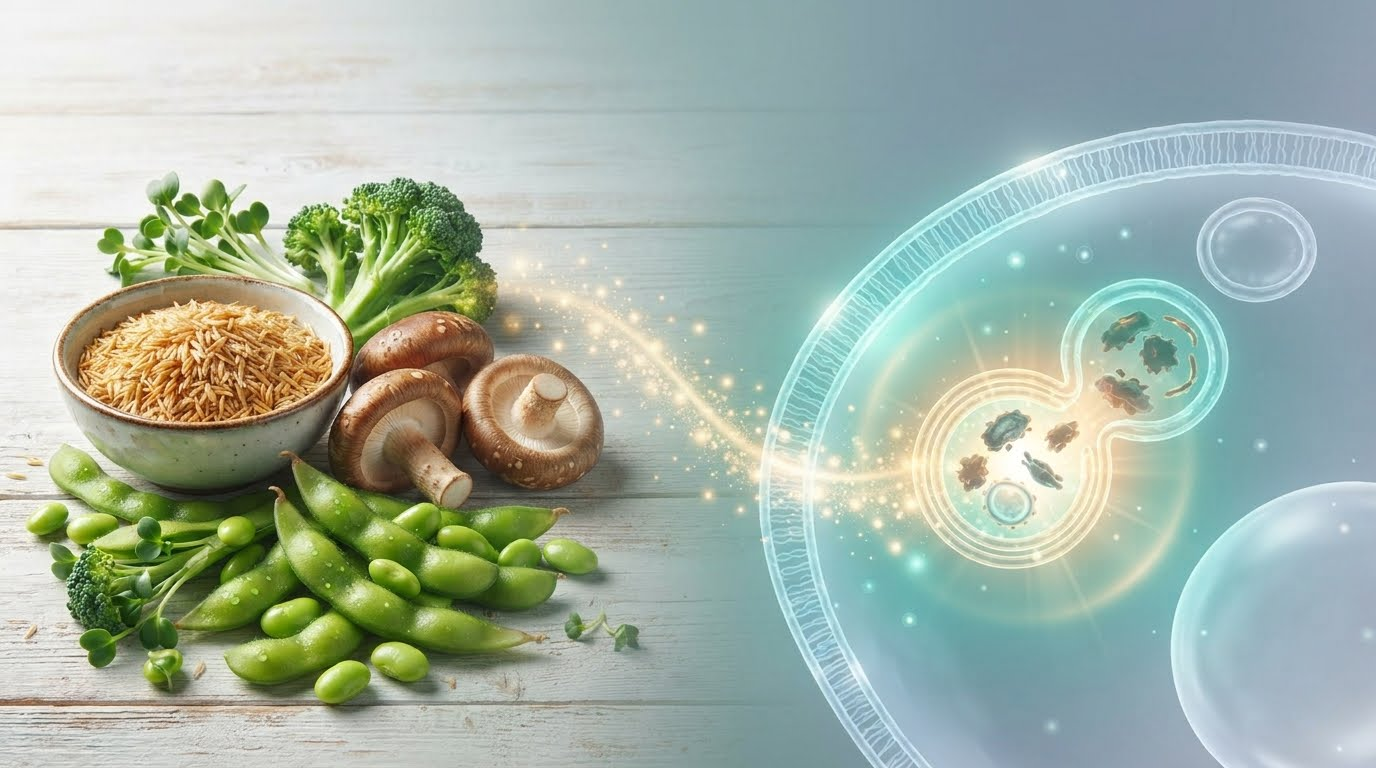
As human cells age, they accumulate damaged organelles, misfolded proteins, and metabolic waste products. Left unchecked, this cellular debris drives chronic low-grade systemic inflammation, accelerates cardiovascular aging, and impairs metabolic flexibility. While fasting and strenuous endurance exercise are renowned for initiating the cell’s internal recycling program, modern nutritional biochemistry has highlighted a powerful biochemical mimic: spermidine autophagy activation.
Spermidine is a naturally occurring polyamine found abundantly in specific whole-plant foods. By consuming spermidine-rich plant sources and combining them with strategic training protocols, athletes and longevity seekers can upregulate cellular cleanup pathways, promote mitochondrial quality control (mitophagy), and protect long-term metabolic health without relying exclusively on prolonged food deprivation.
The Cellular Mechanics: What Is Autophagy?
│                       THE AUTOPHAGIC RECYCLING CYCLE
│                                                                           │
│  Cellular Stress / Spermidine ──► Inhibition of Acetyltransferases (EP300)│
│                                             │                             │
│                                             ▼                             │
│  Phagophore Formation         ──► Envelops Damaged Organelles & Proteins  │
│                                             │                             │
│                                             ▼                             │
│  Lysosomal Fusion             ──► Breakdown into Reusable Amino Acids     │
Autophagy (meaning “self-eating”) is a conserved catabolic degradation process responsible for clearing cellular garbage:
Inhibition of Acetyltransferases: Spermidine functions as a caloric-restriction mimetic by inhibiting histone acetyltransferases (specifically EP300). This keeps key autophagy-related genes (ATGs) unacetylated and actively transcribed.
Mitophagy & Cellular Renewal: Autophagy specifically targets dysfunctional mitochondria (mitophagy), preventing the leakage of reactive oxygen species (ROS) and preserving cellular energy efficiency.
Cardioprotection & Neuroprotection: Regular autophagy activation clears plaque-forming proteins from arterial walls and neural tissue, promoting systemic longevity and healthspan.
Top Whole-Food Plant Sources of Spermidine
While trace amounts of polyamines exist across many foods, certain whole-plant ingredients pack exceptionally high concentrations of spermidine per serving:
| Plant-Based Food Source | Average Spermidine Content (mg per 100g) | Primary Phytochemical Synergy |
| Wheat Germ | ~240-350 mg | High dietary fiber, vitamin E, and phytosterols |
| Soybeans (Natto / Edamame) | ~20-90mg | Complete plant protein, isoflavones, and saponins |
| Shiitake Mushrooms | ~80-110mg | Beta-glucans, immune-modulating polysaccharides |
| Green Peas & Legumes | ~25-45mg | Complex carbohydrates, resistant starch, and iron |
| Broccoli & Cauliflower | ~15-25mg | Sulforaphane precursors and antioxidant polyphenols |
—–
Synergizing Spermidine with Intermittent Fasting & Exercise
                         LONGEVITY SYNERGY PATHWAYS
│                                                                           │
│  Spermidine Intake (Plant Foods) ──► Inhibits EP300 (Epigenetic Trigger)  │
│  Zone 2 Cardio / Fasting          ──► Activates AMPK & Nutrient Depletion │
│                                                   │                       │
│                                                   ▼                       │
│                   MAXIMAL SYNERGISTIC AUTOPHAGY OUTPUT                    │
To maximize the therapeutic impact of spermidine, combine plant-based intake with established metabolic stressors:
Pairing with Intermittent Fasting: Consuming spermidine-rich foods during your eating window complements the natural autophagy induced by extended fasts, as outlined in Plant-Based Fueling Strategies for Intermittent Fasting.
Coupling with Zone 2 Aerobic Training: Low-intensity cardio depletes cellular ATP and activates AMP-activated protein kinase (AMPK), which acts in tandem with spermidine to amplify autophagic flux.
Mitigating Age-Related Decline: Maintaining robust polyamine levels counteracts the natural age-related drop in tissue spermidine concentration, supporting arterial elasticity and metabolic homeostasis.
Actionable Longevity Nutrition Protocol
Incorporate Wheat Germ Daily: Sprinkle 1-2 tablespoons of stabilized wheat germ into your morning oatmeal, smoothie, or grain bowl to instantly establish a heavy baseline of dietary spermidine.
Rotate Functional Mushrooms: Add shiitake or maitake mushrooms into your savory plant-based meals like our High-Fiber Vegan Recomp Chili Recipe to boost polyamine and beta-glucan intake.
Maintain Metabolic Cleanliness: Support endogenous cellular repair pathways alongside anti-inflammatory hydration habits such as our Anti-Inflammatory Turmeric Ginger Lemonade Recipe.
Integrating Longevity Science with Training & Recovery
Maximizing cellular health and healthspan requires coordinating your dietary compounds with smart recovery metrics and structured fitness protocols:
Monitoring Cellular Stress & HRV: Track how deep recovery and autophagy influence your autonomic nervous system in Heart Rate Variability: Useful Metric or Overhyped Tech?.
Building a Metabolic Aerobic Base: Support mitochondrial renewal by following Low-Intensity Zone 2 Cardio for Plant-Based Athletes: A Beginner’s Guide.
Whole Foods vs. Processed Analogues: Understand why whole plant foods outperform processed alternatives in Processed Vegan Meats vs Whole Foods: Performance & Health Audit.
Healing Metabolic Rate Post-Dieting: Learn how to restore baseline metabolic function using whole plant foods in Healing Your Metabolism After Dieting: A Strategic Vegan Approach to Reverse Dieting.
Ready to optimize your healthspan, cellular renewal, and metabolic performance with evidence-based coaching? Explore how Online Fitness Coaching can help you achieve your goals today!
References
Eisenberg, T., Abdellatif, M., Schroeder, S., Primessnig, U., Stekovic, S., Pendl, T., Harger, A., Schipke, J., Zimmermann, A., Schmidt, A., Tong, M., Ruckenstuhl, C., Dammbrueck, C., Gross, A. S., Nevian, B., Heinzel, D., Waller, C., Fröhlich, K., Sinner, F., … Madeo, F. (2016). Cardioprotection and lifespan extension by the natural polyamine spermidine. Nature Medicine, 22(12), 1428–1438.
Madeo, F., Eisenberg, T., Pietrocola, F., & Kroemer, G. (2018). Spermidine in health and disease. Science, 359(6374), Article eaan2788.
San-Millán, I., & Brooks, G. A. (2018). Assessment of metabolic flexibility and plasticity in vivo: A novel method to uncover metabolic bioenergetics in endurance athletes and patients with type 2 diabetes or cancer. Sports Medicine, 48(2), 367–379.