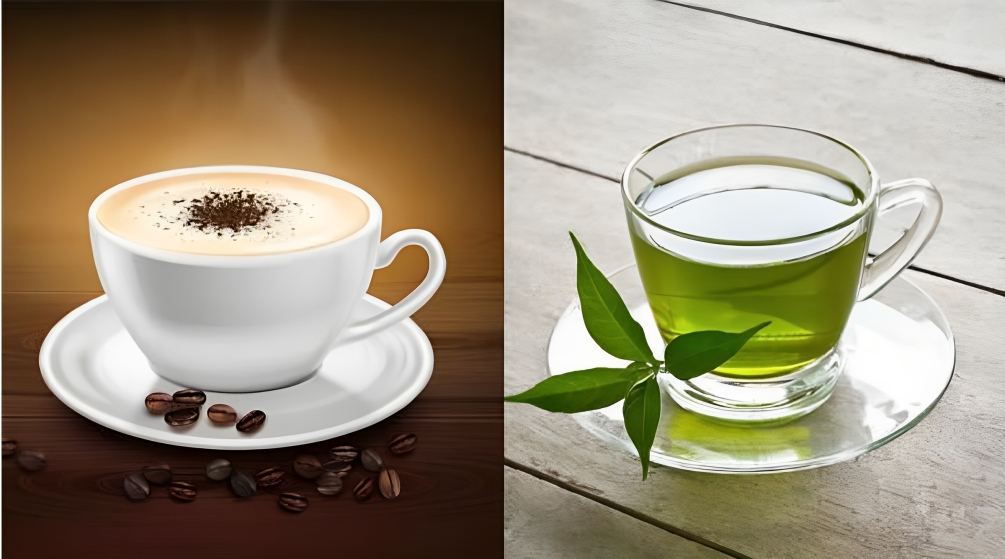
When structuring a performance nutrition plan, the beverages you consume can significantly impact your metabolic adaptations. Deciding between coffee vs green tea is a classic dilemma for endurance athletes and strength trainees alike. Both beverages contain active, health-promoting bio-compounds that support body composition, improve energy levels, and enhance recovery. However, their physical mechanisms differ entirely due to unique antioxidant structures and chemical ratios.
To help you decide which option aligns best with your specific fitness goals, this guide will provide a head-to-head scientific comparison of their raw performance benefits, fat-burning capacities, and everyday practical drawbacks.
➡️ VO₂max for Longevity: Why Your Cardiorespiratory Fitness Predicts Lifespan and Healthspan
1. Caffeine Density and Neuromuscular Stimulation
The most obvious difference between these two hot drinks is their total caffeine content.
Coffee: A standard 8-ounce cup contains between 95 to 165 mg of caffeine.
Green Tea: An 8-ounce serving delivers a much milder 20 to 45 mg of caffeine.
Caffeine acts as a powerful central nervous system stimulant by binding to and blocking adenosine receptors, which reduces your perception of effort and delays central fatigue during high-intensity training. The International Society of Sports Nutrition (ISSN) position stand confirms that caffeine is highly effective for improving muscular endurance, movement velocity, and maximal aerobic capacity when taken in doses of 3–6 mg/kg of body weight.
The Performance Edge: For an intense pre-workout kick that maximizes motor unit recruitment during heavy lifting or sprint intervals, coffee is the clear winner.
2. Antioxidant Profiles: Chlorogenic Acid vs. Catechins
Both drinks are packed with exogenous antioxidants that neutralize reactive oxygen species (ROS), which helps reduce oxidative stress and supports cellular recovery after strenuous training. However, their primary active compounds belong to different chemical families:
Coffee is rich in Chlorogenic Acids (CGA): Polyphenols that improve systemic glucose regulation and support vascular health.
Green Tea is packed with Catechins: Specifically epigallocatechin-3-gallate (EGCG), a highly bioactive molecule that protects cell walls and supports metabolic function.
➡️ The Food Matrix Effect: Why Whole Plants Outperform Isolated Macros on the Track and Scale
3. Metabolism, Thermogenesis, and Fat Oxidation
Both beverages can help increase your daily energy expenditure, but they do so through different metabolic pathways.
COFFEE       ➔ High Caffeine ➔ Direct Central Nervous System Stimulation
GREEN TEA    ➔ EGCG + Caffeine ➔ COMT Inhibition ➔ Prolonged Norepinephrine Activity
A comprehensive meta-analysis shows that pre-exercise caffeine intake significantly increases your baseline fat oxidation rate during submaximal cardio sessions. While coffee relies heavily on high doses of caffeine to mobilize free fatty acids, green tea utilizes a powerful synergetic effect between its mild caffeine content and EGCG.
EGCG works by inhibiting catechol-O-methyltransferase (COMT), the specific enzyme responsible for breaking down norepinephrine. By preventing this breakdown, green tea keeps your fat-burning hormones circulating longer, allowing you to sustain elevated fat oxidation at rest and during recovery.
4. Hydration and Fluid Balance
Optimal cellular hydration is vital for maintaining intracellular pressure, promoting muscle protein synthesis, and sustaining endurance performance.
Because green tea contains significantly less caffeine per cup, it serves as a highly hydrating choice that can be enjoyed throughout the day without disrupting your fluid balance. While older sports folklore claimed that coffee’s mild diuretic effect causes dehydration, modern sports science has disproven this theory. The ISSN confirms that moderate caffeine intake does not cause dehydration or negatively impact fluid balance during exercise. That said, a high intake of strong espresso can cause mild fluid loss in people who aren’t used to it.
Head-to-Head Summary: Choosing Your Performance Fuel
| Feature | Coffee | Green Tea |
| Caffeine Dose | High (95–165 mg) | Low to Moderate (20–45 mg) |
| Primary Bioactive | Chlorogenic Acid | EGCG (Catechin) |
| Primary Benefit | Maximum explosive power & focus | Sustained fat oxidation & recovery |
| CNS Impact | High (Potential jitters/anxiety) | Smooth (Contains calming L-theanine) |
—–
Potential Drawbacks to Monitor
Coffee: Can sometimes trigger elevated heart rates, acute anxiety, and gastrointestinal issues if consumed on an empty stomach before training.
Green Tea: Generally very gentle on the stomach, though its natural tannin content can occasionally cause mild nausea or slightly reduce non-heme iron absorption if consumed in large quantities alongside plant-based meals.
The Verdict
Your choice between coffee vs green tea ultimately comes down to your immediate physical goals and personal caffeine tolerance:
Choose Coffee if you need a strong, reliable pre-workout stimulant to maximize your strength, improve focus, and push through demanding anaerobic or endurance training sessions.
Choose Green Tea if your primary goal is consistent fat loss, smooth all-day hydration, and steady antioxidant support without the energy crashes or jitters that can come with high-dose stimulants, as its epigallocatechin-3-gallate (EGCG) content safely elevates daily energy expenditure.
➡️ How to Make Fitness a Lifestyle: The Behavioral and Physiological Science of Sustainable Progress
References
Collado-Mateo, D., Lavín-Pérez, AM., Merellano-Navarro, E., & Del Coso, J. (2020). Effect of acute caffeine intake on the fat oxidation rate during exercise: A systematic review and meta-analysis. Nutrients, 12(12), 3603.
Gahreman, D., Wang, R., Boutcher, Y., & Boutcher, S. (2015). Green tea, intermittent sprinting exercise, and fat oxidation. Journal of Nutrition and Metabolism, 2015, 715392.
Guest, N. S., VanDusseldorp, T. A., Nelson, M. T., Hennigar, S. R., Campbell, B. I., Schwelfelbein, R. E., … & Antonio, J. (2021). International society of sports nutrition position stand: caffeine and exercise performance. Journal of the International Society of Sports Nutrition, 18(1), 1.
Hodgson, A. B., Randell, R. K., & Jeukendrup, A. E. (2013). The effect of green tea extract on fat oxidation at rest and during exercise: evidence of efficacy and proposed mechanisms. Advances in Nutrition, 4(2), 129–140.
Kapoor, M. P., Sugita, M., Fukuzawa, Y., & Okubo, T. (2017). Physiological effects of epigallocatechin-3-gallate (EGCG) on energy expenditure for prospective fat oxidation in humans: A systematic review and meta-analysis. Journal of Nutritional Biochemistry, 43, 1–10.