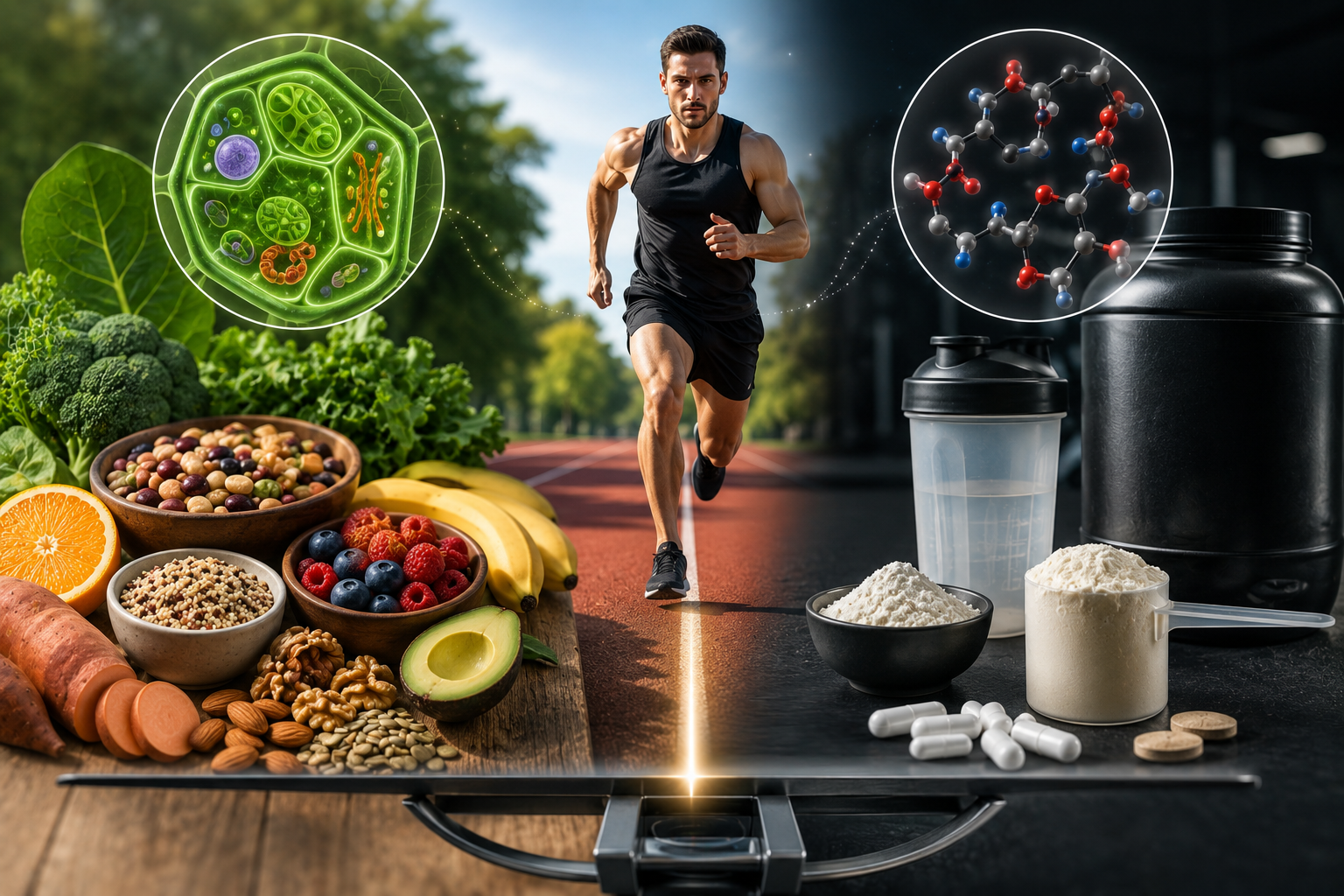
In the modern fitness era, we have been conditioned to look at our plates through a reductive lens. We open an app, log our meals, and assume that if we hit our target numbers for proteins, carbohydrates, and fats, we have optimized our nutrition. But your digestive tract is a complex biological engine, not an arithmetic calculator. For athletes seeking elite conditioning and longevity, the raw numbers are only half the story. The real differentiator is the food matrix effect.
The structural architecture of whole plants determines exactly how, when, and if those isolated macronutrients are utilized by your cells. When you look past basic macro tracking and embrace the biological complexity of whole food structures, you completely change your energy availability, metabolic rate, and performance capacity.
Understanding the Food Matrix Effect
The term “food matrix” refers to the physical and chemical domain of a whole food. It encompasses how nutrients are physically bound together within cellular walls, alongside dietary fibers, water, micronutrients, and bioactive phytochemicals.
Isolated Macro (e.g., Pea Isolate Powder) ──> Rapidly Assimilated ──> Sharp Spike & Drop
Whole Plant Matrix (e.g., Whole Green Peas) ──> Intact Cell Walls ──> Sustained Release + TEF
When you consume an isolated macronutrient—such as a processed protein powder or a refined starch—you have stripped away this natural architecture. Your body processes these isolated molecules rapidly, requiring minimal mechanical or chemical effort.
Conversely, when you consume a nutrient within its native whole-food matrix, your digestive system has to physically tear down cell walls to extract the calories. This cellular breakdown imposes a significant metabolic “tax,” elevating your baseline energy expenditure via the thermic effect of food.
Fiber, Structure, and Digestion Speed
The physical presence of intact plant fiber networks modifies the entire digestive timeline. This structural delay directly transforms athletic performance and body composition through three key mechanisms:
1. Sustained Glycogen Replenishment
Refined, isolated carbohydrates hit your bloodstream as an immediate flood of glucose. This sudden surge forces a large, compensatory insulin spike, which can cause rapid fat storage and a subsequent blood sugar crash.
When those same carbohydrate molecules are bound within a dense legume matrix, the rate of glucose absorption slows down dramatically. This steady, metered release ensures that glucose is steadily ferried off to replenish muscle glycogen stores without triggering the system-wide metabolic inflammation associated with chronic hyperinsulinemia.
➡️ Circadian Rhythm and Glycogen: The Strategic Timing of Plant-Based Carbs
2. Enhanced Microvascular Blood Flow
The food matrix of whole plants contains vital secondary metabolites—such as polyphenols and bioflavonoids—that are completely lost during macro isolation. These matrix-bound compounds act as natural vascular protectors, preserving endothelial health and optimizing blood flow during high-intensity training blocks.
When you rely on whole foods, you aren’t just getting fuel; you are consuming the exact biological keys required to distribute that fuel efficiently to your working muscles.
➡️ Nitric Oxide Beyond Beets: The Full-Spectrum Strategy
3. Metabolic Cost and Satiety Signaling
Because your gastrointestinal tract must work harder to disassemble whole plant structures, whole foods trigger a more profound and lasting release of satiety hormones like PYY and GLP-1 compared to isolated macro powders . For the athlete managing body composition, this means staying full and energized on fewer total calories, preventing the energy crashes that derail consistency.
Whole Food Nutrition vs. Macro Tracking Alone
To be clear, tracking macronutrients is a phenomenal tool for establishing nutritional baselines. However, problems arise when a “flexible dieting” approach substitutes whole foods for processed isolates under the assumption that “a macro is a macro.”
Consider this real-world showdown:
| Variable | 50g Carbs / 20g Protein from Lentils | 50g Carbs / 20g Protein from Rice Flour & Soy Isolate |
| Digestion Speed | Slow, metered, steady release | Rapid absorption, high insulin spike |
| Thermic Cost (TEF) | High (Body works to break down fiber) | Low (Pre-refined, minimal digestion energy) |
| Micronutrient Profile | Rich in magnesium, iron, and polyphenols | Stripped during industrial processing |
| Satiety Impact | High fullness, stable baseline energy | Short-lived fullness, potential energy crash |
Strategy: Mastering the Whole-Plant Strategy
To leverage the food matrix effect for superior body recomposition and field performance, transition your daily nutrition toward these three structural protocols:
Prioritize Intact Carbs: Swap out processed, flour-based items (like breads and boxed pastas) for intact grains and tubers like quinoa, wild rice, amaranth, and sweet potatoes. Let your body do the mechanical work of grinding down the food.
Earn Your Isolates: Reserve processed macromolecule isolates—such as pea protein powders or fast-digesting cyclic dextrins—strictly for the immediate peri-workout window. During this time, the rapid digestion speed is actually advantageous for muscle protein synthesis and immediate recovery.
The Whole-Legume Foundation: Build at least two meals a day around whole black beans, lentils, or chickpeas. The naturally occurring matrix pairing of dense fiber and complex plant protein maximizes your resting thermic expenditure while supporting structural repair.
➡️ Plant-Based Diets and Injury Recovery Speed: The Cellular Repair Blueprint
Plant-Powered Performance Takeaway: Stop treating your nutrition like a basic math problem. An isolated macro is a ghost of the plant it came from. By building your nutritional foundation around the intact cellular architecture of whole plant matrices, you naturally force your metabolism to run hotter, keep your blood sugar stable, and unlock a sustainable edge in long-term body composition and performance.
References
da Silva, A. A., do Carmo, J. M., Li, X., Wang, Z., Mouton, A. J., & Hall, J. E. (2020). Role of hyperinsulinemia and insulin resistance in hypertension: Metabolic syndrome revisited. Canadian Journal of Cardiology, 36(5), 706–717.
Ormsbee, M. J., Bach, C. W., & Baur, D. A. (2014). Pre-exercise nutrition: The role of macronutrients, modified starches and supplements on metabolism and endurance performance. Nutrients, 6(5), 1782–1808.
Paddon-Jones, D., Westman, E., Mattes, R. D., Wolfe, R. R., Astrup, A., & Westerterp-Plantenga, M. (2008). Protein, weight management, and satiety. The American Journal of Clinical Nutrition, 87(5), 1558S–1561S.
Villalobos III, P. A., Sanger, H., & Division of Endocrinology, Mayo Clinic. (2022, November 25). Non-exercise activity thermogenesis in human energy homeostasis. Endotext; MDText.com, Inc. National Center for Biotechnology Information.
Willems, M. E. T. (2020). Anthocyanin-rich blackcurrant supplementation as a nutraceutical ergogenic aid for exercise performance and recovery: A narrative review. Nutrients, 12(11), 3498.