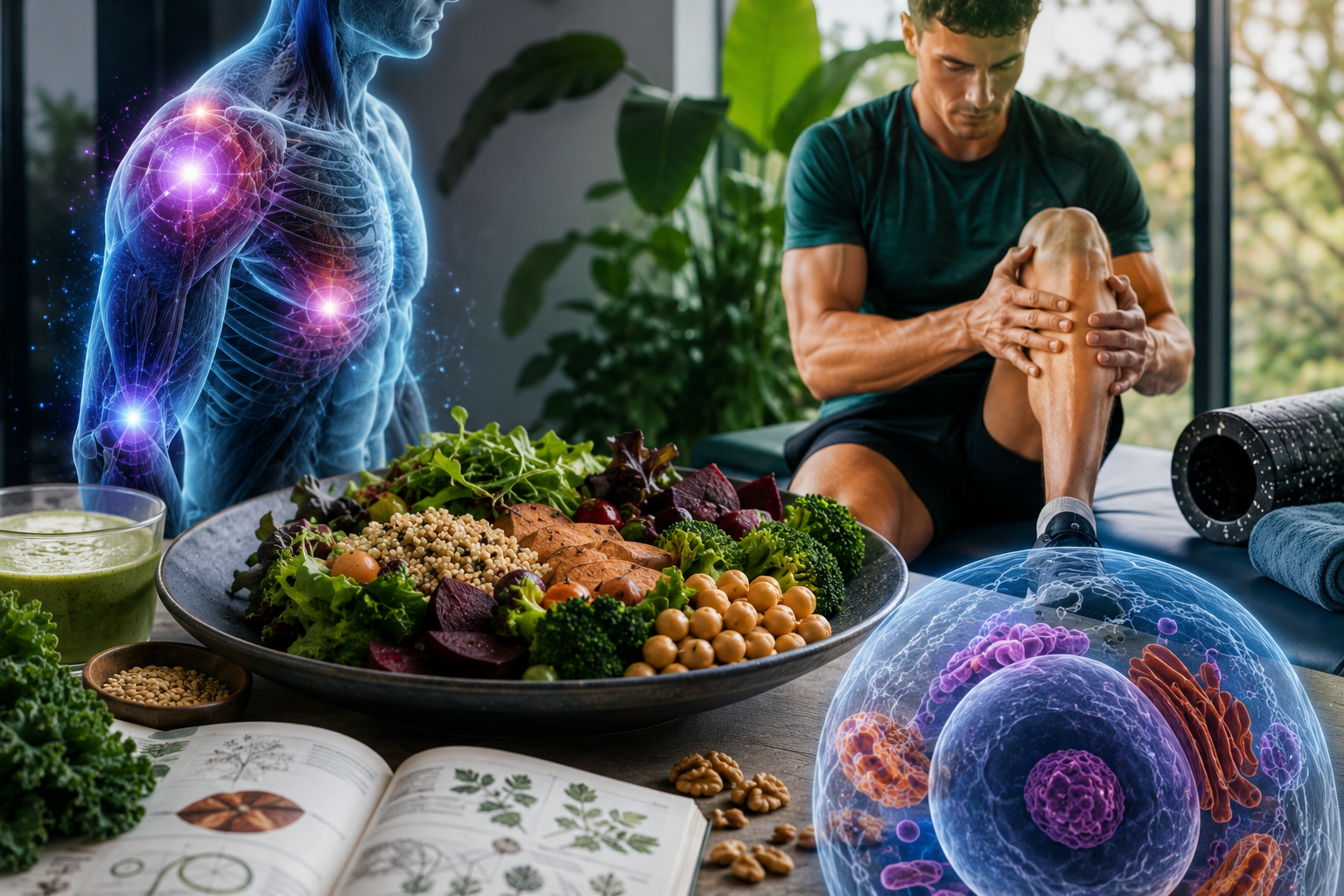
For any high-performance athlete, an injury is the ultimate psychological and physiological test. When you are suddenly sidelined, your immediate instinct is to look for the fastest route back to the field, track, or weight room. While physical therapy and rest are non-negotiable, the role of nutrition during immobilization and rehabilitation is frequently underestimated. Emerging sports science reveals that plant-based diets and injury recovery speed are deeply connected through specific biochemical pathways that control inflammation and accelerate structural tissue repair.
By shifting your recovery nutrition toward a dense matrix of clean, plant-derived compounds, you transition your body from a state of chronic stress into an optimal environment for healing. Here is how to strategically construct your plate to heal faster and return stronger.
The Two Phases of Injury Recovery: Inflammation and Remodeling
Musculoskeletal injuries—whether a soft-tissue strain, ligament tear, or bone fracture—progress through distinct physiological stages. Managing these stages requires a delicate nutritional balance.
Injury Event ──> Phase 1: Acute Inflammation ──> Phase 2: Proliferation & Remodeling
                    (Requires Modulation)             (Requires High Nutrient Density)
Phase 1: Inflammation Modulation
Immediately following an injury, the body initiates an acute inflammatory response to clear damaged cells. While necessary, prolonged or excessive inflammation leads to muscle atrophy and delayed tissue regeneration. Researchers note in a 2014 study that precise micronutrient and macronutrient positioning is essential to modulate these metabolic stress responses without blunting the body’s natural healing triggers.
Phase 2: Proliferation and Remodeling
Once inflammation is controlled, the body begins laying down new collagen fibers to rebuild tendons, ligaments, and muscle tissue. This stage is incredibly energy-intensive and demands a constant supply of specific cellular building blocks.
The Anti-Inflammatory Plant Advantage
The primary accelerator of injury recovery in a plant-based protocol is the sheer density of exogenous antioxidants and systemic anti-inflammatory compounds.
Polyphenol Shielding: Whole plant foods are rich in polyphenols that neutralize the reactive oxygen species (ROS) that run rampant during joint immobilization. For instance, specific fruit extracts have been shown to drastically reduce systemic markers of muscle damage and accelerate functional recovery.
Vascular Dynamics: Healing tissue requires oxygen and nutrients. A diet rich in natural vasodilators optimizes peripheral blood flow, ensuring that your systemic circulation can effectively deliver repair substrates directly to the injury site.
➡️ Nitric Oxide Beyond Beets: The Full-Spectrum Strategy
Key Plant-Based Nutrients for Tissue Repair
To replace the traditional model of recovery nutrition, plant-powered athletes must deliberately target several key nutrients to ensure seamless collagen synthesis and prevent muscle wasting.
1. The Plant-Based Collagen Matrix
Collagen is the primary structural protein in connective tissue. While animal products contain collagen, your body does not absorb it whole; it breaks it down into constituent amino acids. You can drive your own collagen synthesis by consuming the exact precursors:
Vitamin C: Found in abundance in citrus, bell peppers, and strawberries, Vitamin C is the essential co-factor for the hydroxylation of proline and lysine—the step that structurally stabilizes collagen.
Proline and Glycine: Readily available in soy products, seeds, and nuts.
2. Preserving Lean Mass
When a limb is immobilized, muscle protein breakdown quickly outpaces muscle protein synthesis. To counteract this, athletes must exploit the thermic and anabolic properties of high-quality plant proteins like pea and soy isolates. Maintaining a steady amino acid pool prevents the systemic down-regulation often seen during periods of forced inactivity.
➡️ The Thermic Effect of Plant Protein: Why Your Metabolism Prefers Peas Over Pasta
3. Managing Insulin Sensitivity During Downtime
When your physical activity plummets due to an injury, your baseline insulin sensitivity drops along with it. If you continue to consume processed carbs out of habit or boredom, Research shows you risk increasing systemic inflammation and unwanted fat gain—a metabolic trap.
To combat this, athletes must be meticulous with their nutrient timing, reserving denser plant starches for specific windows to protect their long-term metabolic health.
➡️ Circadian Rhythm and Glycogen: The Strategic Timing of Plant-Based Carbs
Real-World Application: The Sidelined Athlete’s Protocol
If you are currently managing an injury, transition your daily routine into this functional three-step healing protocol:
The Morning Anti-Inflammatory Elixir: Blend 30g of pea protein isolate with a cup of wild blueberries, a thumb of fresh turmeric (curcumin), a pinch of black pepper (to enhance absorption), and dark leafy greens.
The “Heavy Digestion” Lunch: Center your midday meal around lentils, chickpeas, or edamame. The combination of high fiber and clean plant protein keeps your digestive system working hard, elevating your baseline thermic effect while providing a sustained release of tissue-repairing amino acids.
The Structural Night Cap: Consume a high-vitamin-C fruit (like a kiwi or orange) alongside a handful of pumpkin seeds (rich in zinc and magnesium) one hour before bed to support nocturnal tissue remodeling and growth hormone release.
Plant-Powered Recovery Takeaway: Being sidelined is a physical restriction, not a nutritional one. By utilizing the specific tissue-repair nutrients and anti-inflammatory compounds found within a structured plant-based diet, you give your body the exact tools it needs to repair cellular damage, preserve lean mass, and accelerate your return to elite performance.
References
Brooks, G. A. (2018). The science and translation of lactate shuttle theory. Cell Metabolism, 27(4), 757–785.
da Silva, A. A., do Carmo, J. M., Li, X., Wang, Z., Mouton, A. J., & Hall, J. E. (2020). Role of hyperinsulinemia and insulin resistance in hypertension: Metabolic syndrome revisited. Canadian Journal of Cardiology, 36(5), 706–717.
Ormsbee, M. J., Bach, C. W., & Baur, D. A. (2014). Pre-exercise nutrition: The role of macronutrients, modified starches and supplements on metabolism and endurance performance. Nutrients, 6(5), 1782–1808.
Villalobos III, P. A., Sanger, H., & Division of Endocrinology, Mayo Clinic. (2022, November 25). Non-exercise activity thermogenesis in human energy homeostasis. Endotext; MDText.com, Inc. National Center for Biotechnology Information.
Willems, M. E. T. (2020). Anthocyanin-rich blackcurrant supplementation as a nutraceutical ergogenic aid for exercise performance and recovery: A narrative review. Nutrients, 12(11), 3498.