
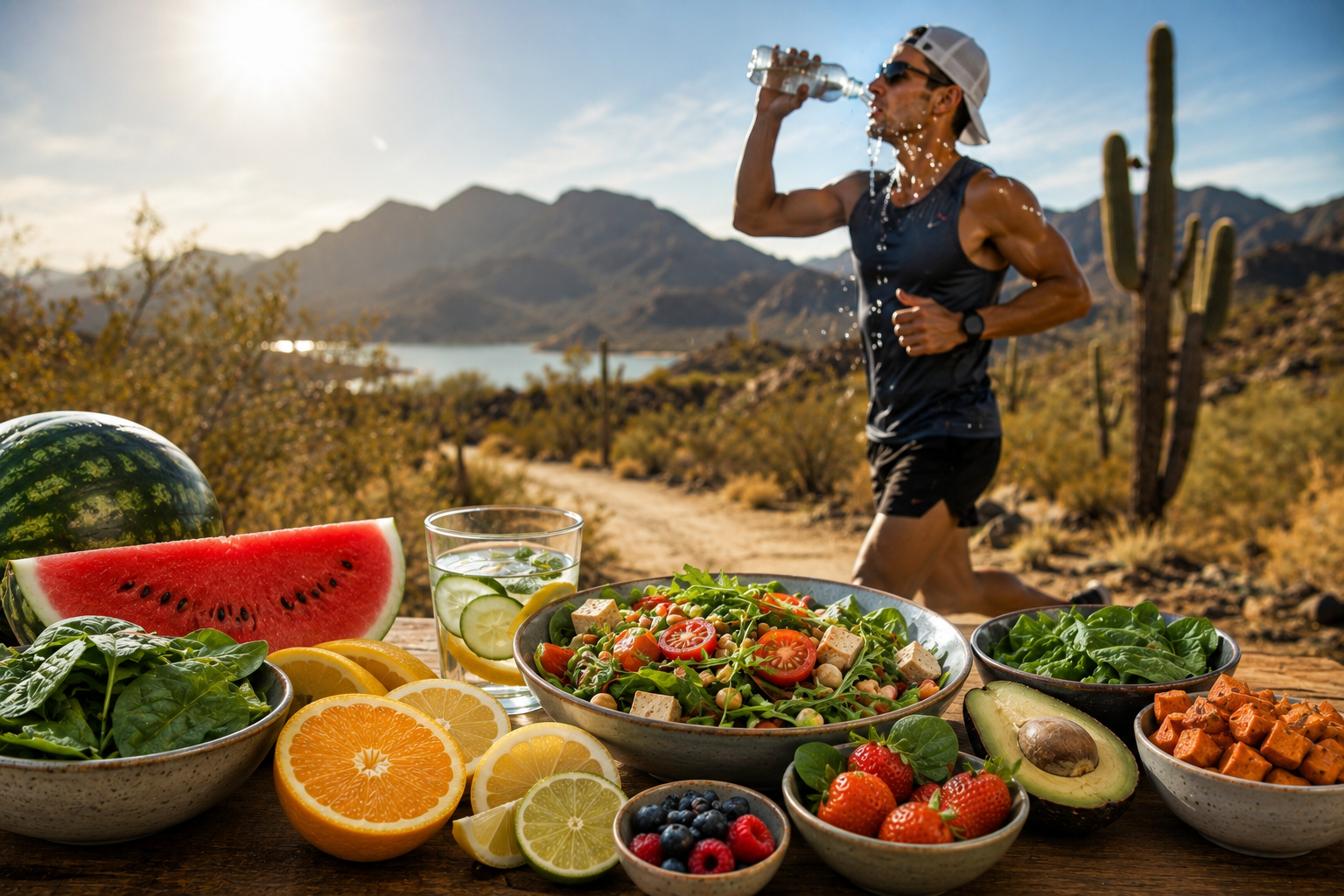
When the temperature rises, every athlete faces the same invisible wall: thermoregulatory strain. As your core temperature climbs, blood flow shifts from your working muscles to your skin to dissipate heat, driving down performance and accelerating fatigue. While most competitors rely strictly on engineered sports drinks to survive the heat, elite performers are discovering that plant-based diets and heat tolerance are intrinsically linked at the cellular level.
Adopting a strategy centered on whole, high-water, mineral-rich plant foods fundamentally alters your hydration architecture. By leveraging the natural electrolyte density and structured water found in plants, you can optimize your thermoregulation system and maintain your competitive edge in the most grueling conditions.
The Physiology of Thermoregulation and Dehydration
During high-intensity training in hot conditions, your body relies on sweating as its primary mechanism for heat dissipation. However, aggressive sweating rapidly depletes both intracellular water and crucial plasma volume. According to a 2014 study, maintaining proper pre-exercise hydration and precise macronutrient/micronutrient balance is vital for preserving cardiovascular function and sustaining endurance output under environmental stress.
When fluid loss exceeds 2% of your body mass, aerobic performance plummets. This degradation happens because blood volume decreases, forcing your heart to beat faster to deliver oxygen to muscles and transport heat to the skin. This physiological struggle is known as cardiovascular drift.
The Plant-Based Cellular Hydration Advantage
Why do plant-based diets and heat tolerance match so perfectly? The answer lies in the difference between simply chugging water and absorbing structured, nutrient-dense moisture.
1. “Living Water” and Intracellular Absorption
Whole plants—like cucumbers, watermelons, celery, and oranges—are composed of up to 90–95% water. This water isn’t just volume; it is naturally bound to organic compounds and unrefined cellular structures. This allows it to be absorbed more gradually by the gastrointestinal tract, providing a sustained release of hydration rather than triggering a rapid diuretic effect.
2. Natural Electrolyte Density
Commercial sports drinks isolate sodium and potassium, often using refined sugars to drive absorption. Whole plant foods deliver a rich, broad-spectrum matrix of essential minerals that dictate fluid balance:
Potassium: Abundant in bananas, coconut water, and avocados, potassium is the primary intracellular cation, pulling hydration directly into the muscle cells.
Magnesium and Calcium: Leafy greens (spinach, kale) supply these crucial minerals, which regulate muscle contractions and prevent cramping brought on by thermal stress.
This natural mineral balance supports healthy cardiovascular function and protects the body against hyperinsulinemia and circulatory strain, physiological safeguards extensively analyzed in metabolic health reviews.
3. Polyphenols and Microvascular Blood Flow
Plant-based diets are uniquely rich in antioxidants and vasoactive compounds. Just as we use specific plant compounds to maximize nitric oxide pathways, these same nutrients preserve endothelial function when the body is under oxidative heat stress. Improved blood vessel flexibility means your body can clear heat via the skin much more efficiently.
➡️ Nitric Oxide Beyond Beets: The Full-Spectrum Strategy
Strategy: Your Heat-Tolerance Fueling Protocol
To strategically use a plant-based protocol for superior thermoregulation, implement these three conditioning rules:
Hyper-Hydrate with Whole Fruits: In the 48 hours leading up to a hot-weather event, replace processed, dry carbohydrates with high-water starches and fruits (such as roasted squash, melons, and citrus).
The Coconut-Green Pre-Game: Ninety minutes before training in the heat, blend 500ml of raw coconut water (for potassium) with a handful of spinach (for nitrates and magnesium) and a pinch of unrefined sea salt.
Post-Heat Glycogen Recovery: When recovering from thermal strain, your insulin sensitivity follows strict biological rhythms. Ensure you pair your rehydration fluids with strategic carbohydrate timing to rapidly replenish depleted stores.
➡️ Circadian Rhythm and Glycogen: The Strategic Timing of Plant-Based Carbs
References
Brooks, G. A. (2018). The science and translation of lactate shuttle theory. Cell Metabolism, 27(4), 757–785.
da Silva, A. A., do Carmo, J. M., Li, X., Wang, Z., Mouton, A. J., & Hall, J. E. (2020). Role of hyperinsulinemia and insulin resistance in hypertension: Metabolic syndrome revisited. Canadian Journal of Cardiology, 36(5), 706–717.
Ormsbee, M. J., Bach, C. W., & Baur, D. A. (2014). Pre-exercise nutrition: The role of macronutrients, modified starches and supplements on metabolism and endurance performance. Nutrients, 6(5), 1782–1808.
Willems, M. E. T. (2020). Anthocyanin-rich blackcurrant supplementation as a nutraceutical ergogenic aid for exercise performance and recovery: A narrative review. Nutrients, 12(11), 3498.