When exploring healthier dietary habits, navigating modern food terminology can feel like learning an entirely new language. Terms like vegan, plant-based, and plant-forward are often used interchangeably, but they represent completely different philosophies regarding food and lifestyle. If you want to optimize your health, support your body composition, and improve your daily energy without committing to a strict, 100% vegan lifestyle, understanding these distinctions is essential.
Adopting a plant-forward lifestyle does not mean you have to wave goodbye to animal products forever. Instead, it offers a pragmatic, sustainable middle ground that prioritizes plant foods while leaving room for flexibility. Let’s break down each term, examine what the science says about their impact on your health, and help you find the right fit for your routine.
1. Veganism: The Ethical and Dietary Lifestyle
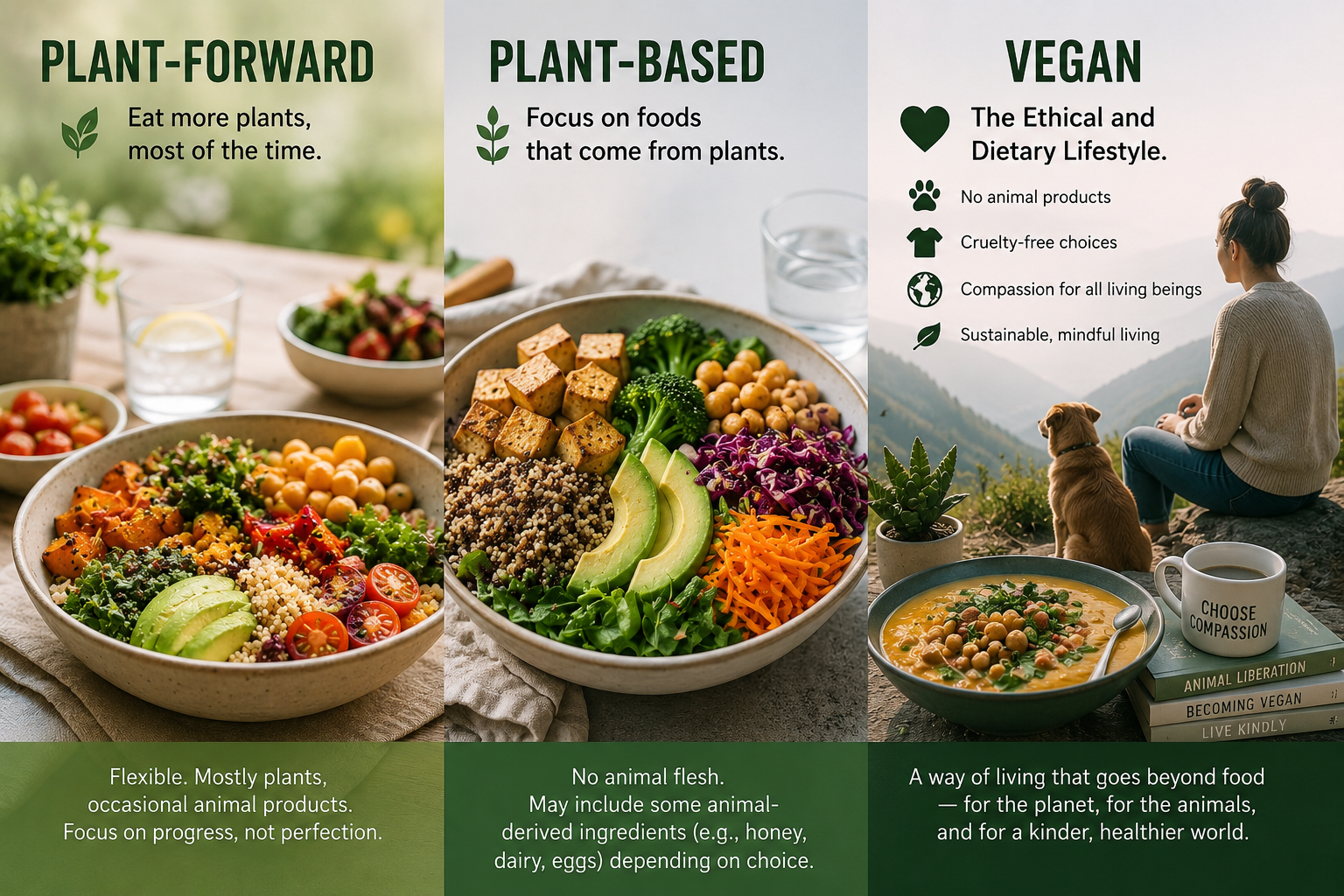
Veganism is often misunderstood as simply a way of eating, but it is fundamentally an ethical worldview and lifestyle commitment.
The Definition: A vegan lifestyle seeks to exclude—as far as is possible and practicable—all forms of exploitation of, and cruelty to, animals for food, clothing, or any other purpose.
The Plate: On the plate, a vegan diet eliminates all animal-derived products entirely. This means zero meat, poultry, fish, dairy, eggs, or honey.
The Challenge: While entirely viable for health, strict veganism requires meticulous planning to avoid nutrient deficiencies (such as Vitamin B12, iron, and zinc) and can feel socially or practically restrictive for individuals with busy, active lives.
2. Plant-Based: The Nutritional Focus
The term “plant-based” has exploded in popularity, often serving as a broader umbrella for eating patterns centered around plant matter.
The Definition: A plant-based diet focuses primarily on foods derived from plants—including vegetables, fruits, whole grains, legumes, seeds, and nuts—while minimizing or completely omitting ultra-processed items and refined sugars.
The Plate: Unlike veganism, “plant-based” does not automatically mean zero animal products. Some people use the term to describe a strict vegan diet, while others use it to describe a diet where 80% to 90% of calories come from plants, with occasional small portions of lean meat, fish, or dairy.
The Benefit: It emphasizes the addition of nutrient-dense whole foods rather than strict moral exclusions, making it an appealing stepping stone for health-conscious individuals. (For a deeper look at why whole plant matrices outperform isolated supplements, check out our guide on.
➡️ The Food Matrix Effect: Why Whole Plants Outperform Isolated Macros on the Track and Scale
3. Plant-Forward: The Flexible “Sweet Spot”
If you find the rigidity of veganism intimidating or unsustainable, a plant-forward approach is likely your ideal destination.
The Definition: Plant-forward (often synonymous with a flexitarian or semi-vegetarian approach) is an eating pattern that makes plant foods the star of the plate while allowing modest, intentional inclusion of animal products.
The Plate: Your meals are anchored by vegetables, beans, lentils, whole grains, and healthy fats. However, high-quality animal proteins—such as grass-fed meats, wild-caught fish, eggs, or Greek yogurt—are treated as accent points rather than the main event.
Why It Works Best: A plant-forward approach eliminates the “all-or-nothing” trap that causes many traditional diets to fail. By focusing on crowding out junk food with nutrient-packed plants, you reap the cardiovascular and metabolic rewards without giving up the foods you love. If you want help structuring this balance into your routine, our custom Nutrition Database and Meal Planner allows you to effortlessly design plant-forward weekly menus.
What the Science Says: Why Plant-Forward Wins on Adherence
Clinical research consistently highlights the profound metabolic and cardiovascular benefits of increasing plant intake. Landmark studies published in journals like Nutrients demonstrate that shifting toward a plant-rich dietary framework significantly improves insulin sensitivity, lowers markers of systemic inflammation, and reduces visceral fat accumulation.
However, behavioral psychology reveals a major hurdle: rigid dietary rules frequently backfire. Research exploring dietary restraint indicates that absolute, binary restrictions (such as never eating animal products again) can trigger feelings of deprivation, anxiety, and eventual diet abandonment.
By contrast, a plant-forward framework utilizes a flexible mindset. It encourages you to lean heavily into whole plant foods for 80% to 90% of your weekly nutrition, creating a sustainable environment for long-term health.
| Feature | Vegan | Plant-Based | Plant-Forward (Flexitarian) |
| Core Philosophy | Ethical avoidance of animal exploitation | Nutritional focus on plant foods | Plant-centric eating with flexible animal inclusion |
| Animal Products | Strictly prohibited (Zero) | Often zero, or minimal/incidental | Included intentionally in moderate portions |
| Social Flexibility | Low (requires navigating menus carefully) | Moderate | High (easily adapts to dining out or travel) |
| Sustainability | High moral intent, can be socially taxing | High nutritional focus | High long-term psychological and social adherence |
—–
How to Build a Plant-Forward Plate Today
Transitioning to a plant-forward lifestyle doesn’t require a culinary degree or a complete kitchen overhaul. You can start building healthier habits using these simple steps:
Shift the Proportions: Make vegetables, greens, and whole grains fill up at least two-thirds of your plate. Let your protein source occupy the remaining third.
Experiment with Plant Proteins: Swap out meat two or three nights a week for nutrient-dense plant proteins like lentils, chickpeas, black beans, or organic tofu.
Upgrade Your Snacks: Instead of processed snacks, keep fresh fruit, nuts, or cut veggies with hummus ready in your fridge (learn more quick prep tricks in our guide on.
Focus on Addition, Not Restriction: Instead of stressing over what you cannot eat, focus on how many vibrant, colorful plant varieties you can add to your meals each day.
➡️ 15 Ways to Burn Body Fat Effectively: A Science-Backed Guide
References
Kahleova, H., Tura, A., Hill, M., Holubkov, R., & Barnard, N. D. (2018). A plant-based dietary intervention improves beta-cell function and insulin resistance in overweight adults: A 16-week randomized clinical trial. Nutrients, 10(2), Article 189.
Linardon, J., & Mitchell, S. (2017). Rigid dietary control, flexible dietary control, and intuitive eating: Relations with eating disorders, depressive symptoms, and body image. Eating Behaviors, 26, 171–177.