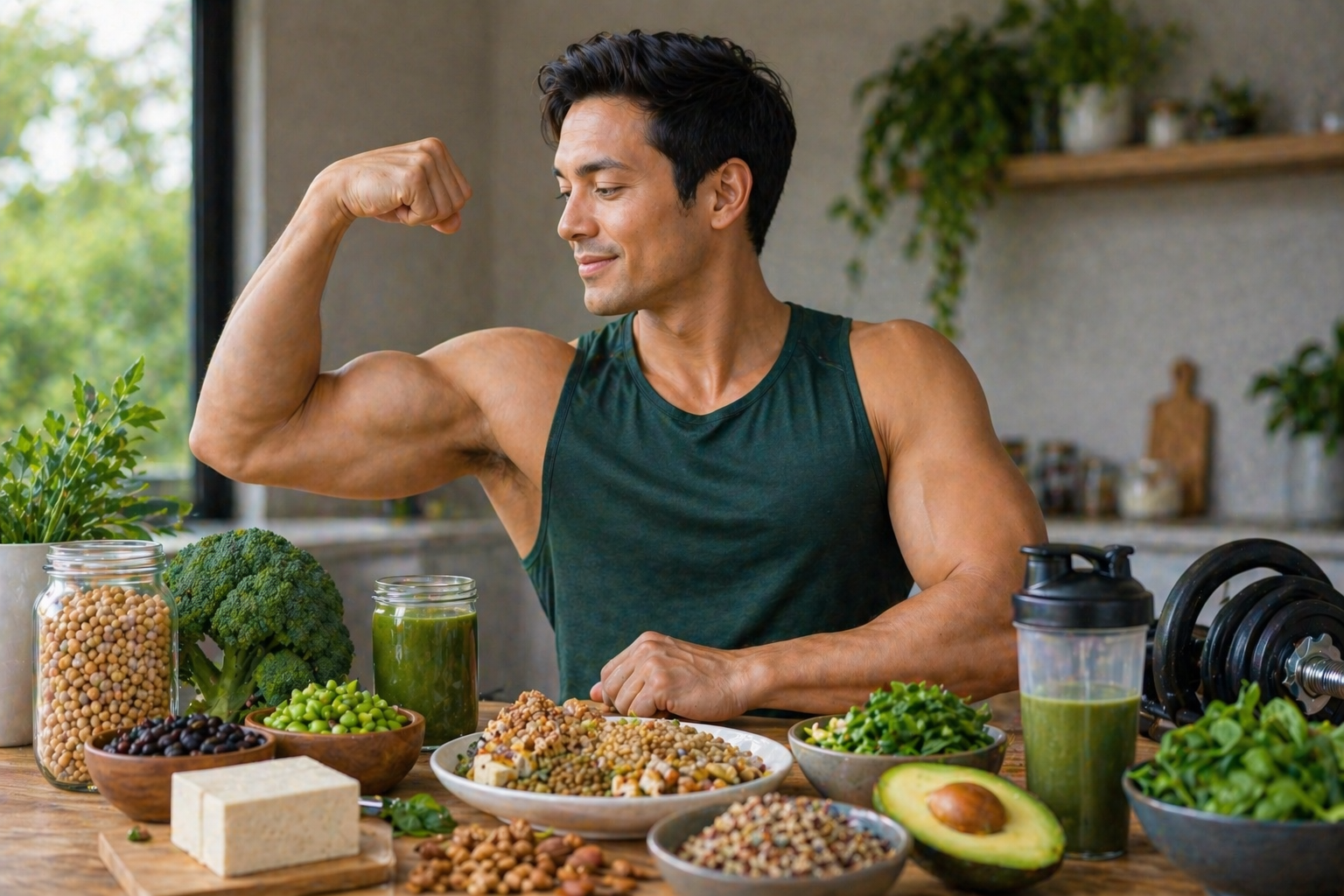
In the pursuit of Plant-Powered Performance, the scale only tells half the story. The real secret to a lean, powerful physique lies in your P-ratio optimization. The P-ratio (partitioning ratio) determines whether the calories you consume are stored as functional muscle tissue or dormant adipose tissue (fat).
For the plant-based athlete, mastering this biological switch isn’t just about eating “clean”; it’s about manipulating your insulin sensitivity to ensure that every lentil, grain, and potato is driven directly into the muscle cell for growth and repair rather than being diverted to fat cells for storage.
The Science of Nutrient Partitioning
Your P-ratio is heavily influenced by your metabolic health, specifically how your body handles insulin. Insulin is the “key” that opens the doors to your cells. In a state of high insulin sensitivity, your muscle cells are the first to respond, soaking up glucose and amino acids. However, when sensitivity drops, insulin levels remain chronically elevated, signaling the body to store energy as fat.
Recent 2025 research has highlighted that high-fiber, plant-based diets naturally support a favorable P-ratio by slowing glucose absorption and improving gut microbiome diversity, which directly modulates systemic insulin signaling.
The Plant-Based Advantage: Refuting the Carb Myth
A common misconception is that the high carbohydrate intake of a plant-based diet makes fat gain inevitable. In reality, randomized controlled trials show that low-fat, whole-food plant-based diets actually increase muscle insulin sensitivity by reducing intramyocellular lipids (fat inside the muscle cell), thereby improving your P-ratio.
3 Levers to Optimize Your P-Ratio
Prioritize a Lean Starting Point: The leaner you are, the better your partitioning. Excess body fat promotes inflammation that blunts the anabolic response in muscle tissue.
Strategic Glycogen Depletion: High-intensity training creates a “vacuum” in the muscle. This upregulates GLUT4 transporters, which pull glucose into the muscle for growth.
Phytochemical Insulin Mimimetics: Certain plant compounds—like berberine (found in barberry) or cinnamon—can improve the efficiency of insulin receptors, making your P-ratio optimization efforts significantly more effective.
➡️ Insulin Sensitivity for Athletes: Why “Healthy” People Still Develop Metabolic Dysfunction
Conclusion: Fueling for the “Double Win”
When you optimize your partitioning, you aren’t just building a better physique; you are operating with higher metabolic efficiency. This aligns your personal performance with the broader mission of being a carbon-efficient athlete.
References
Azhdari, M., & Talepour Ardakani, H. (2025). Nutrigenomics and food safety in chronic disease prevention: From bioactive nutrients to contaminants. Iranian Journal of Diabetes and Obesity, 17(4), 283–290.
Kahleova, H., Holubkov, R., & Barnard, N. D. (2024). The effects of a low-fat plant-based diet on muscle insulin sensitivity and body composition: A randomized controlled trial. Journal of the American College of Nutrition, 43(6), 512–524.
Mo, Q., Wu, J., Lu, Y., & Zhang, X. (2024). Plant-based diets and total and cause-specific mortality: A meta-analysis of prospective studies. Frontiers in Nutrition, 11.
Singar, S., Nagpal, R., Arjmandi, B. H., & Akhavan, N. S. (2024). Personalized nutrition: Tailoring dietary recommendations through genetic insights. Nutrients, 16(16), 2673.