
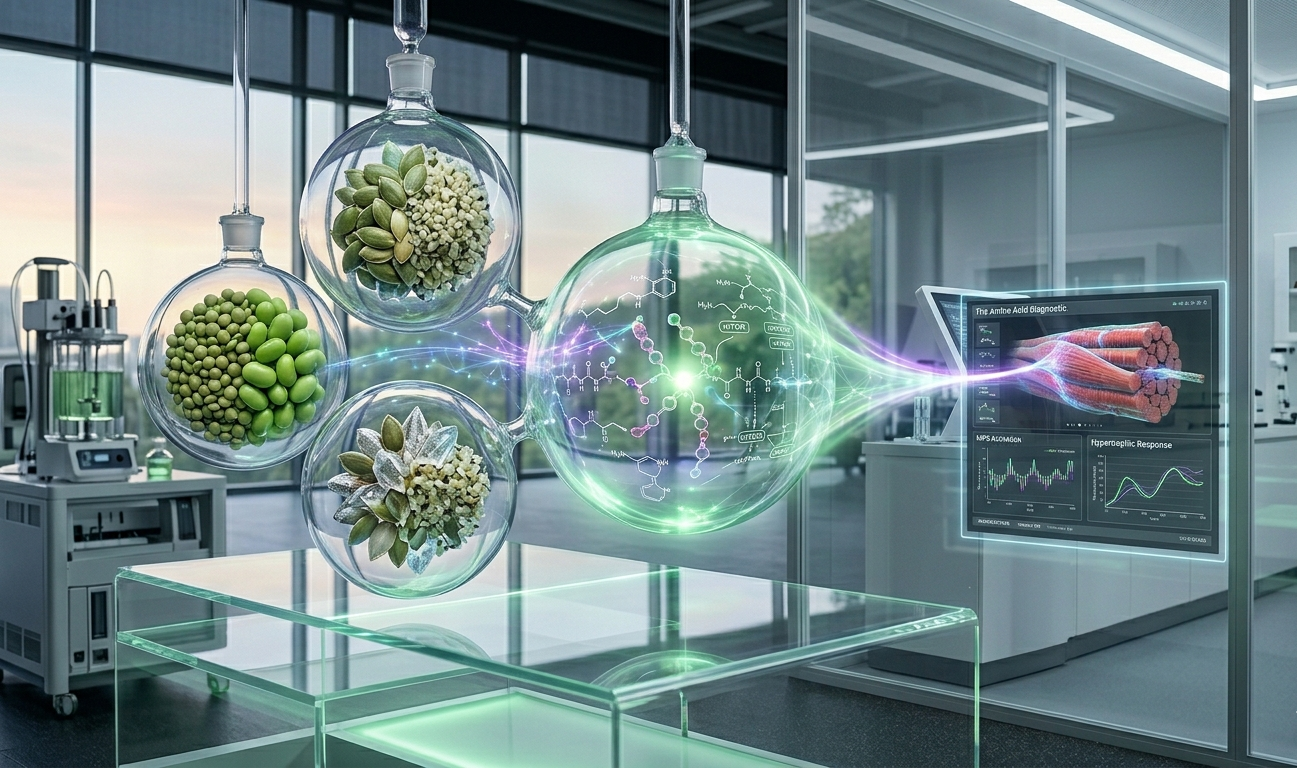
In the pursuit of Plant-Powered Performance, the “Anabolic Window” remains one of the most debated topics in sports nutrition. While the total daily protein intake is paramount, the timing and quality of that protein—specifically the amino acid spike—can be the difference between stagnating and seeing true hypertrophy. For the plant-based athlete, the challenge is clear: how do we mimic the leucine-heavy profile of whey protein using only whole plants?
The Leucine Threshold: The Key to the Anabolic Window
The primary driver of muscle growth is the branched-chain amino acid (BCAA) Leucine. Leucine acts as a metabolic “light switch” for a pathway called mTOR, which signals the body to start building muscle tissue. To maximize this response, research suggests a “leucine threshold” of approximately 2.5 to 3.0 grams per meal.
However, we must address a common hurdle: plant-based protein isolates often have lower essential amino acid contents—specifically leucine—compared to animal-based proteins. This is why a strategic amino acid spike through careful whole-food pairing is non-negotiable for the elite vegan athlete.
Synergistic Pairing: Legumes meet Seeds
To optimize the amino acid spike, we must address the “limiting amino acids” in plant groups. Legumes are high in lysine but lower in methionine; seeds are the inverse. While some question if plant proteins are sufficient, Research shows that as long as the leucine threshold is reached and the protein is digestible, the origin of the amino acids (plant vs. animal) is less relevant to the final hypertrophic outcome.
The Power Pairings:
Soy & Pumpkin Seeds: Creating a profile that rivals traditional animal sources.
Pea Protein & Hemp Hearts: Combining high BCAA counts with sulfur-containing aminos for recovery.
➡️ The Cortisol-Performance Connection: How Adaptogens Support Plant-Powered Resilience
Timing the Amino Acid Spike for Hypertrophy
Consuming your legume-and-seed powerhouse within 45 to 60 minutes post-resistance training ensures that blood leucine levels peak while muscles are most sensitive to nutrient uptake.
➡️ Beta-Alanine and Carnosine: The Plant-Based Performance Edge
References
Gorissen, S. H. M., Crombag, J. J. R., Senden, J. M. G., Watad, W. A. H., Bierau, J., Verdijk, L. B., & van Loon, L. J. C. (2018). Protein content and amino acid composition of commercially available plant-based protein isolates. Amino Acids, 50(12), 1685–1695.
Jäger, R., Kerksick, C. M., Campbell, B. I., Cribb, P. J., Wells, S. D., Skwiat, T. M., … & Antonio, J. (2017). International Society of Sports Nutrition Position Stand: Protein and exercise. Journal of the International Society of Sports Nutrition, 14(1), 20.
Kerksick, C. M., Wilborn, C. D., Roberts, M. D., Smith-Ryan, A., Kleiner, S. M., Jäger, R., … & Antonio, J. (2018). ISSN exercise & sports nutrition review update: Research & recommendations. Journal of the International Society of Sports Nutrition, 15(1), 38.
Phillips, S. M. (2017). Current concepts and unresolved questions in dietary protein requirements and supplements in adults. Frontiers in Nutrition, 4, 13.