For endurance athletes striving to break performance plateaus without increasing training volume, thermoregulatory conditioning offers one of the most potent legal ergogenic aids in exercise physiology. Implementing structured heat acclimation protocols over a 10-to-14-day window triggers physiological adaptations—chief among them hypervolemia (plasma volume expansion)—that enhance submaximal cardiovascular efficiency and thermal tolerance.
For athletes consuming a plant-based diet, pairing these heat stress protocols with targeted fluid and electrolyte strategies creates a powerful synergy for endurance performance.
                    [ INTENTIONAL HEAT STRESS APPLIED ]
                                     │
      ┌──────────────────────────────┼──────────────────────────────┐
      ▼                              ▼                              ▼
┌───────────────────────────┐  ┌───────────────────────────┐  ┌───────────────────────────┐
│  PLASMA VOLUME EXPANSION  │  │ THERMOREGULATORY SHIFT    │  │ CARDIOVASCULAR OPTIMIZE   │
│  Aldosterone & Vasopressin│  │ Lower Core Temp Threshold │  │ Increased Stroke Volume,  │
│  retains Na+ & Water      │  │ Earlier & Sweat Rate ↑   │  │ Reduced Heart Rate        │
└───────────────────────────┘  └───────────────────────────┘  └───────────────────────────┘
The Physiology of Heat Acclimation & Hypervolemia
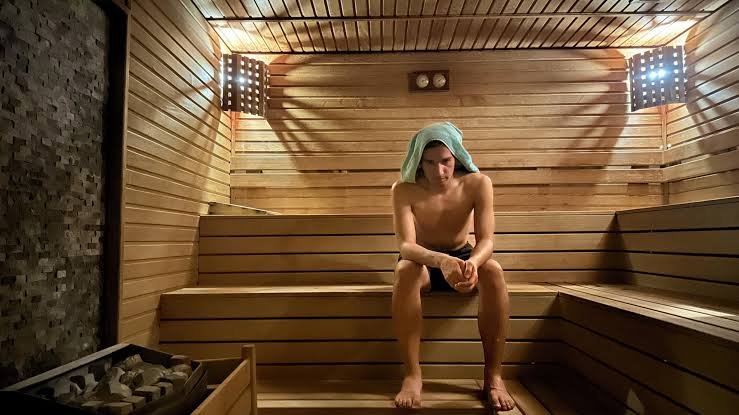
When exposed to environmental heat stress—either actively during training or passively via post-exercise sauna immersion—the body faces competing demands: delivering oxygenated blood to working skeletal muscle while simultaneously shunting blood to the cutaneous vasculature for evaporative cooling.
To resolve this conflict, consistent exposure to core body temperatures elevated above 38.5 degrees C (101.3 degrees F) triggers systemic hormonal and fluid adjustments:
Renin-Angiotensin-Aldosterone System (RAAS) Activation: Thermal stress stimulates renal secretion of aldosterone and vasopressin (anti-diuretic hormone), signaling the kidneys to reabsorb sodium (Na+) and water.
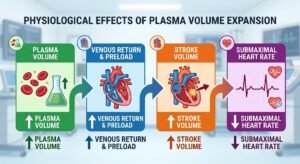
Plasma Volume Expansion: Within 3 to 6 days of protocol onset, intravascular plasma volume increases by 8% to 15%.
Cardiovascular De-Straining: Higher plasma volume increases end-diastolic cardiac filling (preload), boosting stroke volume and lowering submaximal heart rate at a given power output.
14-Day Heat Acclimation Protocol Options
Athletes can implement heat stress using two main methods: Active Heat Acclimation (AHA) or Passive Heat Acclimation (PHA). For most competitive and recreational athletes, post-exercise sauna sessions (PHA) offer maximum adaptation with minimal disruption to key training sessions.
Supporting “Plant-Powered” Endurance & Hydration Dynamics
A plant-based diet provides distinct biochemical advantages during heat adaptation, provided electrolyte dynamics are properly managed:
[ PLANT-BASED DIET NITRATES / ANTIOXIDANTS ] ──► [ Imparts Vasodilation & Endothelial Support ]
                                                                   │
                                                                   ▼
[ HIGH POTASSIUM / SODIUM BALANCED FLUIDS  ] ──► [ Supports Plasma Expansion & Osmolality ]
1. High Potassium-to-Sodium Baseline
Whole-food plant-based diets are naturally rich in potassium (K+), nitrate-dense vegetables, and anti-inflammatory phytonutrients that support vascular endothelial function. However, because aldosterone retention requires sufficient circulating sodium to expand plasma volume, plant-based athletes during a heat block must intentionally increase sodium consumption (2,000-3,000 mg/day above baseline) through sea salt or electrolyte solutions.
2. Nitrates for Microvascular Perfusion
Dietary nitrates from beetroot, arugula, and spinach elevate plasma nitric oxide (NO) levels, enhancing muscle blood flow and thermoregulatory skin blood flow during exercise heat stress.
➡️ Is a Plant-Based Diet Right for You?
Comparison of Heat Acclimation Methods
| Parameter | Post-Exercise Sauna (Passive) | Hot Water Immersion (40∘C) | Active Heat Training (Over-dressed) |
| Primary Mechanism | High environmental air temperature | Hydrostatic pressure + conductive heat | Elevated metabolic heat output |
| Typical Session Duration | 20–30 minutes | 30–40 minutes | 40–60 minutes |
| Impact on Core Training Quality | Low (done after workout) | Low (done after workout) | High (reduces pace/power) |
| Plasma Expansion Magnitude | High (+8% to +12%) | High (+9% to +13%) | Moderate to High (+7% to +10%) |
| Ease of Protocol Adherence | High (accessible at gyms) | Moderate (requires deep tub setup) | High (requires extra clothing) |
—–
Core Safety & Execution Guidelines
To maximize adaptation while minimizing risk:
Hydrate Post-Sauna: Rehydrate with a sodium-containing electrolyte beverage equivalent to 150% of lost body mass over the 2 to 3 hours following heat exposure.
Listen to Thermal Distressing Signals: Dizziness, headache, nausea, or chills during heat stress are immediate exit indicators.
Periodization Integration: Avoid introducing initial heat acclimation during peak competition weeks or heavy recovery taper windows. Build heat blocks during mid-phase aerobic development.
➡️ Beyond Motivation: Identity-Based Habits for Long-Term Fitness
References
Lynch, H., Johnston, C., & Wharton, C. (2018). Plant-based diets: Considerations for environmental impact, protein quality, and exercise performance. Nutrients, 10(11), Article 1695.
Périard, J. D., Racinais, S., & Sawka, M. N. (2015). Adaptations and mechanisms of human heat acclimation: Applications for competitive athletes and general populations. Scandinavian Journal of Medicine & Science in Sports, 25(S1), 20–38.
Sawka, M. N., Leon, L. R., Montain, S. J., & Sonna, L. A. (2011). Integrated physiological mechanisms of exercise-performance adaptation to hot climates. Journal of Applied Physiology, 111(6), 1543–1551.
Scoon, G. S. M., Hopkins, W. G., Mayhew, S., & Cotter, J. D. (2007). Effect of post-exercise sauna bathing on the endurance performance of competitive male distance runners. Journal of Science and Medicine in Sport, 10(4), 259–262.
Tyler, C. J., Reeve, T., Siebold, G. G., & Ely, B. R. (2016). The effects of heat adaptation on physiology, perception and exercise performance in the heat: A meta-analysis. Sports Medicine, 46(11), 1699–1724.