
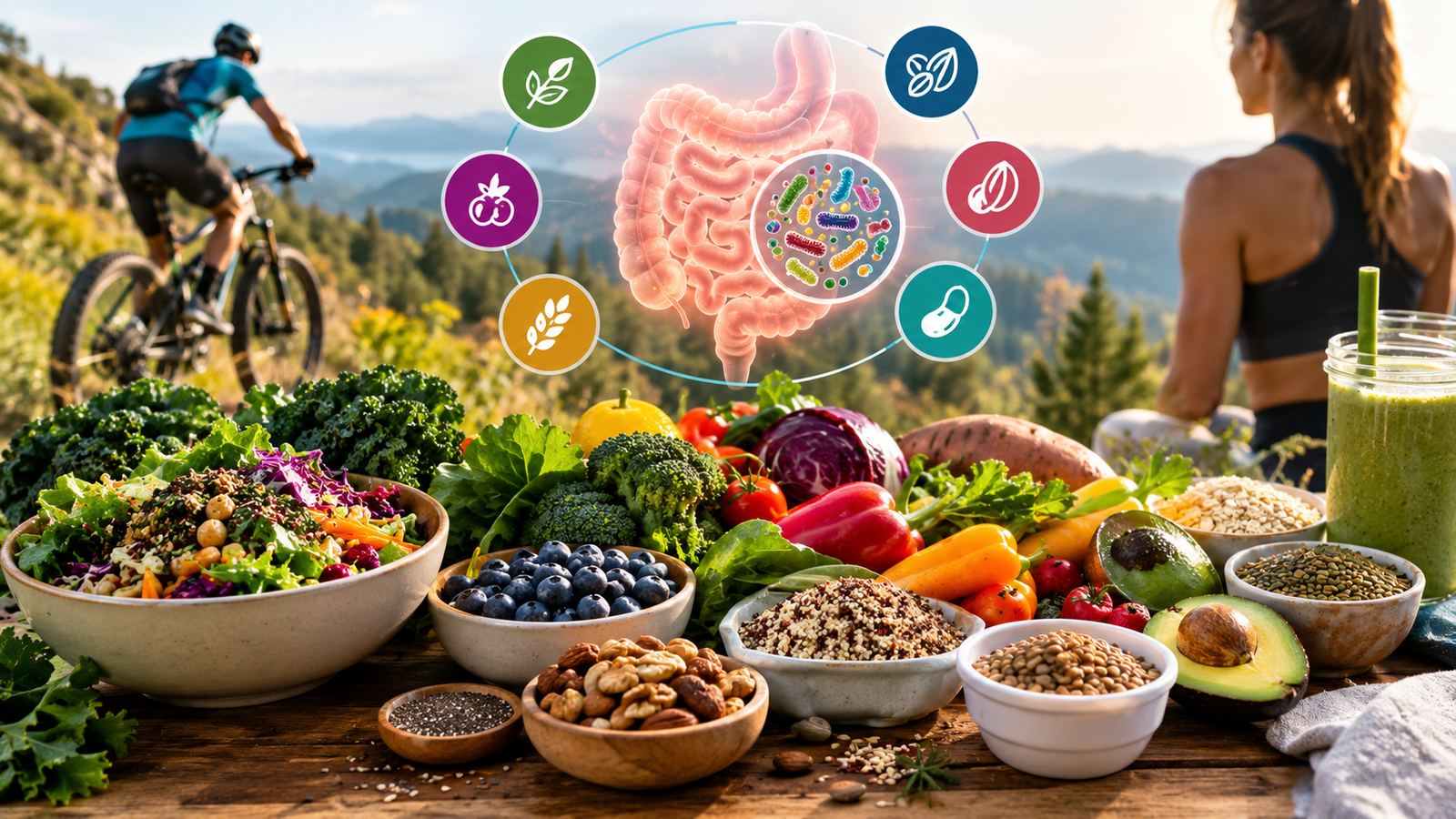
What If the Variety of Plants You Eat Matters as Much as the Amount?
Most nutrition advice focuses on how much you eat.
How much protein?
How much fiber?
How many calories?
How many carbohydrates?
But there is another question worth asking:
How many different plants do you eat?
That question has become increasingly interesting in microbiome research. One of the most widely discussed findings came from the American Gut Project, which reported that people consuming more than 30 different types of plants per week had greater gut microbial diversity than those consuming 10 or fewer types.
That finding helped popularize the idea of eating 30+ plants per week.
But there is an important distinction:
Thirty plants is not a proven biological requirement.
It is better understood as a practical behavioral target—a way to encourage dietary variety and exposure to different fibers, polyphenols, resistant starches, and other plant compounds.
And that is where the idea of a Plant Diversity Score (PDS) becomes useful.
What Is a Plant Diversity Score?
A Plant Diversity Score is a simple way to track the number of different plant foods you consume during a week.
For example:
- Oats = 1
- Blueberries = 1
- Lentils = 1
- Broccoli = 1
- Walnuts = 1
- Chia seeds = 1
- Spinach = 1
- Garlic = 1
Eight different plants = a Plant Diversity Score of 8.
The goal isn’t to obsess over the number.
Instead, the score provides a simple behavioral question:
How many different plants can I include this week?
This is particularly useful because plant-based diets can be extremely diverse—but they can also become surprisingly repetitive.
Someone might eat a technically healthy diet consisting of oats, rice, tofu, spinach, bananas, and the same few vegetables every week.
That’s nutritious.
But increasing variety may provide a broader range of substrates for the gut microbiome.
Importantly, research has not established one universally accepted definition or measurement method for plant-food diversity. A 2025 systematic scoping review identified 43 studies and found substantial variation in how plant diversity was defined and measured, with no consensus on an optimal diversity target.
So think of PDS as a coaching framework, not a medical score.
➡️ Protein Anxiety Is the New Diet Culture — Here’s What Actually Matters
The 30-Plant Finding: What Did the Research Actually Show?
The “30 plants per week” concept largely traces back to the American Gut Project.
Researchers analyzed microbiome data from thousands of participants and examined the relationship between self-reported plant consumption and microbial characteristics.
Participants reporting consumption of more than 30 different plant types per week had greater microbial diversity than participants reporting 10 or fewer types. The higher-diversity group was also associated with microbial features involving short-chain fatty acid (SCFA) production.
That’s an interesting finding.
But there is a major limitation:
The study was observational.
It showed an association—not that eating exactly 30 plants caused a more diverse microbiome.
There are also many factors that influence the microbiome, including overall diet, exercise, medications, age, lifestyle, and other environmental factors.
The more recent scoping review reinforces this point. A 2025 research study found that most research examining plant-food diversity and health outcomes was observational and that there is still limited evidence establishing specific diversity thresholds or causal health effects.
So should you eat 30 plants per week?
Yes—as a practical target, not as a biological requirement.
That distinction matters.
Why Plant Diversity Could Matter to the Gut
Plants contain far more than vitamins and minerals.
They provide complex carbohydrates, fermentable fibers, resistant starches, polyphenols, and other bioactive compounds that interact with the microorganisms living in the gastrointestinal tract.
Different plants provide different combinations of these compounds.
That means increasing plant variety potentially increases the variety of substrates available to the microbiome.
The microbiome, in turn, produces metabolites—including SCFAs such as acetate, propionate, and butyrate—that can interact with the host and influence gastrointestinal, metabolic, and immune processes.
This is one reason dietary diversity may be more interesting than simply maximizing one nutrient.
You aren’t just feeding yourself.
You’re also influencing the ecosystem living inside you.
The Gut–Muscle Connection
This becomes particularly interesting for athletes.
The gut microbiome is increasingly being investigated as part of the broader physiological environment involved in exercise, recovery, metabolism, immune function, and potentially performance.
Research comparing professional athletes with more sedentary individuals has found differences in gut microbiome composition and metabolic activity, including differences in microbial diversity and SCFA-related measures.
But here’s an important chicken-and-egg problem:
Does exercise improve the microbiome, or does a healthier microbiome improve exercise capacity?
Probably both.
For example, researchers in 2016 found that cardiorespiratory fitness was associated with intestinal microbial diversity and with microbial functions related to butyrate production. In their analysis, VO₂peak explained a meaningful portion of variation in microbial richness.
But again, this was an association.
A fitter person may also eat differently, sleep differently, have different body composition, and engage in different lifestyle behaviors.
Therefore:
A diverse microbiome is not automatically the cause of superior fitness.
It may instead be one component of a much larger interaction between diet, exercise, metabolism, and lifestyle.
What About the Gut–Muscle Axis?
The concept becomes even more intriguing when we consider muscle.
Animal research provides mechanistic evidence that the gut microbiota can influence skeletal muscle mass and function. In mice, germ-free animals showed differences in muscle mass, anabolic signaling, mitochondrial-related gene expression, and metabolic profiles compared with animals possessing a normal microbiota.
But this is animal evidence, not proof that increasing plant diversity will increase human muscle mass or strength.
That distinction is critical.
The gut–muscle axis is scientifically interesting.
It is not yet a reason to promise that eating 30 different plants will make you stronger.
➡️ The Gut–Muscle Axis: How Microbiome Health Influences Strength and Recovery
Plant Diversity and Athletic Performance
This is where we need to resist the temptation to overstate the evidence.
There is growing evidence that plant-based dietary patterns can support athletic performance.
A systematic review and meta-analysis found a moderate positive effect of plant-based diets on aerobic performance, with no significant negative effect on strength or power performance. However, the authors also concluded that overall athletic performance was not meaningfully changed when aerobic and strength/power outcomes were considered together.
A separate systematic review similarly concluded that current evidence does not demonstrate that plant-based diets compromise athletic performance, while also emphasizing limitations in the existing literature.
But neither review establishes that plant diversity itself improves VO₂max, FTP, race performance, or strength.
That’s an important distinction.
➡️ Zone 2 Training Is Not Easy Cardio: A Physiological Breakdown
The evidence currently supports this:
Plant-based diets can support athletic performance.
The evidence does not yet establish this:
Eating 30+ different plants directly increases athletic performance.
The second statement remains a hypothesis worth investigating.
So Where Does Plant Diversity Fit Into Performance Nutrition?
Think of plant diversity as part of the foundation, not the performance variable itself.
Your performance still depends heavily on:
- Total energy availability
- Carbohydrate availability
- Adequate protein
- Essential fats
- Micronutrient sufficiency
- Hydration
- Electrolytes
- Training quality
- Recovery
- Sleep
- Appropriate body composition
Plant diversity potentially complements these fundamentals.
It shouldn’t replace them.
For an endurance athlete, the goal isn’t:
“I ate 32 plants, therefore my performance nutrition is excellent.”
The goal is:
“I have a nutritionally adequate diet, and I’m also creating substantial dietary variety.”
That’s a much more defensible strategy.
A Practical Plant Diversity Score
Here’s a simple way to implement the concept.
Step 1: Count unique plants
Count each distinct plant food you eat during the week.
For example:
Fruits
- Blueberries
- Strawberries
- Banana
- Apple
Vegetables
- Spinach
- Broccoli
- Carrots
- Bell pepper
- Tomatoes
Legumes
- Lentils
- Chickpeas
- Black beans
Whole grains
- Oats
- Quinoa
- Brown rice
Nuts and seeds
- Almonds
- Walnuts
- Chia
- Flax
Herbs and spices
- Garlic
- Turmeric
- Ginger
- Cinnamon
That’s already more than 20 unique plants.
And you don’t need exotic foods.
What Counts?
Keep it simple.
A whole food counts as one plant.
For example:
- Black beans = 1
- Pinto beans = 1
- Chickpeas = 1
They’re all legumes, but they’re different plants.
Similarly:
- Spinach = 1
- Kale = 1
- Broccoli = 1
And:
- Blueberries = 1
- Strawberries = 1
- Raspberries = 1
Herbs and spices can also contribute to diversity.
This approach makes variety easier because you don’t have to eat enormous quantities of every food.
You’re simply trying to increase the number of different plants represented in your diet.
A Better Way to Think About “30”
Instead of treating 30 as a magic number, use ranges.
0–10 plants/week
Opportunity for improvement
Your diet may be relatively repetitive.
10–20 plants/week
Building diversity
You’re getting meaningful variety, but there’s room to expand.
20–30 plants/week
Strong diversity
You’re incorporating a substantial range of plant foods.
30+ plants/week
Excellent variety
You’ve reached the commonly discussed American Gut benchmark.
Again, these categories are coaching targets—not clinical classifications.
There is no evidence establishing that someone eating 29 plants has an inferior microbiome to someone eating 30.
The Performance Version of Plant Diversity
For athletes, I’d take the concept one step further.
Don’t simply count plants.
Track performance alongside dietary diversity.
For example, monitor:
Endurance
- VO₂max or VO₂peak
- Power at a fixed heart rate
- Heart-rate drift
- Time-to-exhaustion
- Training consistency
Cycling
- FTP
- Power-duration profile
- Average power during endurance rides
- Heart rate at a standardized power
- Perceived exertion
Recovery
- Resting heart rate
- HRV trends
- Muscle soreness
- Sleep quality
- Training readiness
Gastrointestinal function
- Bloating
- Constipation
- Diarrhea
- Abdominal discomfort
- GI tolerance during exercise
Now you have something much more useful than a number.
You have a nutrition-and-performance experiment.
Don’t Forget Fiber
One of the most obvious reasons plant diversity may matter is fiber.
Different plants contain different types and combinations of dietary fiber, and fiber fermentation contributes to the production of microbial metabolites such as SCFAs.
But more isn’t always better—particularly immediately before or during intense endurance exercise.
Large increases in fiber can produce gastrointestinal distress in some athletes.
That means plant diversity should be periodized around training.
A high-fiber, highly diverse meal may be fantastic on a recovery day.
It may not be the best choice 60 minutes before a hard interval session.
The goal isn’t simply:
Maximum fiber at all times.
It’s:
Adequate fiber and plant diversity while maintaining gastrointestinal comfort and fueling performance.
➡️ Fibremaxxing: Discover How Dietary Fiber Supports Plant-Based Athletes
Plant Diversity and the Athlete’s Gut
This may ultimately become one of the more interesting areas of sports nutrition research.
We already know that exercise and the gut microbiome interact in complex ways. Athletes appear to have distinctive microbiome characteristics compared with sedentary individuals, although diet and exercise are difficult to separate experimentally.
We also know that cardiorespiratory fitness is associated with microbial diversity and microbial functions.
And mechanistic animal research suggests that gut microorganisms can influence skeletal muscle biology.
What we don’t yet know is exactly how much plant diversity itself contributes to these relationships.
That’s the research gap.
And it’s a fascinating one.
➡️ Nutrition Garden: A Whole-Food Approach to Plant-Based Eating for Health, Performance, and Longevity
The 30-Plant Challenge
Here’s a simple experiment:
For the next four weeks, aim for 30 different plant foods per week.
Don’t radically change your diet.
Don’t chase obscure superfoods.
Instead, expand what you already eat.
Week 1
Write down every unique plant you consume.
Week 2
Add five new plants.
Week 3
Add another five.
Week 4
Try to consistently reach 30+.
At the same time, track:
- Energy
- Digestion
- Bowel regularity
- Sleep
- Recovery
- Training quality
- Exercise performance
You’re not proving that plant diversity caused an improvement.
You’re simply determining whether greater dietary variety works well for you.
The Bottom Line
The idea of eating 30 different plants per week is based on an intriguing microbiome observation—not a nutritional law.
The American Gut Project found that people consuming more than 30 plant types per week had greater gut microbial diversity than those consuming 10 or fewer.
But subsequent research shows that plant diversity is still inconsistently defined and measured, and there is not enough evidence to establish 30 as a universal threshold for health.
For athletes, the bigger idea may be more important than the number:
Don’t just eat enough plants. Eat a wide variety of them.
A diverse plant-based diet can provide a broad spectrum of fibers, resistant starches, polyphenols, micronutrients, and other bioactive compounds while supporting the nutritional foundation required for training and recovery.
And while we can’t yet say that 30 plants will increase your FTP, VO₂max, strength, or race performance, the emerging gut–exercise research makes dietary diversity a compelling area to watch.
➡️ Benefits of a Vegan Diet for Athletes and Non-Athletes
Your challenge:
Count your plants this week.
Not calories.
Not macros.
Not “superfoods.”
Just plants.
You might be surprised by the number.
And you might discover that increasing it is one of the simplest ways to make your plant-based diet more diverse—and potentially more supportive of long-term gut and metabolic health.
Plant-Powered Performance starts with what you put on the plate.
References
Barton, W., Penney, N. C., Cronin, O., Garcia-Perez, I., Molloy, M. G., Holmes, E., Shanahan, F., Cotter, P. D., & O’Sullivan, O. (2018). The microbiome of professional athletes differs from that of more sedentary subjects in composition and particularly at the functional metabolic level. Gut, 67(4), 625–633.
Creedon, A. C., Hubbard, V., Gibson, R., & Dimidi, E. (2025). Diversity of plant-based food consumption: A systematic scoping review on measurement tools and associated health outcomes. Nutrition Reviews, 83(10), 1985–2014.
Damasceno, Y. O., Leitão, C. V. F. S., de Oliveira, G. M., Andrade, F. A. B., Pereira, A. B., Viza, R. S., Correia, R. C., Campos, H. O., Drummond, L. R., Leite, L. H. R., & Coimbra, C. C. (2024). Plant-based diets benefit aerobic performance and do not compromise strength/power performance: A systematic review and meta-analysis. British Journal of Nutrition, 131(5), 829–840.
Estaki, M., Pither, J., Baumeister, P., Little, J. P., Gill, S. K., Ghosh, S., Ahmadi-Vand, Z., Marsden, K. R., & Gibson, D. L. (2016). Cardiorespiratory fitness as a predictor of intestinal microbial diversity and distinct metagenomic functions. Microbiome, 4, Article 42.
Lahiri, S., Kim, H., Garcia-Perez, I., Reza, M. M., Martin, K. A., Kundu, P., Cox, L. M., Selkrig, J., Posma, J. M., Zhang, H., Padmanabhan, P., Moret, C., Gulyás, B., Blaser, M. J., Auwerx, J., Holmes, E., Nicholson, J., Wahli, W., & Pettersson, S. (2019). The gut microbiota influences skeletal muscle mass and function in mice. Science Translational Medicine, 11(502), eaan5662.
McDonald, D., Hyde, E., Debelius, J. W., Morton, J. T., Gonzalez, A., Ackermann, G., Aksenov, A. A., Behsaz, B., Brennan, C., Chen, Y., DeRight Goldasich, L., Dorrestein, P. C., Dunn, R. R., Fahimipour, A. K., Gaffney, J., Gilbert, J. A., Gogul, G., Green, J. L., Hugenholtz, P., … Knight, R. (2018). American Gut: An open platform for citizen science microbiome research. mSystems, 3(3), e00031-18.
O’Brien, M. T., O’Sullivan, O., Claesson, M. J., & Cotter, P. D. (2022). The athlete gut microbiome and its relevance to health and performance: A review. Sports Medicine, 52(Suppl 1), 119–128.
Presti, N., Mansouri, T., Maloney, M. K., & Hostler, D. (2024). The impact plant-based diets have on athletic performance and body composition: A systematic review. Journal of the American Nutrition Association, 43(7), 636–643.