
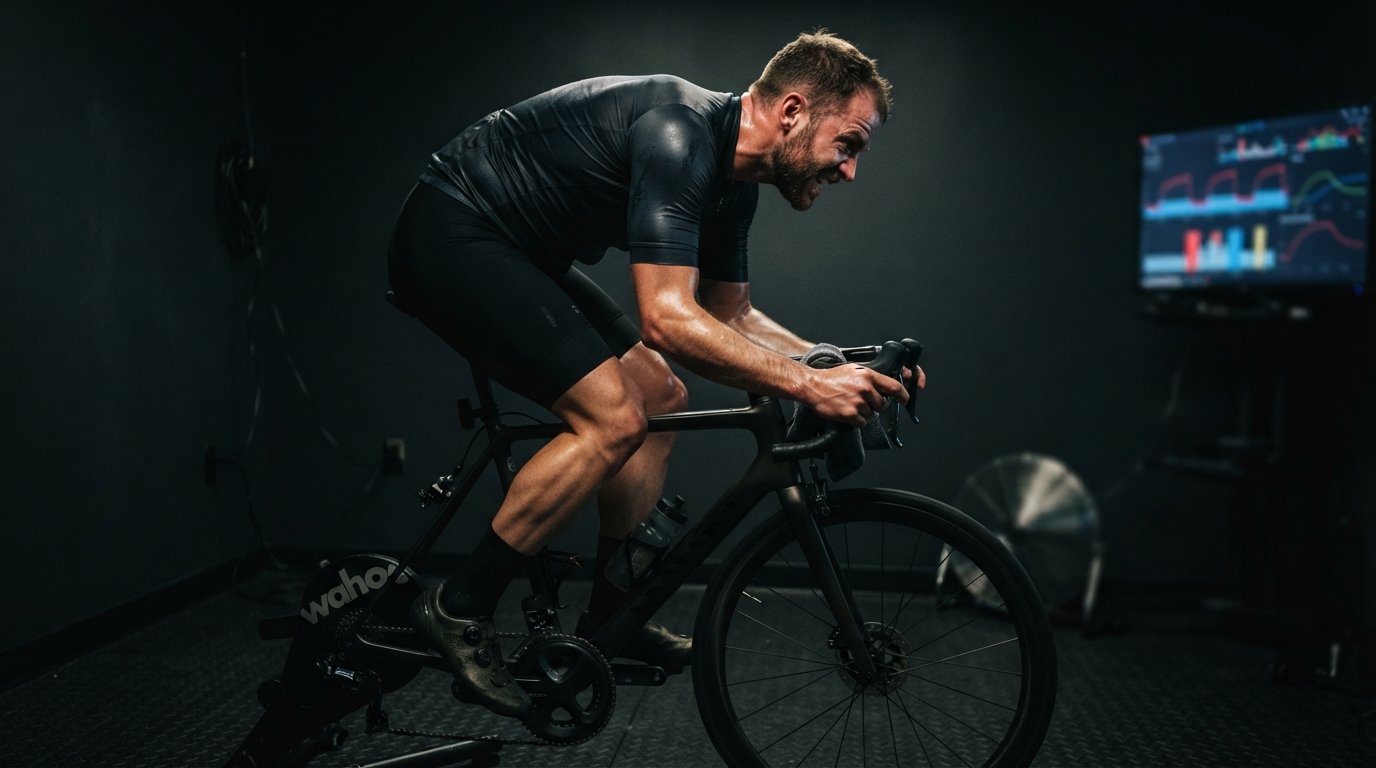
Every endurance athlete eventually encounters it: the moment when the legs feel heavy, breathing becomes more deliberate, power begins to fade, and the finish line still seems frustratingly far away.
Welcome to the pain cave.
But psychological pacing strategies can help determine whether that moment becomes a performance breakdown or an opportunity to execute a smarter race plan.
The ability of mastering the pain cave late in competition is not simply about having a high VO₂max, a powerful cardiovascular system, or strong legs. It involves a sophisticated interaction between the brain, working muscles, metabolic pathways, and the athlete’s perception of effort.
And there is an important misconception to clear up: lactate is not simply metabolic waste that accumulates until the body shuts down. It is an important energy source, a metabolic intermediary, and a signaling molecule.
Understanding how the body transports and utilizes lactate, regulates acidity, and manages perceived effort can help athletes develop a more effective approach to late-race fatigue.
Let’s examine the science behind staying composed when the effort gets uncomfortable.
1. The Psychology of the Pain Cave: Is Fatigue in Your Head?
Fatigue is both physiological and perceptual.
Your muscles experience changes in metabolite concentrations, ion balance, calcium handling, substrate availability, and contractile function. At the same time, your brain integrates information from the cardiovascular system, respiratory system, muscles, temperature regulation, and the demands of the event.
The result is a constantly changing perception of effort.
Understanding the Central Governor Theory
The central governor theory proposes that the brain subconsciously regulates exercise intensity by adjusting motor-unit recruitment and pacing to help preserve physiological stability.
In practical terms, your brain may begin reducing your willingness or ability to sustain a particular power output before you reach an absolute physiological limit.
This concept is associated with the work of exercise physiologist Timothy Noakes and the broader discussion of anticipatory pacing and physiological regulation.
However, the central governor model remains debated. A critical review by Weir et al. (2006) argued that the model does not adequately explain all observed performance limitations and that fatigue is better understood through the interaction of central and peripheral mechanisms.
The important takeaway is not that fatigue is imaginary. It is that the brain plays an active role in regulating effort, and perception can influence how much performance an athlete is willing or able to sustain.
The Psychobiological Model: Perception of Effort Matters
A complementary explanation is the psychobiological model of endurance performance.
Rather than treating fatigue as a single physiological event, this model emphasizes the relationship between perceived effort, motivation, and the decision to continue exercising.
Research reviewed psychological determinants of endurance performance and found consistent support for interventions involving self-talk, imagery, and goal setting.
A particularly interesting 2014 study found that a structured motivational self-talk intervention improved cycling time to exhaustion in recreationally active participants.
This has practical implications for athletes who struggle with late-race fatigue.
The goal is not to convince yourself that the effort is easy. It is to manage your response to an effort that is genuinely difficult.
2. Five Psychological Pacing Strategies for Late-Race Performance
Mental toughness is not simply the ability to tolerate suffering. It is the ability to make effective decisions while experiencing it.
Here are five strategies worth practicing before race day.
1. Break the Race Into Smaller Targets
Thinking about the entire remaining distance can amplify the perceived difficulty of an event.
Instead, divide the race into manageable segments.
For example, during a 90-minute mountain-bike race:
- Focus on reaching the next climb.
- Concentrate on maintaining momentum through the technical section.
- Target the next aid station or course landmark.
- Reassess effort after each segment.
This creates a series of manageable performance objectives rather than one overwhelming challenge.
2. Use Task-Oriented Self-Talk
Motivational self-talk can be useful, but specific instructions often provide a more actionable focus.
Examples:
| Less productive thought | Task-oriented replacement |
|---|---|
| I can’t hold this pace. | Relax the shoulders and maintain cadence. |
| My legs are cooked. | Smooth pedal stroke, steady breathing. |
| This climb is killing me. | Focus on the next 20 pedal strokes. |
| I need to slow down. | Check power, breathing, and race position. |
—–
The purpose is to redirect attention toward controllable actions.
3. Control Your Attentional Focus
Endurance athletes can alternate between internal and external attentional focus.
Internal focus:
- Breathing rhythm
- Pedaling efficiency
- Running mechanics
- Muscle tension
- Posture and relaxation
External focus:
- Road position
- Terrain and trail selection
- Competitors ahead
- Course landmarks
- The next section of the race
Brick et al. (2016) described how cognitive control and attentional focus contribute to pacing and self-regulation during endurance performance.
The practical lesson is to avoid becoming excessively absorbed in every uncomfortable sensation. Shift attention toward useful information and the task immediately in front of you.
4. Practice Controlled Discomfort
Athletes who only train at comfortable intensities may be less familiar with the sensations associated with sustained high-intensity work.
Structured threshold intervals, VO₂max sessions, and race-specific efforts can help athletes develop familiarity with discomfort.
The objective is not to make every workout a battle.
Instead, develop the ability to recognize different levels of fatigue, maintain technique, and execute an appropriate pacing strategy when the effort becomes demanding.
5. Avoid Spending Your Race Budget Too Early
An aggressive opening pace can feel exhilarating, particularly when surrounded by competitors.
But the physiological cost of excessive early intensity can compromise the ability to sustain power later.
A useful strategy is to establish a controlled opening effort, monitor your response, and increase intensity when the remaining race distance makes it appropriate.
The strongest finish often begins with a disciplined start.
3. Lactate Is Fuel, Not Metabolic Garbage
One of the most persistent misconceptions in exercise physiology is that lactate is simply a waste product responsible for muscle fatigue.
Modern exercise physiology has substantially revised this understanding.
Lactate is produced continuously during exercise, including aerobic exercise. It can move between muscle fibers and tissues, where it can be oxidized to produce energy or used as a precursor for glucose production.
In his influential review, Brooks (2018) explained how lactate functions as an energy source, a gluconeogenic precursor, and a signaling molecule.
This concept is known as the lactate shuttle.
How the Lactate Shuttle Works
During high-intensity exercise, glycolytic muscle fibers produce lactate at elevated rates.
Rather than remaining trapped in those cells, lactate can be transported to other tissues and utilized as fuel.
             MUSCLE GLYCOLYSIS
                     |
                     v
               LACTATE FORMED
                     |
                     v
          MONOCARBOXYLATE TRANSPORT
                     |
          +----------+----------+
          |                     |
          v                     v
    OXIDATIVE MUSCLE         BLOODSTREAM
          |                     |
          v                     v
    LACTATE OXIDATION       HEART / OTHER
          |                OXIDATIVE TISSUES
          v                     |
      ATP PRODUCTION             v
                            ENERGY USE
This is why lactate accumulation and fatigue should not be treated as interchangeable concepts.
A rise in blood lactate indicates that lactate appearance exceeds its removal from the circulation at that moment. It does not automatically mean that the muscles are failing.
4. MCT1 and MCT4: The Transporters Behind Lactate Movement
If lactate is a useful fuel, how does it move between cells?
A major part of the answer involves monocarboxylate transporters, commonly called MCTs.
Two particularly important transporters in skeletal muscle are MCT1 and MCT4.
MCT1: The Oxidative Transporter
MCT1 is highly associated with oxidative muscle fibers.
Its role includes facilitating lactate uptake into cells that can use lactate as an oxidative fuel.
This is particularly relevant to endurance athletes because oxidative muscle fibers possess substantial mitochondrial capacity.
MCT4: The Lactate Exporter
MCT4 is commonly associated with glycolytic muscle fibers.
It facilitates lactate transport out of cells experiencing high glycolytic activity.
This helps distribute lactate to other tissues and muscle fibers that can utilize it.
The distinction is useful, although these transporters should not be viewed as completely separate one-way pumps. Their transport activity depends on concentration gradients and the cellular environment.
How Training Influences MCT Expression
A 2024 systematic review examined 41 studies investigating exercise-related changes in MCT1 and MCT4.
The authors found that exercise training can increase MCT1 protein content in human skeletal muscle. MCT4 can also increase following training, although its responsiveness appears less consistent.
This suggests that training can improve the muscle’s capacity to transport lactate.
For endurance athletes, that adaptation is particularly valuable because the ability to transport and oxidize lactate contributes to metabolic flexibility and sustained exercise performance.
MCT1 vs. MCT4
| Characteristic | MCT1 | MCT4 |
|---|---|---|
| Common association | Oxidative muscle fibers | Glycolytic muscle fibers |
| Primary functional role | Lactate uptake and exchange | Lactate export and exchange |
| Exercise relevance | Supports lactate utilization | Supports lactate transport from highly glycolytic cells |
| Training response | Strong evidence for increased protein content | Can increase following training |
—–
Importantly, MCT1 and MCT4 transport lactate together with hydrogen ions (H⁺). Their activity therefore contributes to both lactate movement and cellular acid-base regulation.
5. Hydrogen Ions, Muscle Acidosis, and the Real Meaning of Buffering
The burning sensation associated with intense exercise is often blamed entirely on lactic acid.
That explanation is incomplete.
During intense muscular contractions, changes in hydrogen ion concentration, inorganic phosphate, potassium balance, calcium handling, and other metabolic factors can contribute to impaired muscle function.
A 2025 review examined the relationship between exercise-induced acidosis and human performance.
The authors concluded that severe intracellular acidosis can contribute to reductions in muscle force and power, particularly during intense exercise. However, lactate itself is not the primary villain, and fatigue involves multiple interacting mechanisms.
What Happens During High-Intensity Exercise?
          HIGH-INTENSITY MUSCLE CONTRACTION
                         |
                         v
                INCREASED ATP TURNOVER
                         |
                         v
              METABOLIC DISTURBANCES
                         |
             +-----------+-----------+
             |                       |
             v                       v
       H+ ACCUMULATION          PHOSPHATE CHANGES
             |                       |
             +-----------+-----------+
                         |
                         v
             ALTERED MUSCLE FUNCTION
                         |
                         v
               REDUCED FORCE / POWER
The body has several mechanisms for managing these changes:
- Intracellular buffering systems, including carnosine.
- Transport of hydrogen ions through MCTs.
- Bicarbonate buffering in extracellular compartments.
- Oxidative metabolism and restoration of cellular homeostasis.
The distinction matters because improving lactate transport, increasing buffering capacity, and increasing lactate oxidation are related but different physiological adaptations.
6. The Plant-Powered Connection: Dietary Nitrates and Nitric Oxide
Now we get to the nutritional side of the equation.
Plant-based diets provide several compounds that may support exercise performance, including inorganic dietary nitrates.
Some of the richest dietary sources include:
- Beetroot
- Arugula
- Spinach
- Swiss chard
- Celery
- Lettuce
Dietary nitrate follows a pathway that can increase nitric oxide availability.
The Nitrate-Nitrite-Nitric Oxide Pathway
        NITRATE-RICH PLANT FOODS
         Beetroot / Arugula / Spinach
                    |
                    v
             DIETARY NITRATE
                    |
                    v
          ORAL BACTERIAL CONVERSION
                    |
                    v
                 NITRITE
                    |
                    v
          NITRIC OXIDE AVAILABILITY
                    |
          +---------+----------+
          |                    |
          v                    v
     VASCULAR FUNCTION     MUSCLE FUNCTION
          |                    |
          v                    v
    BLOOD FLOW SUPPORT    EXERCISE EFFICIENCY
Nitric oxide is involved in vascular regulation and other physiological processes that may influence exercise performance.
Does Nitrate Directly Accelerate Lactate Clearance?
This is where we need to separate promising mechanisms from proven outcomes.
Dietary nitrate may influence blood flow, oxygen cost, and muscle contractile efficiency. However, it has not been established as a reliable way to accelerate lactate clearance or directly buffer hydrogen ions.
A 2021 systematic review and meta-analysis by Gao et al. evaluated dietary nitrate supplementation and endurance performance.
Although nitrate supplementation showed potential effects on certain cardiorespiratory measures, the analysis found no statistically significant reduction in blood lactate compared with placebo.
Therefore, it would be inaccurate to claim that beetroot juice or leafy greens directly clear lactate or neutralize the hydrogen ions responsible for exercise-induced acidosis.
The more defensible performance argument is that dietary nitrates may support aspects of exercise efficiency and vascular function, potentially helping athletes sustain a given workload.
The response varies between individuals, training status, dose, and exercise conditions.
Practical Nitrate-Rich Foods
| Plant food | Nutritional contribution | Practical use |
|---|---|---|
| Beetroot | Concentrated dietary nitrate | Pre-training juice or roasted beetroot |
| Arugula | Nitrate-rich leafy green | Salads and sandwiches |
| Spinach | Nitrate and folate | Smoothies and meal bowls |
| Swiss chard | Nitrate and potassium | Sautéed greens |
| Celery | Dietary nitrate and water | Salads and snacks |
—–
➡️ For additional strategies, explore Nitric Oxide Beyond Beets: The Full-Spectrum Strategy.
7. The Training Connection: Build the Machinery Before Race Day
No supplement or mental strategy can replace the physiological adaptations developed through consistent training.
If you want to become more effective at sustaining power when fatigue peaks, your training should develop several complementary systems.
Zone 2: Improve the Aerobic Foundation
Zone 2 training supports mitochondrial adaptations and the ability to oxidize fat and lactate at sustainable exercise intensities.
Over time, improved oxidative capacity can help athletes manage lactate production and utilization at a given workload.
This is one reason aerobic base development is so important for endurance athletes.
➡️ Read more: Zone 2 Training Is Not Easy Cardio: A Physiological Breakdown.
Threshold Training: Improve Sustainable Power
Threshold training exposes the body to sustained workloads near the athlete’s upper aerobic capacity.
Appropriately structured intervals can improve the ability to sustain higher power outputs while managing metabolic stress.
Examples include:
- 3 × 10 minutes near threshold
- 2 × 20 minutes at controlled threshold intensity
- 30–40 minutes of continuous subthreshold work
The exact intensity and duration should reflect training experience, recovery capacity, and event demands.
VO₂max Intervals: Expand Aerobic Capacity
VO₂max training challenges the cardiovascular and muscular systems at high intensities.
Examples include:
- 5 × 3 minutes at high aerobic intensity
- 4 × 4 minutes near VO₂max intensity
- 20 × 1 minute with controlled recovery
These sessions are demanding and should be programmed strategically rather than added indiscriminately.
Race-Specific Work: Practice Pacing Under Fatigue
One of the most valuable training tools is practicing race-specific efforts after accumulated fatigue.
For example:
- Complete a sustained endurance ride.
- Add several controlled threshold efforts.
- Finish with short race-specific surges.
- Practice maintaining technique and decision-making as fatigue increases.
This develops the ability to execute a race plan when conditions are less than ideal.
8. The Complete Pain Cave Strategy
The strongest endurance athletes combine psychological skills, metabolic adaptations, and nutritional preparation.
Here is how the pieces fit together.
| Performance component | Primary objective | Practical strategy |
|---|---|---|
| Psychological pacing | Manage perceived effort | Self-talk, imagery, segment goals |
| Aerobic capacity | Improve oxidative metabolism | Consistent Zone 2 training |
| Lactate transport | Improve lactate movement | Endurance and high-intensity training adaptations |
| Buffering capacity | Manage exercise-induced acidity | Appropriate training and beta-alanine-supported carnosine synthesis |
| Vascular function | Support blood flow | Nitrate-rich plant foods |
| Race execution | Maintain sustainable output | Controlled starts and race-specific pacing |
| Fuel availability | Preserve carbohydrate supply | Appropriate pre-race and during-race fueling |
—–
A Practical Race-Day Mental Checklist
When fatigue begins to peak, use the following sequence:
- Assess: Is this normal race discomfort, or are there signs of a problem that require backing off?
- Relax: Release unnecessary tension in your shoulders, hands, jaw, and upper body.
- Refocus: Identify one controllable task, such as cadence, breathing, or technical execution.
- Reassess: Check your power, pace, heart rate, and position relative to the race plan.
- Commit: If your condition and race strategy support it, gradually increase effort.
The objective is not to ignore fatigue. It is to distinguish between discomfort that can be managed and warning signs that should not be ignored.
Chest pain, faintness, unusual breathlessness, confusion, or sudden loss of coordination are not signals to push harder.
9. The Takeaway: Winning the Pain Cave Is a Science
Late-race performance is not determined by mental toughness alone.
It is the product of several interacting systems:
- The brain regulates effort and influences pacing decisions.
- Psychological strategies help athletes manage perceived exertion.
- MCT1 and MCT4 facilitate lactate and hydrogen ion transport.
- Mitochondria use lactate as an oxidative fuel.
- Buffering systems help regulate changes in acidity.
- Dietary nitrates may support vascular function and exercise efficiency, although direct lactate clearance benefits are not established.
- Consistent endurance training improves the physiological foundation that makes sustained performance possible.
The real advantage comes from combining these systems rather than searching for one magic solution.
Build the aerobic machinery. Practice race-specific discomfort. Develop repeatable mental strategies. Fuel appropriately with nutrient-dense plant foods.
When the race gets difficult, the goal is not simply to suffer longer.
It is to keep making good decisions while your body is working harder than ever.
References
Benítez-Muñoz, J. A., Cupeiro, R., Rubio-Arias, J. Á., Amigo, T., & González-Lamuño, D. (2024). Exercise influence on monocarboxylate transporter 1 (MCT1) and 4 (MCT4) in the skeletal muscle: A systematic review. Acta Physiologica, 240(3), e14083.
Blanchfield, A. W., Hardy, J., De Morree, H. M., Staiano, W., & Marcora, S. M. (2014). Talking yourself out of exhaustion: The effects of self-talk on endurance performance. Medicine & Science in Sports & Exercise, 46(5), 998–1007.
Brick, N. E., MacIntyre, T. E., & Campbell, M. J. (2016). Thinking and action: A cognitive perspective on self-regulation during endurance performance. Frontiers in Physiology, 7, Article 159.
Brooks, G. A. (2018). The science and translation of lactate shuttle theory. Cell Metabolism, 27(4), 757–785.
Cairns, S. P., & Lindinger, M. I. (2025). Lactic acidosis: Implications for human exercise performance. European Journal of Applied Physiology, 125(7), 1761–1795.
Gao, C., Gupta, S., Adli, T., Hou, W., Coolsaet, R., Hayes, A., Kim, K., Pandey, A., Gordon, J., Chahil, G., Belley-Cote, E. P., & Whitlock, R. P. (2021). The effects of dietary nitrate supplementation on endurance exercise performance and cardiorespiratory measures in healthy adults: A systematic review and meta-analysis. Journal of the International Society of Sports Nutrition, 18, Article 55.
McCormick, A., Meijen, C., & Marcora, S. (2015). Psychological determinants of whole-body endurance performance. Sports Medicine, 45(7), 997–1015.
Weir, J. P., Beck, T. W., Cramer, J. T., & Housh, T. J. (2006). Is fatigue all in your head? A critical review of the central governor model. British Journal of Sports Medicine, 40(7), 573–586.