In the world of Plant-Powered Performance, we often focus on the engine—the muscles and the cardiovascular system. But for the long-term athlete, the “chassis” is just as critical. Your tendons and joints are the biological cables and hinges that transmit force, and in 2026, the scientific consensus is clear: Isometric Overcoming is the most effective tool for making them indestructible.
Static holds aren’t just for rehab; they are a high-performance modality. By understanding how to “pull against an immovable object,” you can enhance tendon stiffness, eliminate pain, and prime your nervous system for maximum strength without the joint wear and tear of traditional lifting.
Why Overcoming Isometrics?
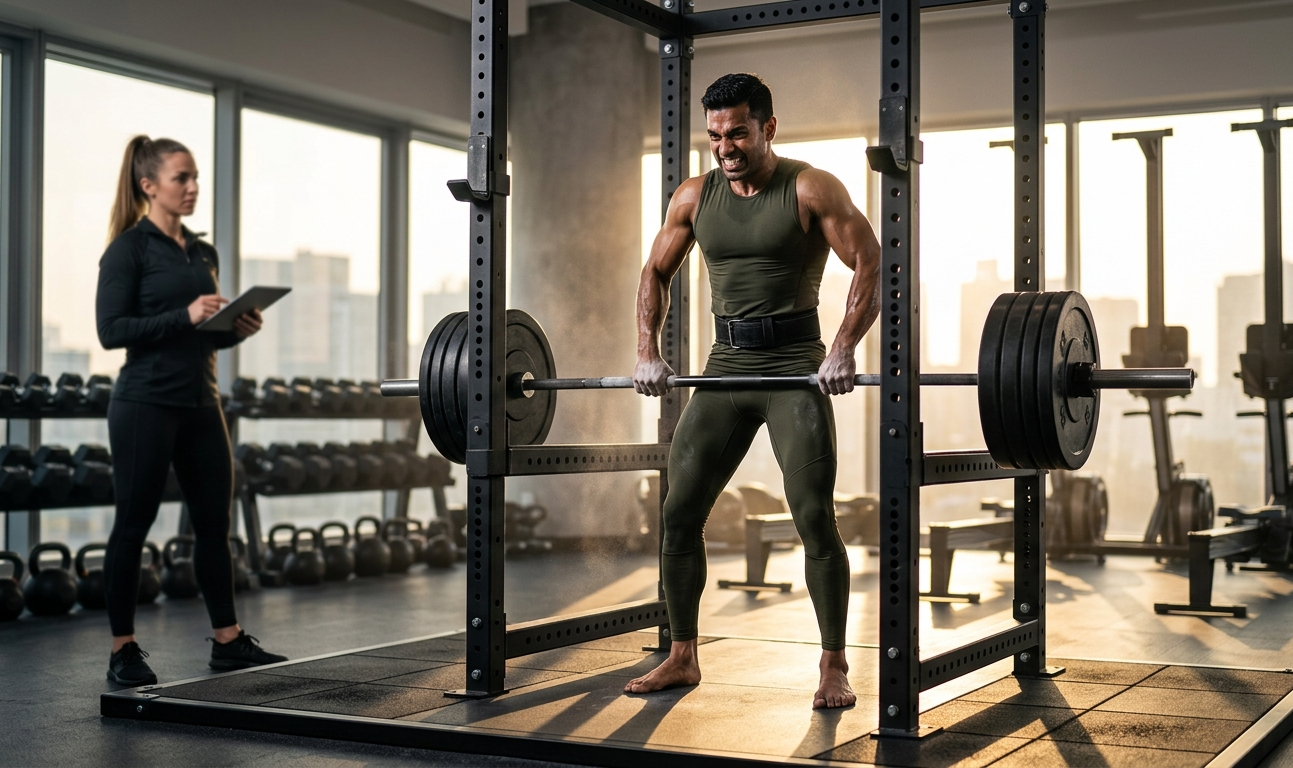
Unlike “yielding” isometrics (holding a weight in place), overcoming isometrics involve pushing or pulling against an object that will not move. Imagine trying to deadlift a bar that is pinned to a rack.
Research in 2025 highlights that this specific type of maximal effort induces significant Post-Activation Performance Enhancement (PAPE), increasing motor unit activation and reducing recruitment thresholds. For the plant-based lifter, this means more “pop” in your training sessions with lower systemic fatigue.
The Secret to Tendon Health: “Stress Relaxation”
Tendons are predominantly made of Type I collagen. When we load them dynamically (running, jumping, or heavy lifting), they act like springs. However, injured or “noisy” tendons often suffer from stress-shielding, where the healthy fibers take all the load, leaving the injured portions unconditioned.
Long-duration isometric holds (30–45 seconds) trigger a phenomenon called stress relaxation. This process allows the collagen fibers to relax into a steady state, redistributing load to the shielded regions and signaling the body to synthesize new collagen.
➡️ Strength Training for Endurance Athletes: What Actually Transfers
The Plant-Powered Edge: Fueling Tendon Synthesis
A common myth is that plant-based athletes lack the “building blocks” for joint health. In reality, a well-structured plant-powered diet is high in vitamin C—the essential cofactor for collagen cross-linking—and proline, which can be found in abundance in soy and legumes.
2026 systematic reviews confirm that high-dose amino acid availability (15–30g), specifically when timed 60 minutes before isometric loading, significantly improves tendon stiffness and remodeling.
➡️ Should I Take a Multivitamin?
How to Implement “Bulletproof” Holds
To build “bulletproof” joints, incorporate these two protocols:
For Performance (The Primer): 3 sets of 6-second maximal effort pull against an immovable bar. Rest 2 minutes. This “wakes up” the high-threshold motor units for your main lifts.
For Tendon Health (The Healer): 3–5 sets of 30-second holds at 70% of your maximum voluntary contraction. This is the “sweet spot” for tendon stiffness and pain relief.
References
Baar, K. (2019). Stress relaxation and targeted nutrition to treat patellar tendinopathy. International Journal of Sport Nutrition and Exercise Metabolism, 29(4), 453–457.
Kubo, K., Kanehisa, H., & Fukunaga, T. (2001). Effects of different duration isometric contractions on tendon elasticity in human quadriceps muscles. The Journal of Physiology, 536(2), 649–655.
Lecce, E., et al. (2025). Cross-education: motor unit adaptations mediate the strength increase in non-trained muscles following 8 weeks of unilateral resistance training. Frontiers in Physiology, 15.
MDPI. (2026). Collagen supplementation on tendon-related structural and performance outcomes: A systematic review. MDPI.
Pietraszewski, P., Gołaś, A., Zając, A., Maćkała, K., & Krzysztofik, M. (2025). The acute effects of combined isometric and plyometric conditioning activities on sprint acceleration and jump performance in elite junior sprinters. Applied Sciences, 15(4), 2125.