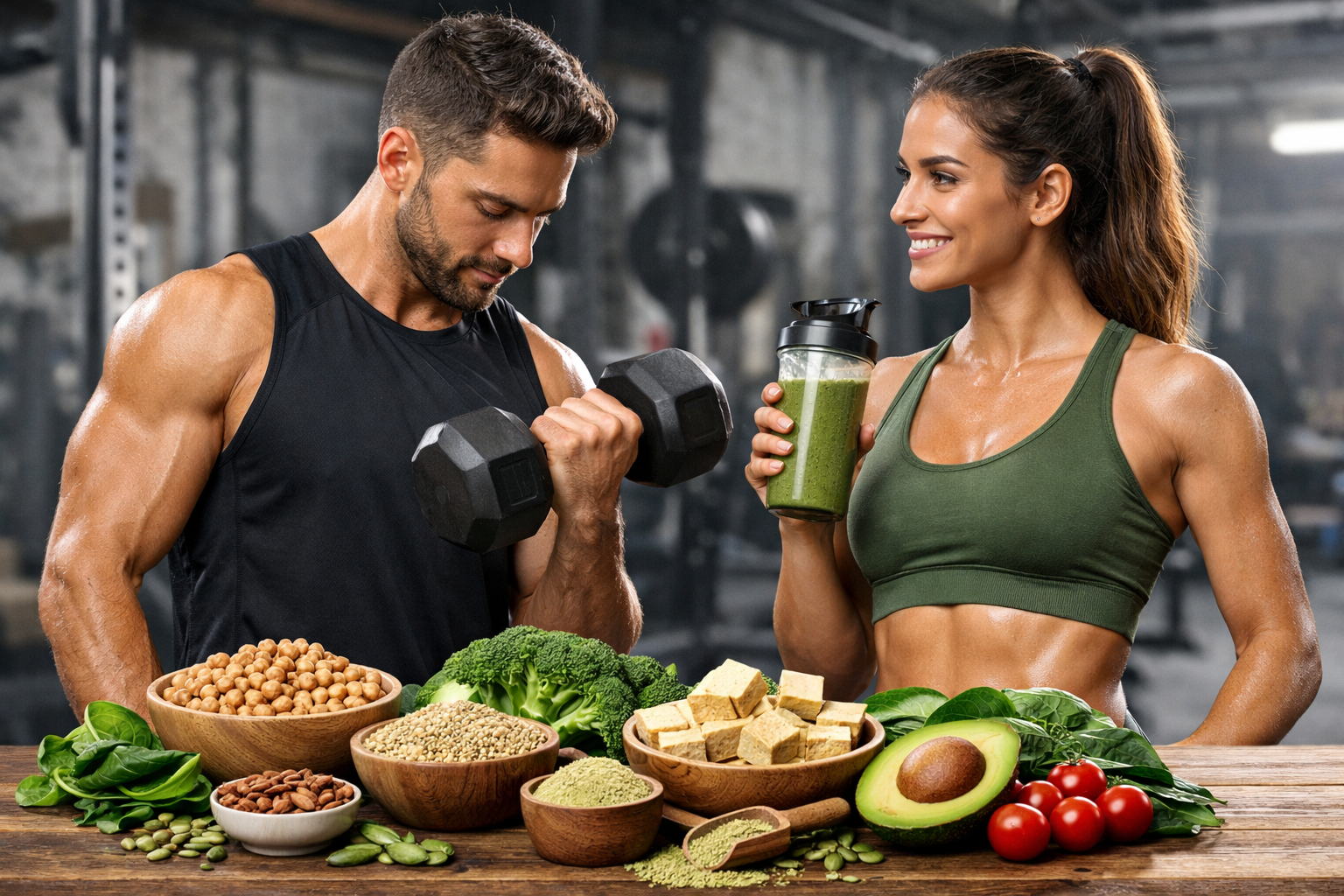
There’s a persistent myth that you can’t build significant muscle on a plant-based diet. The truth? With proper planning, nutrition, and training, hypertrophy (muscle growth) on a plant-based diet is not only possible — it’s supported by emerging research. Whether you’re an endurance athlete, strength competitor, or weekend warrior, understanding how to fuel muscle growth on plants empowers you to train harder and recover better.
Can Plant-Based Diets Support Muscle Gain?
Yes — science shows that plant-based diets can meet the requirements for muscle hypertrophy when properly structured.
A recent modeling study found that completely plant-based diets, when scaled to meet the energy demands of resistance training and hypertrophy, satisfy the protein, leucine, and micronutrient needs associated with maximal muscle and strength gains in adult strength athletes. This research supports the idea that plant-based eating doesn’t inherently limit hypertrophy if energy and amino acid intake are sufficient.
Similarly, evidence from plant-based protein intervention studies indicates that diets emphasizing whole plant proteins and adequate intake can support muscle protein synthesis and measurable muscle gain in resistance-trained individuals.
Key Nutrition Strategies for Plant-Based Hypertrophy
1. Hit Your Protein Targets with Quality and Quantity
Hypertrophy requires a net positive protein balance, driven by muscle protein synthesis (MPS) outpacing breakdown. For most active athletes, research supports aiming for ~1.6–2.4 g/kg/day of protein split evenly across meals. (Consistent with consensus in sports nutrition.)
Some plant proteins are lower in certain essential amino acids like leucine — a key driver of MPS — but this can be addressed by combining varied plant proteins and choosing protein sources with higher leucine content (e.g., soy, pea blends, quinoa).
➡️ Protein Myths: Can Plants Really Build Muscle?
2. Leucine and Muscle Protein Synthesis
Leucine is the amino acid most strongly associated with triggering MPS. Plant-based regimens can achieve effective leucine intake by emphasizing:
- Soy products (tofu, tempeh, edamame)
- Pea-based protein blends
- Quinoa and buckwheat
- Complementary food combinations
Several modeling studies show that properly scaled plant diets can meet or exceed leucine requirements necessary for hypertrophy.
3. Calories Still Matter
Unlike casual maintenance diets, those pursuing hypertrophy must ensure a consistent caloric surplus. Plant foods tend to be more voluminous and lower in calories, which is metabolically healthy — but it also means you need to plan larger portions to meet energy and anabolic goals.
Strength Training Principles That Drive Hypertrophy
Muscle gains stem from progressive overload — consistently challenging muscles with increasing resistances, volume, or intensity. Research indicates that resistance training in the 6–12 rep range with 3–5 sets per muscle group per week is effective for hypertrophy. Paired with plant-based nutrition, this forms the cornerstone of growth.
Additional analysis supports that multiple weekly resistance sessions help provide sufficient anabolic stimulus for growth while allowing adequate recovery.
➡️ Build Muscle With Bodyweight Exercises
Benefits of Plant-Based Hypertrophy Beyond Muscle Size
Anti-Inflammatory and Recovery Edge
Plant foods are rich in antioxidants and anti-inflammatory compounds. Athletes prioritizing recovery often reap benefits from improved inflammation regulation — enhancing training consistency and reducing soreness.
Heart Health and Longevity Synergy
A plant-based diet’s cardioprotective profile aligns with long-term athletic health — particularly for endurance athletes seeking to maintain cardiovascular efficiency alongside strength performance.
➡️ Gut Health Is the New Strength Training
Hypertrophy Diet vs. Traditional Muscle Nutrition
While animal proteins like whey and casein are often highlighted in muscle-building discussions, plant-based protein — when adequately planned and portioned — can provide comparable anabolic responses. Some studies show similar MPS rates between plant-based and animal protein when leucine and total protein are matched.
Key Takeaway: It’s not where you get protein — it’s how much and how consistent it is that drives growth.
Practical Plant-Based Meal Examples for Hypertrophy
- Tofu scramble with quinoa and black beans: A breakfast with complete amino acids and high energy.
- Lentil chili with sweet potatoes: Complex carbs for training fuel plus protein.
- Pea-protein smoothie with banana & oats: Post-workout recovery shake.
- Tempeh stir-fry with mixed grains: Balanced macro profile for surplus calories.
➡️ Fuel Your Fall Workouts with Plants
Common Pitfalls & How to Avoid Them
- Low caloric intake: Plant foods are voluminous; plan extra servings if your goal is hypertrophy.
- Inadequate leucine: Combine plant proteins to raise the essential amino acid profile.
- Micronutrient gaps: Nutrients like vitamin D or B12 may require monitoring or supplementation.
Final Thought
Hypertrophy on a plant-based diet isn’t a myth — it’s a science-backed reality when nutrition, energy, and training are aligned. With thoughtful macronutrient planning, caloric balance, and strength-oriented resistance training, plant-powered athletes can build muscle, enhance performance, and thrive across sport and life.
References
Goldman, D. M., et al. (2025). Completely plant-based diets that meet energy requirements for resistance training can supply enough protein and leucine to maximize hypertrophy and strength in male bodybuilders: A modeling study. Nutrients, 16(8), 1122.
Physicians Committee for Responsible Medicine. (2023). Plant-based protein supports building muscle during resistance training. https://www.pcrm.org/news/health-nutrition/plant-based-protein-supports-building-muscle-during-resistance-training Physicians Committee
Strength & Diet. (n.d.). Plant-based protein sources and nutrition. https://strengthanddiet.com/nutrition