
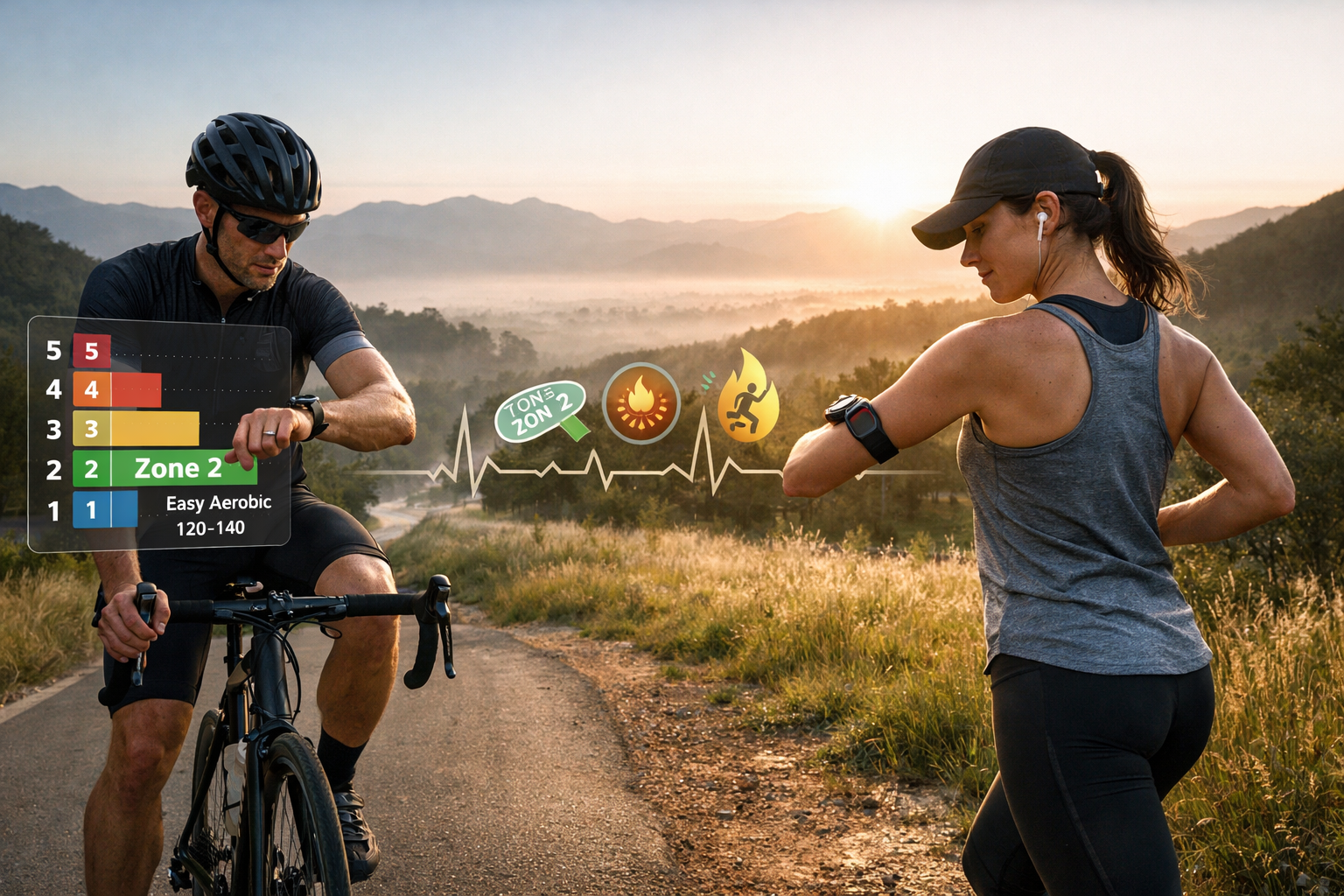
Zone 2 training has become one of fitness’s hottest topics — from endurance athletes to casual exercisers to longevity enthusiasts. But why has moderate-intensity cardio (roughly 60–70% of maximum heart rate) become so popular, and is all the hype justified?
In this post, we’ll unpack what Zone 2 training is, what it does well, where it falls short, and how to use it effectively.
What Is Zone 2 Training?
Zone 2 refers to a level of aerobic exercise intensity that is comfortably challenging — you can typically talk but are breathing more deeply than at rest. On a heart rate scale, this usually lands around 60%–70% of your maximum heart rate. It includes brisk walking, steady cycling, slow running, swimming, and other rhythmic, sustainable activities.
Experts often call it aerobic base training, because it develops the body’s ability to use oxygen efficiently for long durations.
➡️ The Importance of Rest & Recovery
Zone 2: What the Science Says It Does Well
1. Builds Aerobic Base & Endurance
Research shows that Zone 2 improves how efficiently your heart and muscles use oxygen by increasing mitochondrial function and capillary density — adaptations that support endurance performance and fatigue resistance.
2. Enhances Fat Oxidation
At this moderate intensity, the body increases its capacity to use fat as fuel. That doesn’t magically melt fat off your body by itself, but it does improve metabolic flexibility — meaning the body becomes better at switching fuel sources when needed.
3. Improves Cardiovascular Health
Consistent Zone 2 sessions have been linked with cardiovascular improvements such as lower resting heart rate and more efficient blood flow, benefits associated with reduced risk of heart disease.
4. Lower Injury & Stress Risks
By design, Zone 2 is lower impact and gentler on joints and connective tissue than repetitive high-intensity training. This makes it a safe addition to many programs — especially when paired with resisting stress or overtraining.
Where Zone 2 Doesn’t Live Up to the Hype
1. Not a One-Size-Fits-All Solution
While many tout Zone 2 as the “magic” card for fat burning, it’s not inherently superior to higher-intensity work for every goal. If your primary aim is maximal improvements in VO₂max or anaerobic power, higher-intensity intervals outperform Zone 2 in those domains. Traditional high-intensity interval training (HIIT) can produce greater gains in maximum oxygen uptake and cardiovascular performance.
2. Requires Time Commitment for Best Effects
To truly benefit from mitochondrial and aerobic adaptations, Zone 2 often requires longer sessions (often ≥ 45 minutes) several times per week — a pace that can feel inefficient for time-pressed individuals.
3. Not Enough on Its Own
If used exclusively without any higher-intensity work or strength training, Zone 2 won’t develop speed, power, or higher anaerobic capacity — all important for comprehensive fitness and athletic performance. Sports science argues for balance: aerobic base plus higher-intensity sessions for full spectrum fitness.
Practical Takeaways
Here’s a simple way to think about Zone 2:
✔ Helpful for:
Building a solid aerobic base
Increasing fat oxidation capacity
Enhancing recovery and training durability
Supporting long-term cardiovascular and metabolic health
✔ Overhyped when:
It’s treated as a standalone solution for speed or VO₂max
It replaces all higher intensity or strength training work
It becomes the only focus for fat loss, ignoring diet and recovery
The best programs often use Zone 2 in conjunction with strength training, high-intensity intervals, and flexibility work.
➡️ Build Muscle With Bodyweight Exercises
How to Use Zone 2 in Your Program
Frequency: 2–4 sessions per week
Duration: 30–60+ minutes
Examples: brisk walking, cycling, jogging, hiking, rowing
Intensity guide: ~60–70% of max heart rate or comfortable conversation pace
This balanced approach keeps your aerobic foundation strong while allowing room for anaerobic work and strength improvements.
➡️ Fuel Your Fall Workouts With Plants
References
Cleveland Clinic. (2025). What is Zone 2 cardio?
FitnessRec. (2025). Zone 2 cardio for athletes: Build aerobic base and boost fat burning.
HealthCrunch. (2025). Zone 2 training: The metabolic sweet spot for longevity.
HPRC. (2025). What’s Zone 2 training and why does it matter?
Mayo Clinic Press. (2024). Zone 2 cardio: What is it and why is it trending online?
Note: Reddit threads indicate discussion and debate but are not used as formal references; scientific literature was used instead.