For decades, weight loss has been framed around a single, unforgiving metric: the scale. Step on it. Read the number. Judge your success—or failure—accordingly.
But in 2026, that mindset is finally losing its grip.
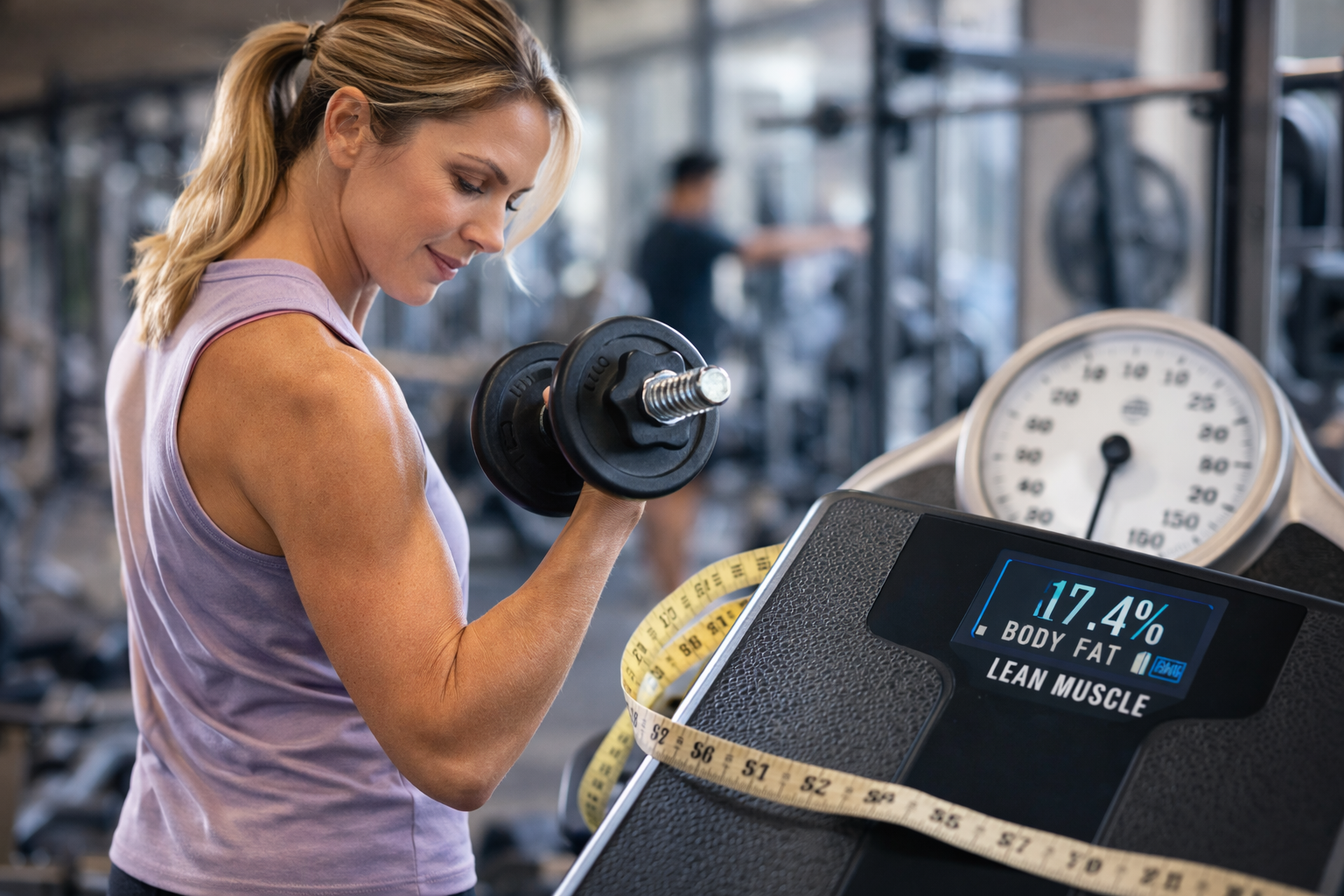
More people—especially busy professionals and long-time dieters—are realizing that lasting fat loss, better energy, and a healthier body have far more to do with body composition than body weight. The shift is clear: build strength, preserve muscle, and let the scale become a secondary data point—not the goal.
If you’ve ever lost weight only to regain it (and then some), this approach isn’t just refreshing—it’s necessary.
Why the Scale Has Been Letting You Down
The scale tells you how much you weigh.
It does not tell you:
How much muscle you have
How much fat you’ve lost
Whether your metabolism is improving or slowing
How strong, capable, or resilient your body has become
In fact, many traditional weight-loss approaches—especially aggressive calorie restriction—cause muscle loss alongside fat loss, which can backfire long term. Research consistently shows that loss of lean mass contributes to metabolic slowdown, making weight regain more likely over time.
This is one of the main reasons chronic dieters feel like their metabolism is “broken.” It’s not broken—it’s adapted.
Body Composition: The Metric That Actually Matters
Body composition refers to the proportion of fat mass and fat-free mass (muscle, bone, organs, and water) in your body.
When weight loss is approached through this lens, the goal becomes:
Lose fat
Maintain or build muscle
Improve metabolic health
Enhance strength, function, and energy
You may weigh the same—or even slightly more—but look leaner, feel stronger, and perform better.
This is why in 2026, more evidence-based programs are asking a better question:
What is your body made of—not just what does it weigh?
Why Strength Training Is the Centerpiece of Modern Weight Loss
1. Muscle Preservation Protects Your Metabolism
Skeletal muscle is metabolically active tissue. The more muscle you retain, the higher your resting energy expenditure tends to be.
Resistance training has been repeatedly shown to preserve lean mass during calorie deficits, especially when combined with adequate protein intake.
Without strength training, weight loss often comes at the expense of muscle—setting the stage for plateaus and rebound weight gain.
2. Strength Improves Long-Term Fat Loss Outcomes
While cardio burns calories during exercise, strength training influences how your body handles calories around the clock.
Regular resistance training:
Improves insulin sensitivity
Enhances fat oxidation
Increases energy expenditure through muscle maintenance and repair
A meta-analysis found that resistance training contributes significantly to reductions in fat mass while improving lean mass, even without dramatic scale changes.
3. Strength Training Is Age-Resilient Training
From about age 30 onward, adults naturally lose muscle mass at a slow but steady rate—a process known as sarcopenia. For midlife professionals, this matters.
Strength training:
Slows or reverses age-related muscle loss
Improves bone density
Reduces injury risk
Enhances daily function and confidence
This isn’t just about aesthetics—it’s about maintaining independence and vitality as the years go on.
Why This Shift Resonates with Former Chronic Dieters
If you’ve spent years cycling through diets, you’ve likely experienced:
Short-term success
Long-term frustration
Increasing difficulty losing weight over time
A strength-first approach changes the narrative:
Progress isn’t erased by a higher scale reading
Food supports training, not punishment
The focus shifts to what your body can do, not just how it looks
This psychological shift alone improves adherence—one of the strongest predictors of long-term success.
What a Strength-Focused Weight Loss Plan Looks Like in 2026
A modern, sustainable approach typically includes:
2–4 days of progressive resistance training per week
Moderate cardiovascular work to support heart health and recovery
Adequate protein intake to support muscle retention
A mild, sustainable calorie deficit, not extremes
Multiple progress metrics: strength gains, measurements, photos, energy levels
The scale may still be used—but it no longer drives decisions.
The Bottom Line
Weight loss in 2026 isn’t about shrinking yourself at all costs.
It’s about:
Building strength
Preserving muscle
Supporting metabolism
Creating results that last
When strength becomes the priority, fat loss becomes the byproduct—and the scale finally stops being the boss.
If you’re ready to stop chasing numbers and start building a stronger, healthier body, this shift isn’t just a trend—it’s the future.
References
Hall, K. D., Bemis, T., Brychta, R., Chen, K. Y., Courville, A., Crayner, E. J., … Walter, P. J. (2016). Calorie balance versus carbohydrate balance in the regulation of body weight. The American Journal of Clinical Nutrition, 104(2), 324–333.
Phillips, S. M., & Winett, R. A. (2010). Uncomplicated resistance training and health-related outcomes: Evidence for a public health mandate. Journal of Applied Physiology, 108(6), 1747–1758.
Schoenfeld, B. J., Grgic, J., & Krieger, J. (2021). How many times per week should a muscle be trained to maximize muscle hypertrophy? Sports Medicine, 51, 2121–2132.