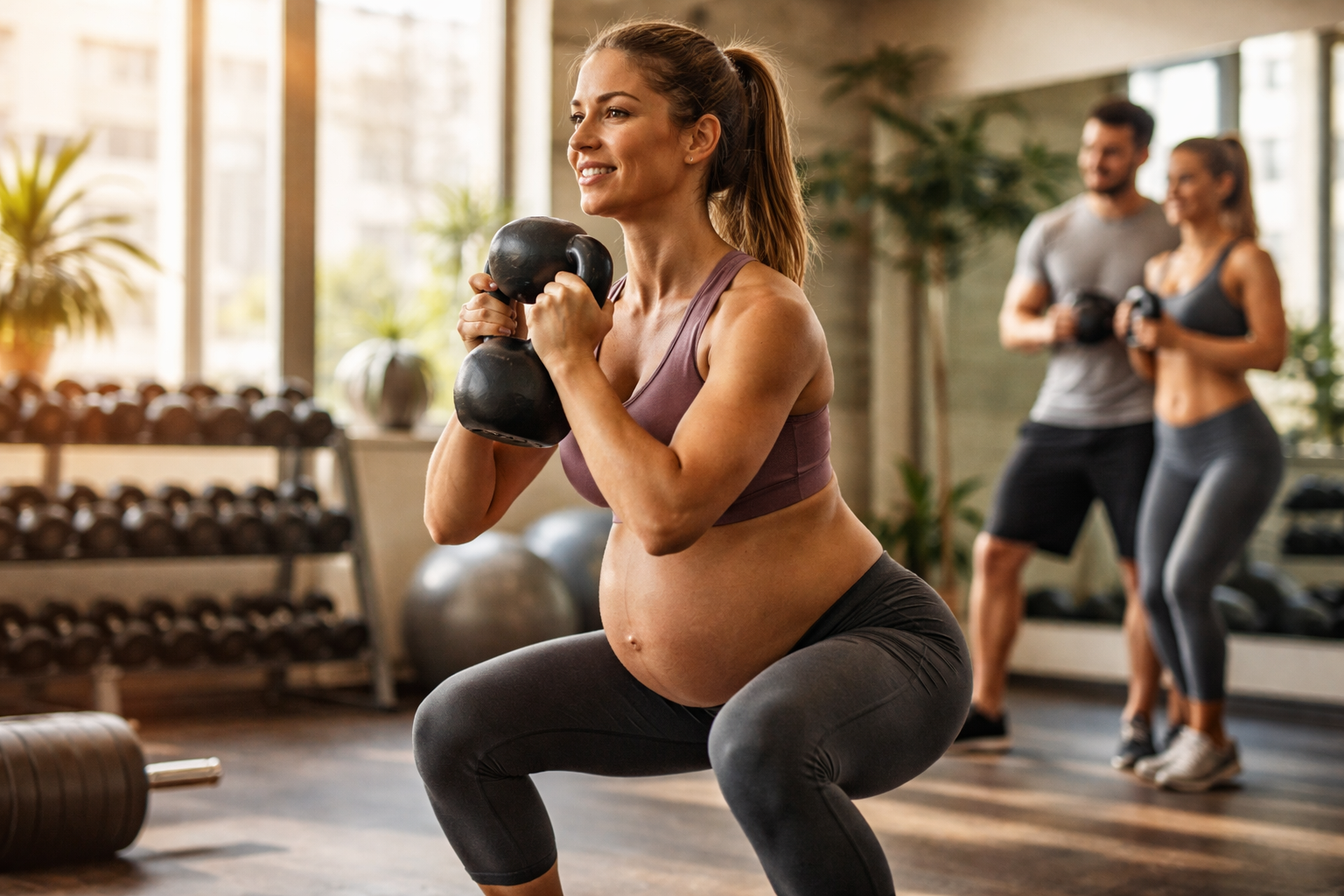
Leading medical bodies including the American College of Obstetricians and Gynecologists (ACOG) now recommend that women with uncomplicated pregnancies be encouraged to engage in both aerobic and strength-conditioning exercises before, during, and after pregnancy, unless there are medical reasons to avoid it (e.g., certain complications).
Pregnancy is no longer viewed as a time for bed rest; exercise during pregnancy is safe and desirable for most women, with minimal risks when appropriately modified and supervised.
Why Strength Training Works — Backed by Research
1. Strength Training Is Safe When Done Appropriately
A growing body of clinical research shows that prenatal resistance training is safe and can be incorporated into a well-designed exercise plan. In studies where women engaged in supervised, light-to-moderate resistance workouts through pregnancy, injuries were rare and strength outcomes improved without negative effects on blood pressure or vital signs.
This aligns with general prenatal exercise guidance that emphasizes moderation, monitoring, and provider clearance before beginning or adapting a program.
➡️ Why Recovery Is the Missing Variable in Most Fat-Loss Programs
2. Strength Training Improves Maternal Health Outcomes
Evidence suggests that resistance training during pregnancy can:
- Reduce excessive gestational weight gain
- Improve glucose control, potentially reducing gestational diabetes risk
- Alleviate common symptoms like back pain and fatigue
- Help maintain muscle strength and posture as the body changes
- Improve mental well-being and energy levels
These benefits directly address some of the most common complaints women experience during pregnancy, and they support overall fitness and function throughout gestation.
➡️ Maximizing Your Cardio Training
3. Strength Training May Improve Birth-Related Outcomes
Preliminary research also suggests resistance training may positively influence pregnancy outcomes, including reduced risk of macrosomia (excessive birth weight) and improved glucose metabolism, which can support both maternal health and longer-term child health outcomes when combined with aerobic activity and appropriate medical care.
How to Train Safely
Safety isn’t just about whether you train — it’s about how you do it.
Consult Your Healthcare Provider First
Before beginning or continuing any strength training program during pregnancy, get clearance from your obstetrician, midwife, or qualified prenatal clinician. Women with certain conditions (e.g., preeclampsia, placenta previa, uncontrolled hypertension) may need individualized guidance.
General Safety Guidelines (what the research says):
- Use moderate intensity and avoid maximal lifting unless already well trained
- Avoid exercises requiring extended supine positions as pregnancy progresses
- High-impact or high-risk balance movements (e.g., plyometrics) should be modified
- Focus on technique and controlled movement over heavy loads
- Incorporate resistance bands, machines, or bodyweight alternatives when appropriate
Training Benefits Beyond the Physical
Strength training not only helps with physical readiness for birth but can also contribute to mental resilience and confidence during a time of rapid change. Studies show women who maintain regular resistance exercise experience less fatigue and better mood regulation throughout pregnancy compared with those who are more sedentary.
➡️ Plant-Forward Doesn’t Mean Vegan Only
Recap: Why It Matters
Strength training during pregnancy isn’t just safe — it’s beneficial. When incorporated thoughtfully by women with uncomplicated pregnancies and cleared by their healthcare providers:
✔ It supports physical health
✔ It improves functional strength
✔ It reduces common discomforts
✔ It contributes to better metabolic outcomes
And because it prepares the body for both labor and recovery after birth, it’s a powerful tool in a comprehensive prenatal fitness strategy.
References
American College of Obstetricians and Gynecologists. (2020). Physical activity and exercise during pregnancy and the postpartum period.
Duchette, C., Perera, M., Arnett, S., White, E., Belcher, R., & Tinius, R. (2024). Benefits of resistance training during pregnancy for maternal and fetal health: A brief overview. International Journal of Women’s Health, 16, 1137–1147.
Evenson, K. R., & Wen, F. (2014). Guidelines for physical activity during pregnancy [Review]. PMC.
Horsely, S. (1998). Strength training during pregnancy [Educational resource]. PMC.
Smith, J. (2025). Effects of strength training on quality of life in pregnant women: A systematic review. Acta Obstetricia et Gynecologica Scandinavica.