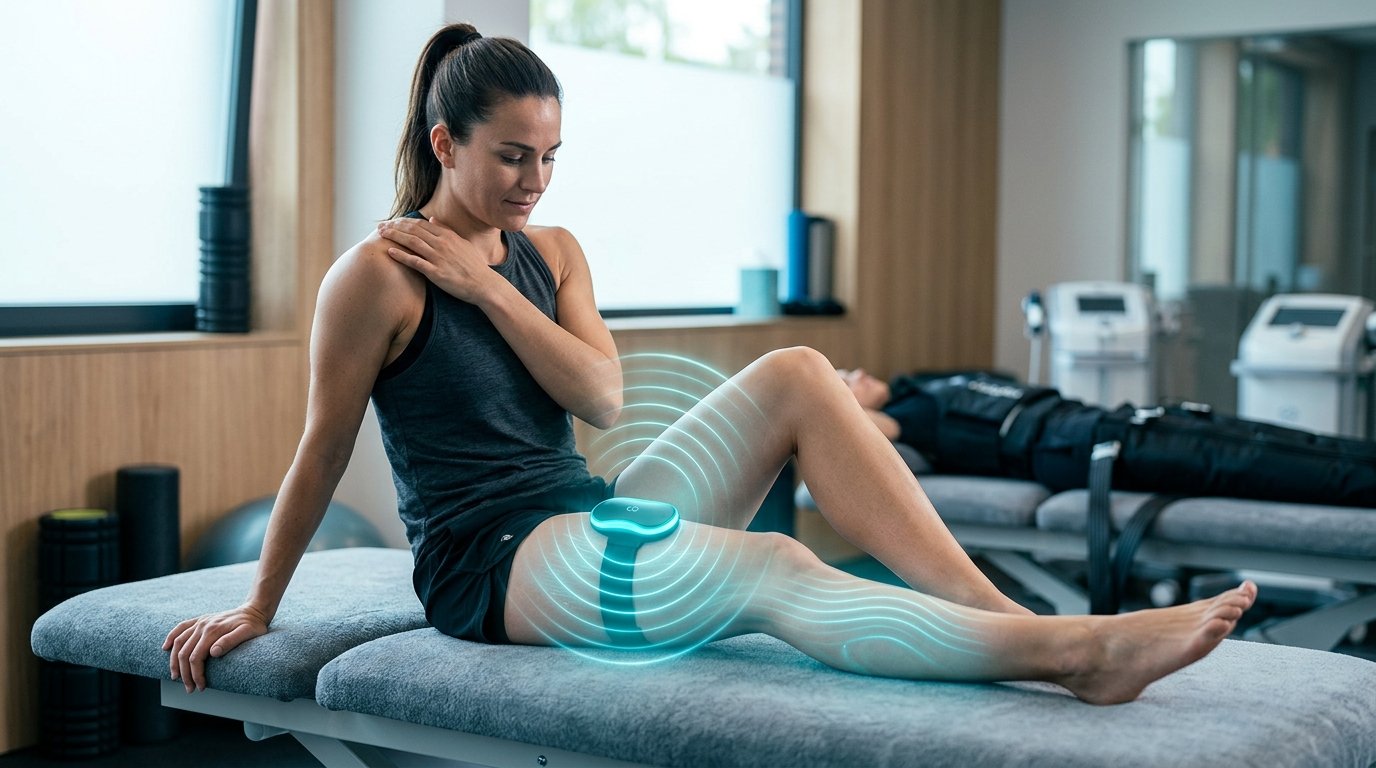
For serious athletes, lifters, and endurance competitors, the rate-limiting step in physical progression is rarely how hard you can train—it is how fast you can recover. While sleep, periodized volume, and targeted nutrition form the bedrock of adaptation, modern training gear has expanded into bio-telemetry and neuromuscular recovery hardware. Among these innovations, smart EMS recovery tech (wireless neuromuscular electrical stimulation devices such as Compex or PowerDot) has emerged as a powerful tool for accelerating physical restoration.
By delivering precise biphasic electrical impulses directly to motor nerve branches, smart electrical muscle stimulation (EMS) forces involuntary, non-fatiguing muscle contractions. When integrated with an evidence-based training and recovery regimen—including polyphenol-rich plant nutrition—EMS helps clear metabolic waste, enhances localized capillary micro-circulation, and bridges the gap between intense training blocks.
The Physiology of Neuromuscular Electrical Stimulation (NMES)
                    VOLUNTARY vs. EMS MOTOR RECRUITMENT
│                                                                           │
│  Voluntary Contraction  ──► Brain ──► Spinal Cord ──► Size Principle      │
│                             (Recruits slow-twitch first, fast-twitch last)│
│                                                                           │
│  EMS / NMES Contraction ──► Surface Electrode ──► Motor Nerve Branch      │
│                             (Fires superficial motor units directly)      │
Unlike voluntary exercise where the central nervous system (CNS) recruits motor units according to Henneman’s size principle (slow-twitch fibers first, high-threshold fast-twitch fibers last), electrical muscle stimulation bypasses the central nervous system:
Direct Motor Nerve Activation: Surface electrodes placed over motor points depolarize peripheral nerve axons, triggering action potentials that contract underlying muscle fibers synchronously.
Low-Frequency Flush Protocols (1-10 Hz): Recovery-focused EMS programs use low-frequency pulses to create rhythmic, twitch-like muscle contractions. This acts as a mechanical skeletal muscle pump, dramatically increasing local micro-vascular blood flow without imposing mechanical tension or joint stress.
Bypassing CNS Fatigue: Because the electrical current handles the depolarization signal, the brain and spinal cord experience zero central fatigue, allowing the autonomic nervous system to downshift into parasympathetic recovery.
Head-to-Head Recovery Modality Matrix
| Recovery Modality | Primary Mechanism | Key Ergogenic Advantage | Primary Limitation | Optimal Application |
| Smart EMS / NMES | Rhythmic involuntary muscle twitching (1-10 Hz) | Rapid local blood lactate clearance and micro-circulation boost | Requires precise electrode placement; passive modality | Post-workout flush or active rest days |
| Cold Water Immersion (CWI) | Vasoconstriction & systemic hydrostatic pressure | Blunts acute perception of soreness and swelling | Can blunt long-term muscle hypertrophy if used immediately post-lift | Endurance events & high-heat training blocks |
| Active Recovery (Spin/Walk) | Voluntary low-intensity movement | Whole-body metabolic clearance and joint lubrication | Imposes minor mechanical stress on already tired joints | General day-after recovery |
—–
The Plant-Based Recovery Synergy: Flushing & Nutrient Delivery
While smart EMS devices excel at mechanically pumping out metabolic debris (H+ ions, lactate, and inflammatory byproducts) from working muscle beds, the speed at which tissue repairs depends heavily on substrate availability. This is where combining mechanical EMS recovery with a plant-based nutrition strategy creates a powerful loop:
                   THE RECOVERY & NUTRIENT TRANSPORT LOOP
│                                                                          │
│  1. Mechanical EMS Flush  ──► Rhythmic Pumping Clears Local Lactate & H+ │
│  2. Micro-Circulation     ──► Enhances Capillary Perfusion to Tissue     │
│  3. Plant-Based Synergy   ──► Delivers Phytochemicals & Amino Acids      │
Optimizing Micro-Circulation for Nutrient Delivery: EMS flush sessions dilate local micro-vessels and increase blood flow velocity. For plant-based athletes who rely on precise amino acid timing (e.g., a post-workout pea and rice protein isolate blend) and ergogenic saturation (like creatine and beta-alanine), enhanced capillary perfusion ensures these nutrients reach target muscle fibers rapidly.
Combating Exercise-Induced Muscle Damage (EIMD): Heavy eccentric contractions generate localized micro-tears and inflammatory cytokines (IL-6 and TNF-α). While whole-food plant antioxidants (such as those in tart cherry or dark berries) neutralize systemic oxidative stress, pairing dietary anti-inflammatories with mechanical EMS flush sessions accelerates waste product clearance, bridging the gap between passive nutrition and active neuromuscular restoration.
Actionable Smart EMS Recovery Protocol
Post-Training Recovery Flush: Within 30 minutes of completing a heavy lower-body resistance session or grueling endurance run, apply wireless EMS pods to the quadriceps or calves using a low-frequency recovery program (2-9 Hz) for 20-30 minutes.
Rest-Day Capillarization: On active rest days, utilize low-intensity capillary programming to stimulate regional blood flow without inducing muscle damage or depleting glycogen.
Co-Ingest with Recovery Nutrition: Follow your EMS flush session with a nutrient-dense recovery meal or shake, such as our High-Protein Berry-Spinach Anabolic Recovery Smoothie, to leverage peak microvascular perfusion.
Integrating Recovery Tech with Training & Nutrition
Pairing advanced electrical recovery hardware with structured workouts and evidence-based nutrition accelerates overall body composition and performance progress:
Tracking Nervous System Readiness: Monitor how effectively your recovery tech restores autonomic balance by reading Heart Rate Variability: Useful Metric or Overhyped Tech?.
Optimizing Training Frequency: Discover how faster recovery times unlock higher weekly training volumes in The Plant-Powered Athlete’s Guide to Optimal Training Frequency: Full Body vs. Split Routines.
Essential Ergogenic Supplements: Support your muscular contractions and recovery capacity using guidelines from The Top 5 Essential Supplements for Vegan Athletes to Boost Performance.
Cellular Autophagy & Repair: Combine mechanical flushing with cellular cleanup protocols outlined in Spermidine & Autophagy Activation: How Plant Compounds Stimulate Cellular Cleanup.
Ready to fine-tune your recovery tech, training splits, and athletic performance with evidence-based coaching? Explore how Online Fitness Coaching can help you achieve your goals today!
References
Babault, N., Cometti, G., Bernard, M., Pousson, M., & Chatard, J. C. (2011). Effects of electromyostimulation training on muscle strength and power of elite rugby players. Journal of Strength and Conditioning Research, 25(2), 431–437.
Giuriato, G., Ives, S. J., Tarperi, C., Bortolan, L., Ruzzante, F., Pedrinolla, A., Martignon, C., Laginestra, F. G., Cevese, A., Schena, F., & Venturelli, M. (2019). Timed synchronization of muscle contraction to heartbeat enhances muscle hyperemia. Frontiers in Physiology, 10, Article 503