Why Reverse Dieting Became Popular
Reverse dieting has become one of the most talked-about strategies in physique and performance nutrition. It’s often marketed as a way to “fix” metabolism, prevent fat regain, and restore hormonal balance after prolonged dieting.
The appeal is understandable. Many athletes and active individuals experience:
- Metabolic slowdown after dieting
- Persistent hunger
- Reduced training output
- Fear of increasing calories
Reverse dieting promises a controlled exit from restriction — but the science is far more nuanced than social media suggests.
This article separates what reverse dieting can do, what it cannot do, and who it actually helps.
What Reverse Dieting Actually Is (and Isn’t)
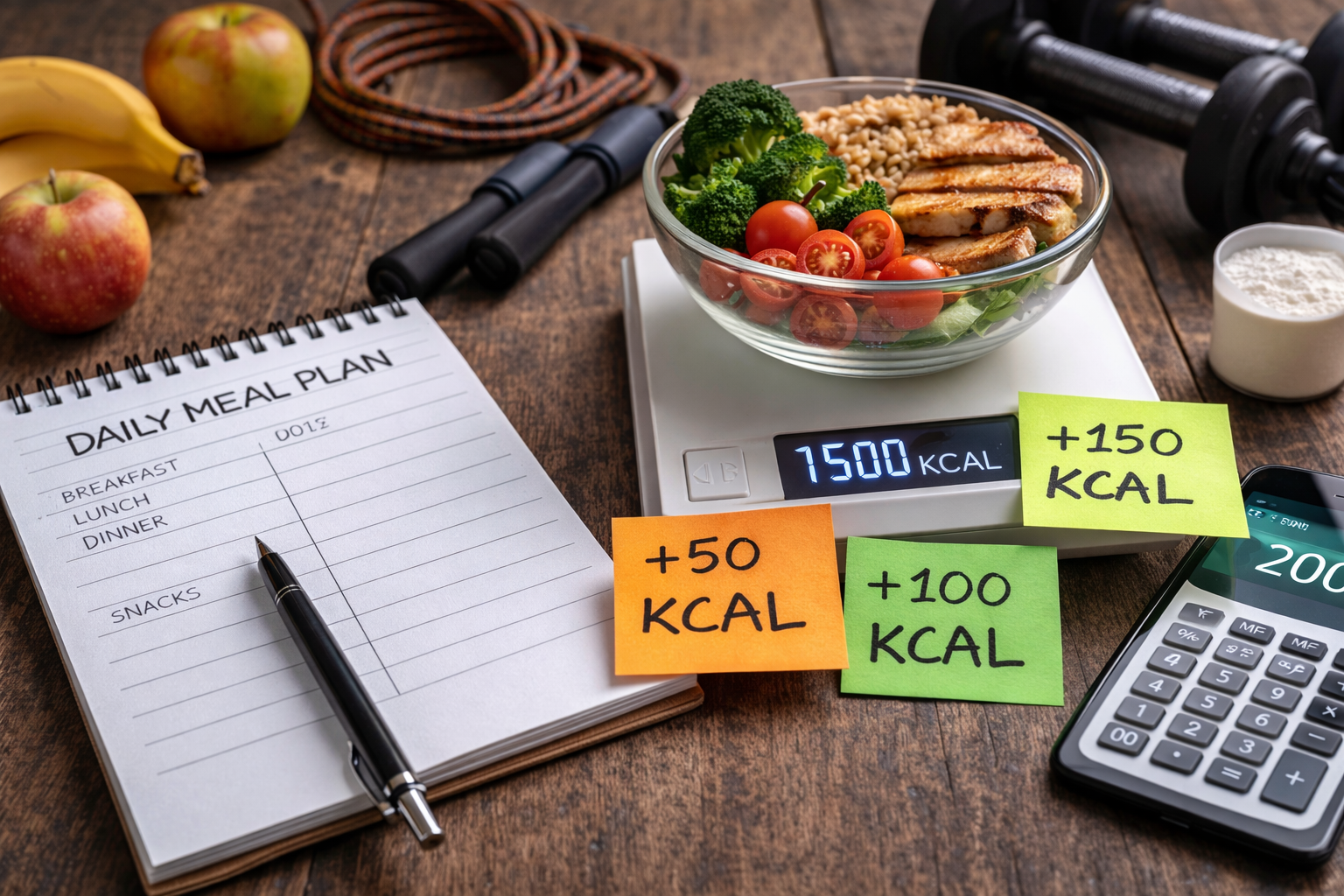
At its core, reverse dieting is a gradual increase in calorie intake following a period of sustained energy restriction. Typical increases range from:
- 50–150 kcal per week
- Often driven primarily by carbohydrates and fats
What It Is
- A behavioral strategy to manage post-diet transitions
- A way to restore energy availability
- A method to reduce rapid fat regain for some individuals
What It Is Not
- A proven method to “repair” metabolism
- A guarantee against fat gain
- A substitute for adequate energy intake
Metabolic adaptation is real — but it is often overstated.
What the Research Says About Metabolic Adaptation
Metabolic adaptation refers to reductions in resting energy expenditure beyond what is expected from weight loss alone.
However, research consistently shows:
- Most metabolic adaptation is proportional to weight loss
- True “damage” is rare
- Energy expenditure rebounds with adequate intake and weight stabilization
Gradual calorie increases do not appear to restore metabolism faster than:
- Returning directly to maintenance
- Allowing body weight to stabilize
This means reverse dieting is not physiologically superior, but it may be psychologically and behaviorally useful.
➡️ The New Definition of Metabolic Fitness — Why Body Fat % Alone Fails
Why Reverse Dieting Feels Like It Works
Reverse dieting often “works” because it addresses behavioral constraints, not because it overrides physiology.
Common benefits include:
- Reduced fear around food
- Improved dietary adherence
- Slower fat regain due to tighter monitoring
- Restoration of training quality
In athletes emerging from aggressive cuts, these factors can meaningfully improve outcomes — even if metabolism itself is not being “repaired.”
When Reverse Dieting Makes Sense
Reverse dieting can be useful when:
1. Dieting Was Prolonged or Aggressive
- Contest prep
- Weight-class sports
- Chronic low energy availability
2. Psychological Food Anxiety Is High
- Fear of carbohydrates
- Rigid tracking behaviors
- Binge–restrict cycles
3. Training Load Remains High
- Endurance athletes
- Hybrid athletes
- High weekly volume with insufficient fueling
In these cases, structure can reduce chaos.
When Reverse Dieting Is Unnecessary (or Harmful)
Reverse dieting is often unnecessary when:
- The calorie deficit was mild
- Body fat levels remain moderate
- Training volume is low
- The individual can tolerate short-term weight regain
In some cases, reverse dieting:
- Prolongs under-fueling
- Delays hormonal recovery
- Reinforces diet culture thinking
Energy availability — not precision — is often the limiting factor.
➡️ Why Maintenance Calories Matter More Than Fat-Loss Calories
Reverse Dieting vs. Returning to Maintenance
Research does not support the idea that slowly increasing calories produces better long-term fat-loss maintenance than returning to maintenance intake.
The key predictors of success are:
- Adequate protein intake
- Training consistency
- Psychological flexibility
- Sleep and stress management
Reverse dieting may support these behaviors — but it does not replace them.
Practical Guidelines (If You Use Reverse Dieting)
If reverse dieting is appropriate:
- Increase calories by ~5–10% per week
- Prioritize carbohydrates first
- Monitor training performance and recovery
- Avoid micromanaging scale weight
- Transition to maintenance within 6–10 weeks
The goal is normalization, not endless control.
➡️ Blended vs. Single-Source Plant Proteins: Do Combinations Improve Results?
The Bigger Picture: Energy Availability Matters More
Low energy availability has well-documented consequences:
- Hormonal suppression
- Reduced bone density
- Impaired recovery
- Increased injury risk
Reverse dieting should never become a prolonged state of partial restriction.
At some point, eating enough matters more than eating carefully.
➡️ The Hidden Cost of Chronic Energy Deficit in Endurance Athletes
The Bottom Line
Reverse dieting is:
- A tool, not a treatment
- Behaviorally useful for some
- Physiologically neutral compared to maintenance
It works best when it:
- Reduces fear
- Restores training output
- Leads to sustained adequate intake
It fails when it:
- Delays recovery
- Reinforces restriction
- Avoids necessary weight regain
References
Mountjoy, M., Sundgot-Borgen, J., Burke, L., Ackerman, K. E., Blauwet, C., Constantini, N., … Budgett, R. (2018). IOC consensus statement on relative energy deficiency in sport (RED-S). British Journal of Sports Medicine, 52(11), 687–697.
Müller, M. J., Enderle, J., Bosy-Westphal, A., Krawczak, M., & Blundell, J. E. (2015). Metabolic adaptation to caloric restriction and subsequent refeeding. American Journal of Clinical Nutrition, 102(4), 807–819.
Rosenbaum, M., & Leibel, R. L. (2010). Adaptive thermogenesis in humans. International Journal of Obesity, 34(S1), S47–S55.
Trexler, E. T., Smith-Ryan, A. E., & Norton, L. E. (2014). Metabolic adaptation to weight loss: Implications for the athlete. Journal of the International Society of Sports Nutrition, 11, 7.