
Not long ago, diet culture obsessed over calories. Before that, it demonized fat. Then carbs.
Now? Protein has become the latest fixation.
From grocery labels screaming “HIGH PROTEIN” to social media claims that you’ll lose muscle overnight without animal products, protein anxiety is quietly replacing older diet fears — especially among active adults and professionals trying to “do health right.”
But here’s the reality:
➡️ Most people are not protein deficient.
➡️ Plant-based diets can meet performance needs.
➡️ Anxiety around protein often creates worse outcomes than low intake ever would.
Let’s unpack what actually matters — using science, not fear.
What Is Protein Anxiety?
Protein anxiety is the belief that missing protein targets — even briefly — is dangerous, performance-limiting, or irresponsible. It often shows up as:
Constant macro tracking
Fear of plant-based meals being “incomplete”
Overconsumption of protein at the expense of fiber and micronutrients
Confusion between fitness marketing and physiology
This mindset mirrors classic diet-culture patterns: control, rigidity, and fear — just wearing a “high-performance” disguise.
Reality Check: Are People Actually Low in Protein?
In short: No — not in industrialized countries.
Population data consistently show that average protein intake meets or exceeds recommendations, even before supplements or protein-fortified products are added.
The Recommended Dietary Allowance (RDA) of 0.8 g/kg/day is designed to prevent deficiency — not to limit athletic progress — and most adults naturally exceed it through normal eating patterns.
Even physically active adults typically meet needs through balanced meals without aggressive supplementation.
Plant-Based Protein: Adequate, Effective, and Misunderstood
One of the biggest drivers of protein anxiety is the belief that plant protein is inferior.
Modern research doesn’t support that fear.
A narrative review shows that plant-based proteins can stimulate muscle protein synthesis, particularly when intake is sufficient and food variety is present.
A 2023 systematic review found no meaningful differences in strength gains between plant- and animal-protein diets when total protein and training were matched.
The outdated “incomplete protein” myth ignores how people actually eat — across meals, not isolated foods.
➡️ Variety across the day matters far more than perfection at each meal.
For most active adults, meeting protein needs doesn’t require supplements or obsession — it requires consistency, food variety, and systems that fit real life, which is exactly what practical plant-based nutrition for busy professionals focuses on.
When Protein Focus Becomes Counterproductive
Ironically, excessive protein focus often crowds out nutrients that matter just as much — or more — for long-term health and performance:
Fiber (gut health, insulin sensitivity, satiety)
Carbohydrates (training output, recovery, cognition)
Micronutrients & phytonutrients (inflammation control, longevity)
High-protein diets that displace plant foods may improve short-term metrics while undermining metabolic health over time.
This matters especially for midlife adults prioritizing longevity, resilience, and sustainable fitness.
Protein, Muscle, and Aging: What Actually Matters
Muscle retention isn’t about maxing protein — it’s about stimulus + adequacy + consistency, which becomes even more critical when training with a longevity fitness mindset rather than short-term aesthetics. In fact, this is why strength training matters more than scale weight is a foundational shift for long-term body composition and metabolic health.
Key drivers of lean mass preservation:
Progressive resistance training
Adequate total calories
Sufficient (not excessive) protein
Recovery and stress management
Research shows that muscle loss accelerates more from inactivity and under-fueling than from modest protein variation.
Protein supports the process — it doesn’t replace it.
A Smarter, Plant-Forward Protein Framework
Instead of anxiety, use this evidence-based approach:
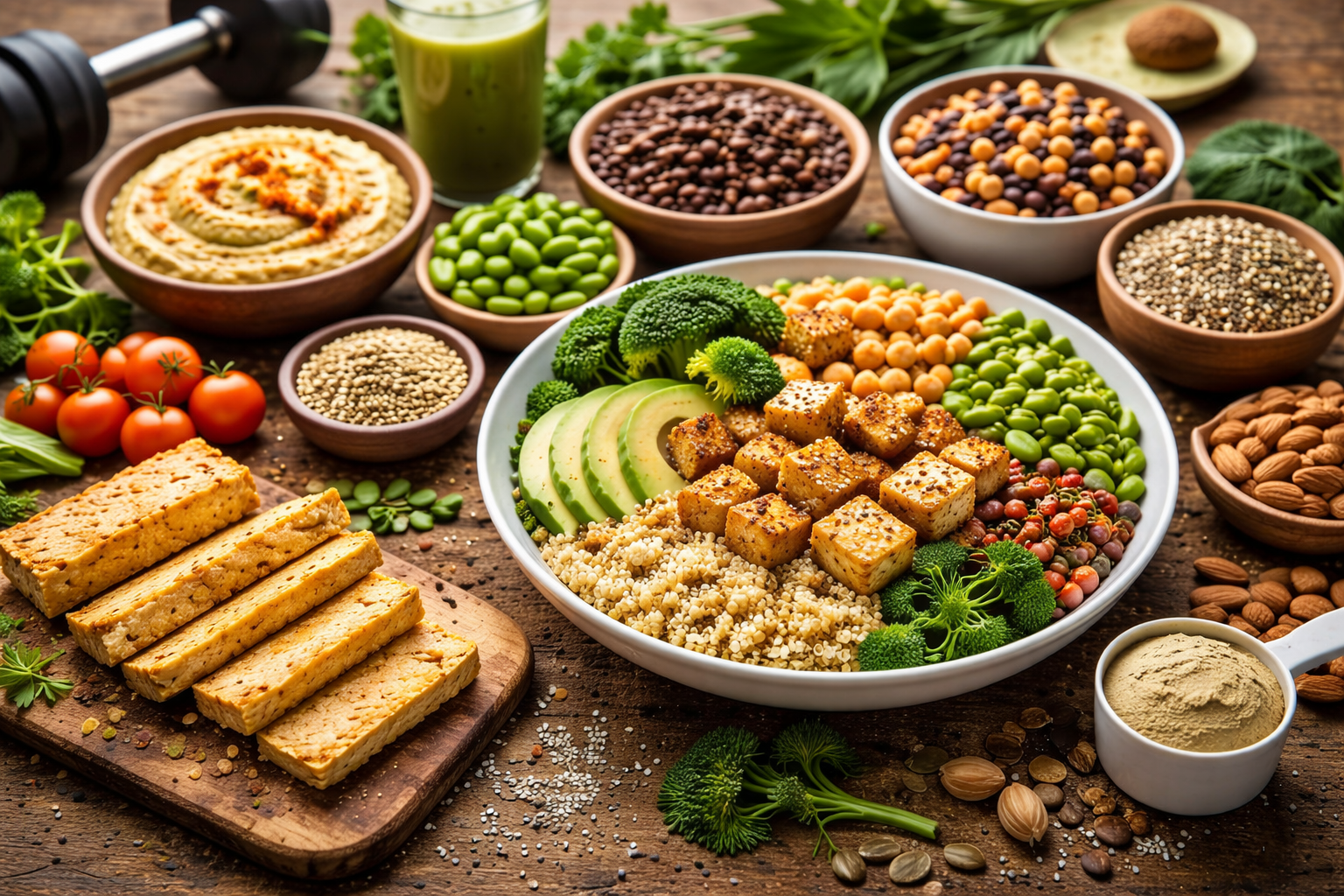
➡️ Eat diverse plant proteins (legumes, tofu/tempeh, whole grains, nuts, seeds)
➡️ Anchor meals around whole foods, not protein isolates
➡️ Match intake to training volume, not social media trends – especially if your routine looks more like short workouts, big results rather than high-volume bodybuilding splits.
➡️ Prioritize consistency over precision
Protein should support your life — not dominate it.
Remember, protein supports training — it doesn’t replace it. Fundamentals like progressive loading, recovery, and even the components of a proper warm-up often have a greater impact on performance than obsessing over macro ratios.
Final Takeaway
Protein isn’t the problem.
Fear-based nutrition is.
When protein becomes another source of stress, it stops serving health and performance. A plant-based, evidence-driven approach prioritizes adequacy, variety, and sustainability — not anxiety.
References
Harvard T.H. Chan School of Public Health. (n.d.). Protein. The Nutrition Source.
Lim, M. T., Pan, B. J., Toh, D. W. K., Sutanto, C. N., Kim, J. E., & Huang, J. (2023). Plant-based versus animal-based protein intake and skeletal muscle health: A systematic review and meta-analysis. Sports Medicine, 53(2), 385–406.
Mitchell, C. J., Churchward-Venne, T. A., West, D. W., Burd, N. A., Breen, L., Baker, S. K., & Phillips, S. M. (2012). Resistance exercise load does not determine training-mediated hypertrophic gains in young men. Journal of Applied Physiology, 113(1), 71–77.
Phillips, S. M., & Van Loon, L. J. C. (2011). Dietary protein for athletes: From requirements to optimum adaptation. Journal of Sports Sciences, 29(sup1), S29–S38.
Satija, A., Bhupathiraju, S. N., Spiegelman, D., Chiuve, S. E., Manson, J. E., Willett, W., & Hu, F. B. (2016). Healthful and unhealthful plant-based diets and the risk of coronary heart disease in U.S. adults. Journal of the American College of Cardiology, 70(4), 411–422.
van Vliet, S., Burd, N. A., & van Loon, L. J. C. (2015). The skeletal muscle anabolic response to plant- versus animal-based protein consumption. Journal of Nutrition, 145(9), 1981–1991.