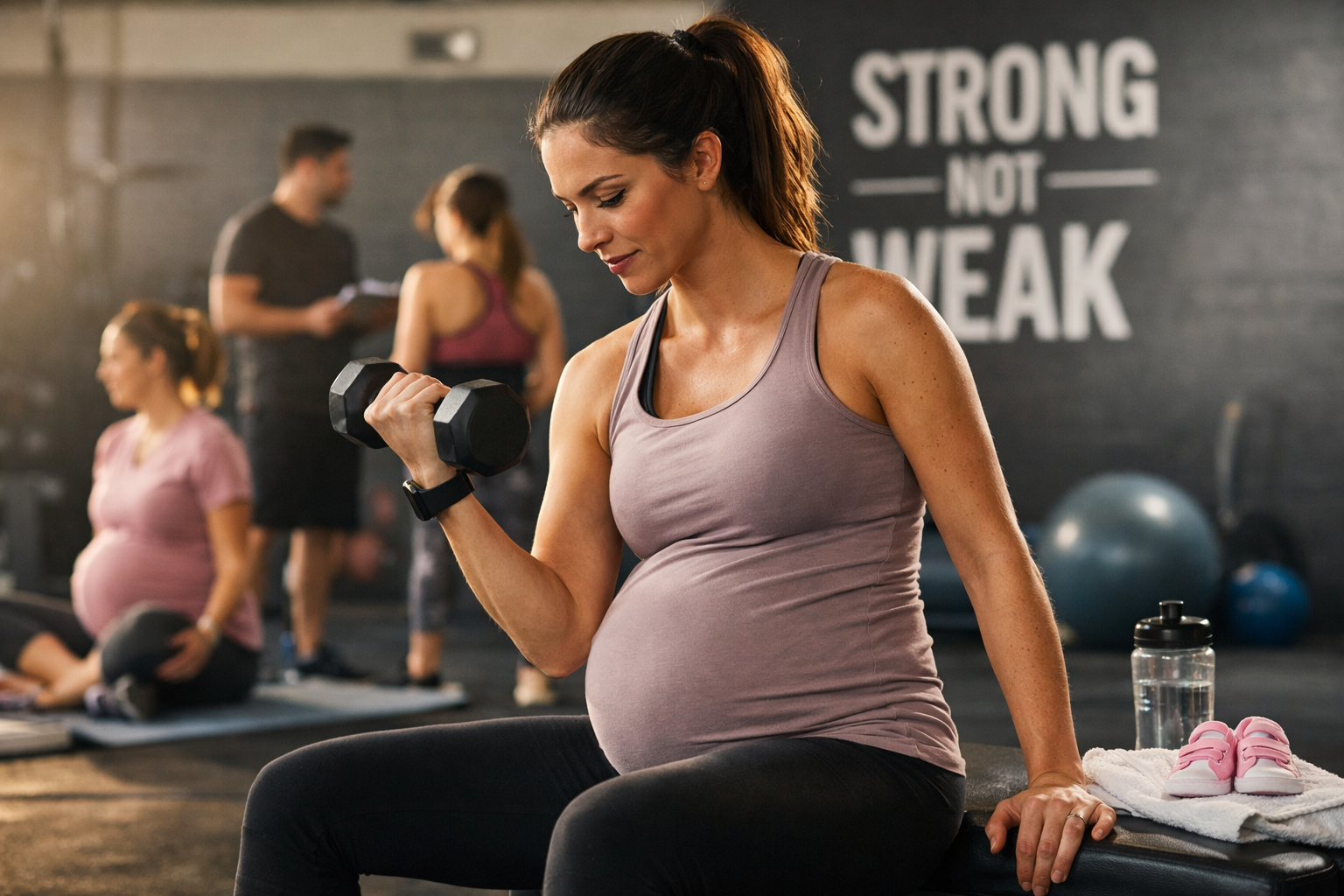
Pregnancy Is Not a Time to “Let Go”
Pregnancy is often framed as a period where women must pull back, slow down, and lower expectations—especially around movement and exercise. While caution has its place, fear-based fitness messaging has quietly created a different problem: psychological harm.
When pregnant individuals are told—explicitly or implicitly—that exercise is dangerous, selfish, or irresponsible, the result is often anxiety, guilt, loss of autonomy, and disconnection from their bodies. This isn’t protective. It’s counterproductive.
Fear-Based Fitness Advice and Psychological Stress
Fear-based health messaging during pregnancy commonly includes warnings to “just rest,” “don’t lift,” or “avoid intensity.” While usually well-intended, these messages conflict with decades of research showing that appropriate physical activity during pregnancy is safe and beneficial.
➡️ 15 Stress Management Techniques During the Holidays
According to the American College of Obstetricians and Gynecologists (ACOG), most pregnant individuals should engage in at least 150 minutes of moderate-intensity physical activity per week, barring medical contraindications. Yet many women report receiving advice that contradicts these guidelines—often increasing fear and uncertainty.
Psychologically, mixed messaging increases stress and decision fatigue, both of which are linked to higher prenatal anxiety and depressive symptoms.
The Mental Health Cost of “Letting Go”
Exercise during pregnancy is not merely about physical outcomes. Regular movement has been shown to:
- Reduce prenatal depression and anxiety
- Improve perceived control and body trust
- Support identity continuity during major life transitions
A meta-analysis found that prenatal exercise significantly reduced the odds of prenatal depression, independent of exercise intensity. Similarly, another study found that physically active pregnant women reported lower anxiety and improved mood states compared to inactive peers.
➡️ How Sport & Physical Activity Boost Mental Health, Mood & Well-Being
When fear-based advice discourages movement, it can unintentionally remove a protective mental health behavior at a time when psychological resilience matters most.
Body Autonomy, Identity, and Confidence During Pregnancy
Pregnancy already challenges body image and identity. Being told to disengage from physical competence can amplify feelings of loss and helplessness.
Research suggests that maintaining strength-based and capability-focused activities during pregnancy supports self-efficacy and body appreciation, which are protective against perinatal mood disorders.
Pregnancy is not a pause button on identity. It is a transition—one that benefits from supportive, evidence-based guidance, not fear.
What Evidence-Based Prenatal Fitness Actually Looks Like
Evidence-based prenatal fitness is not about pushing limits. It is about:
- Individualized intensity regulation
- Emphasis on movement quality and strength maintenance
- Respect for fatigue, recovery, and medical context
The Canadian Society for Exercise Physiology guidelines emphasize that exercise during pregnancy is associated with reduced risk of gestational diabetes, hypertensive disorders, excessive weight gain, and prenatal anxiety, with minimal adverse outcomes.
Fear-based messaging often ignores this nuance, replacing informed autonomy with blanket avoidance.
➡️ Myth: Aerobic Exercise and Weight Loss, the Ultimate Combination
Moving Forward: Replacing Fear With Literacy
Pregnant individuals deserve health literacy, not health anxiety.
Replacing fear-based fitness advice with evidence-based education allows women to:
- Trust their bodies
- Engage in movement safely
- Protect both physical and mental health
Pregnancy is not a time to “let go.”
It is a time to be supported, informed, and respected.
References
American College of Obstetricians and Gynecologists. (2020). Physical activity and exercise during pregnancy and the postpartum period (Committee Opinion No. 804). Obstetrics & Gynecology, 135(4), e178–e188.
Davenport, M. H., McCurdy, A. P., Mottola, M. F., Skow, R. J., Meah, V. L., Poitras, V. J., Garcia, A. J., Gray, C. E., Barrowman, N., Riske, L., Sobierajski, F., James, M., Nuspl, M., Marchand, A.-A., Nagpal, T. S., Slater, L. G., Weeks, A., & Riddell, M. C. (2018). Impact of prenatal exercise on maternal mental health: A systematic review and meta-analysis. British Journal of Sports Medicine, 52(21), 1376–1385.
Guszkowska, M. (2014). The effect of exercise and childbirth classes on fear of childbirth and locus of control. Anxiety, Stress, & Coping, 27(2), 176–189.
Mottola, M. F., Davenport, M. H., Ruchat, S.-M., Davies, G. A., Poitras, V. J., Gray, C. E., Jaramillo Garcia, A., Barrowman, N., Adamo, K. B., Duggan, M., Zehr, L., Slater, L. G., Barakat, R., Chilibeck, P. D., Fleming, K., Forte, M., Korolnek, J., Nagpal, T. S., Slater, L., & Riddell, M. C. (2018). 2019 Canadian guideline for physical activity throughout pregnancy. British Journal of Sports Medicine, 52(21), 1339–1346.
Watson, E. D., Oddie, B., & Constantinou, D. (2015). Exercise during pregnancy: Knowledge and beliefs of medical practitioners in South Africa. South African Journal of Sports Medicine, 27(2), 38–43.