
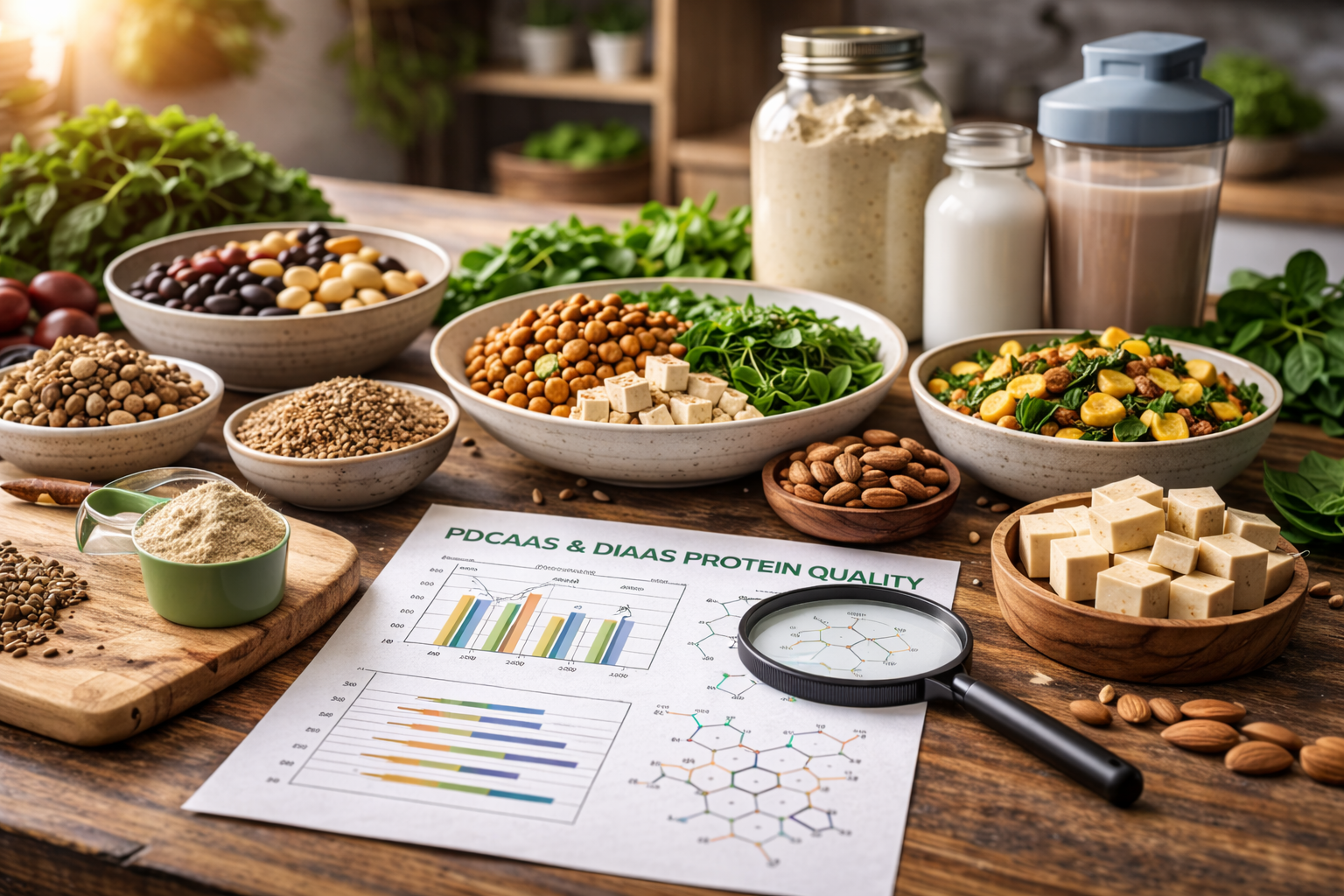
Protein quality is a hot topic in fitness, longevity, and performance communities — especially among those following plant-based or plant-forward diets. Metrics like PDCAAS (Protein Digestibility-Corrected Amino Acid Score) and DIAAS (Digestible Indispensable Amino Acid Score) are often cited as if they’re the final word in protein science. But when it comes to human performance, health outcomes, and real-world nutrition, these scores tell only part of the story.
Let’s unpack what PDCAAS and DIAAS measure — and more importantly, what they don’t.
What Are PDCAAS and DIAAS?
PDCAAS
Developed in the 1990s, PDCAAS evaluates:
- Essential amino acid profile
- Protein digestibility in the whole diet
Scores range from 0 to 1.0; a score of 1.0 is traditionally labeled “high quality.” Dairy and eggs nearly always score at or near 1.0, while many plant sources score lower.
DIAAS
Emerging as a successor, DIAAS uses ileal digestibility (small intestine) rather than total tract digestibility, and it allows scores >1.0. Early advocates argue it’s more precise than PDCAAS — but precision doesn’t always equal performance relevance.
The Limitations of PDCAAS & DIAAS
1. They Don’t Reflect Real-World Mixed Meals
Both scores are best used in isolation, not in the context of real meals. Most meals combine multiple protein sources, which can complement each other’s amino acid profiles and improve overall quality.
For example:
- Grains + legumes → better amino acid balance
- Nuts/seeds + whole grains enhance lysine availability
This synergy is not captured by single-food PDCAAS/DIAAS measurements.
➡️ Plant-Forward Doesn’t Mean Vegan Only
2. They Don’t Tell the Whole Story About Absorption
PDCAAS and DIAAS measure digestibility, not utilization. That is:
- Digestibility ≠ how much protein is ultimately used for muscle repair or growth
- Absorption is just one piece of the anabolic equation
Researchers have emphasized that digestibility scores can overestimate or underestimate real muscle protein synthesis responses depending on diet context and protein mix.
3. They Can Mislead Practical Protein Planning
A common misconception:
“Plant proteins must be combined at every meal to be complete.”
This is outdated. Humans maintain a circulating pool of amino acids, and complementary proteins across meals render the “meal-timing” complementation idea unnecessary for most people.
What does matter more is:
- Total daily protein intake
- Leucine threshold (signal for muscle protein synthesis)
- Energy balance
- Training stimulus
Plant Proteins in Practice: What Actually Matters
Daily Protein Targets
For performance and body composition goals, research supports protein intakes in the range of:
This target tends to matter far more than minor differences in PDCAAS or DIAAS.
Leucine: The Molecular Trigger
Leucine is a key amino acid that signals muscle protein synthesis. Plant sources vary in leucine content:
- Soy and pea proteins are relatively high
- Grains, nuts, and seeds are lower
When total intake meets your leucine threshold across the day, anabolic signaling is supported regardless of score.
Meal Composition > Single Food Scores
A lunch bowl of:
Lentils + quinoa + spinach + seeds
provides complementary amino acids and often exceeds quality on many isolated single protein scores.
This matches real-world eating patterns more closely than isolated protein testing.
Real World Evidence: Plant vs Animal Protein Performance
Growing research shows that well-planned plant-based diets can support:
- Muscle mass maintenance
- Strength gains
- Endurance performance
when overall protein and energy needs are met.
This reinforces that performance outcomes depend on dietary context, quantity, and consistency, not just isolated quality scores.
So What’s the Bigger Picture?
PDCAAS and DIAAS are not bad metrics — they just:
- Are too narrow for performance outcomes
- Ignore meal context and habitual diet
- Don’t reflect utilization or anabolic signaling
A more functional framing considers:
- Daily protein dosage
- Leucine triggering thresholds
- Energy availability
- Training type & goals
These factors correlate far more strongly with outcomes than single-food quality scores.
Practical Takeaways for Plant-Forward Athletes
✔ Track total daily protein first
✔ Ensure adequate leucine across meals
✔ Emphasize food variety and complementary combinations
✔ Don’t chase perfection in isolated scores
✔ Prioritize total energy intake and recovery
➡️ Fuel Your Fall Workouts With Plants
References
Food and Agriculture Organization of the United Nations. (1991). Protein quality evaluation: Report of the joint FAO/WHO expert consultation. FAO Food and Nutrition Paper.
Food and Agriculture Organization of the United Nations. (2013). Dietary protein quality evaluation in human nutrition: Report of an FAO expert consultation. FAO.
Gorissen, S. H. M., & Witard, O. C. (2018). Characterising the muscle anabolic potential of dairy, meat and plant-based protein sources in older adults. Proceedings of the Nutrition Society, 77(1), 20–31.
Mangano, K. M., Sahni, S., Kerstetter, J. E., et al. (2017). Protein distribution and muscle-related outcomes: Is there an optimal pattern? Nutrition & Metabolism, 14(1).
Morton, R. W., et al. (2018). A systematic review, meta-analysis and meta-regression of the effect of protein supplementation on resistance training-induced gains in muscle mass and strength. British Journal of Sports Medicine, 52(6), 376–384.
Volek, J. S., et al. (2015). Alternative diets and performance outcomes: A review. Journal of Sports Sciences, 33(Supp 1), S29–S37.