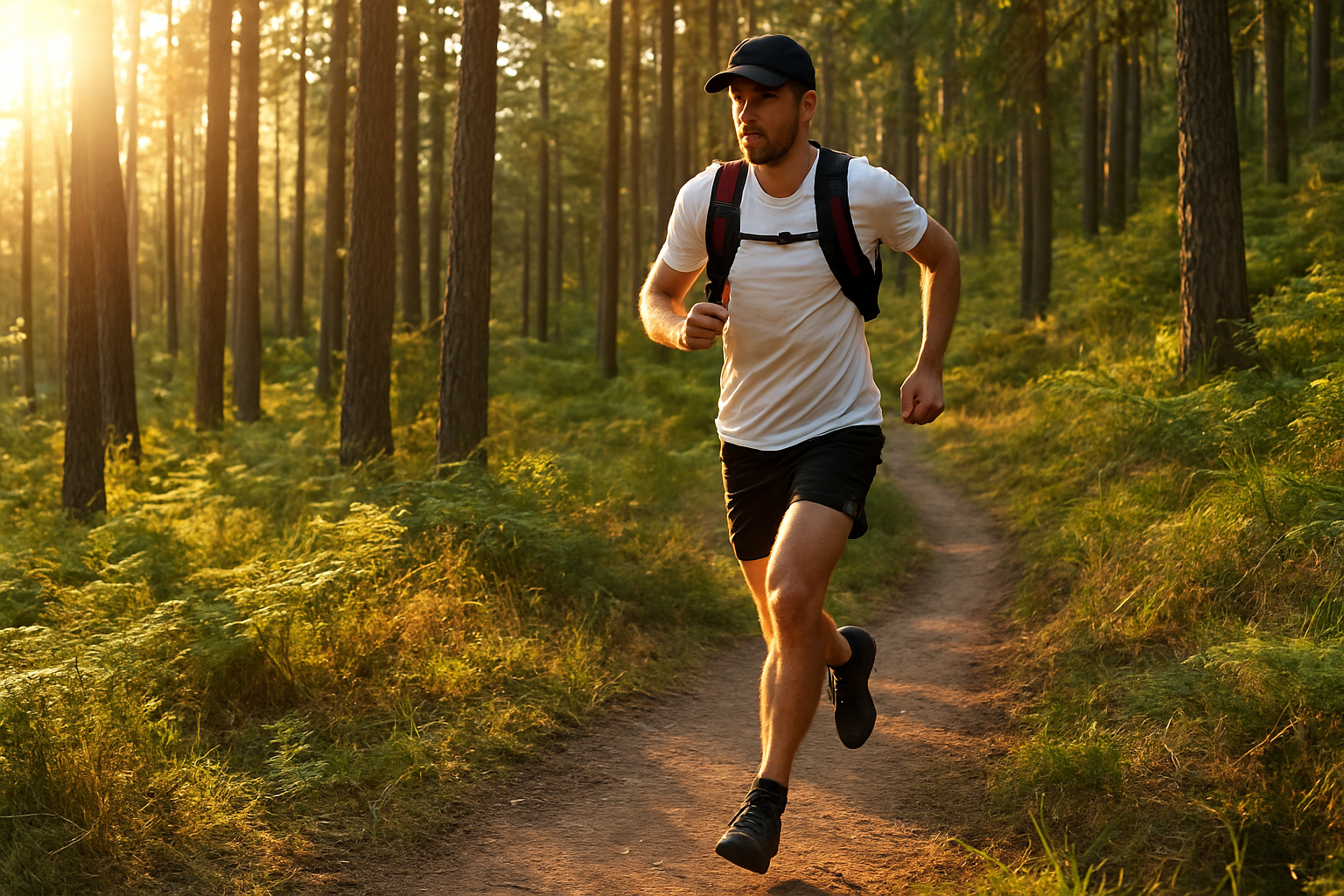
Gyms aren’t disappearing — but trails, forests, and mountains are quickly becoming the new training ground. Trail running, mountain biking (MTB), hiking, and hybrid endurance training are surging in popularity, driven by a mix of performance benefits, mental health advantages, and long-term sustainability.
Outdoor fitness isn’t just a trend. It’s a smarter way to train.
Why More People Are Training Outdoors
According to the Outdoor Industry Association, participation in outdoor physical activity increased significantly following the COVID-19 pandemic, with many people reporting greater enjoyment, reduced stress, and improved motivation when exercising in natural environments. Research consistently shows that nature-based exercise improves adherence, meaning people stick with it longer than purely indoor training.
Beyond enjoyment, outdoor training challenges the body and brain in ways treadmills and spin bikes simply cannot.
The Cognitive & Mental Health Edge of Outdoor Exercise
Exercising in natural environments has been shown to reduce anxiety, depression, and perceived stress more effectively than indoor exercise at similar intensities. Exposure to green spaces enhances attention, emotional regulation, and cognitive restoration — key components of mental fitness and endurance performance.
For athletes, this translates into:
Better stress regulation
Improved focus under fatigue
Greater emotional resilience during long efforts
Trail Running: Strength, Stability, and Efficiency
Trail running places higher demands on balance, proprioception, and eccentric muscle control than road running. Uneven terrain recruits stabilizing muscles and improves neuromuscular coordination, reducing injury risk when programmed appropriately.
Compared to road running, trail running:
Increases lower-body muscular engagement
Improves reactive agility and foot placement
Enhances cardiovascular efficiency due to variable intensity
Mountain Biking: Power, Endurance, and Cognitive Load
MTB is a true hybrid sport — blending endurance, power output, technical skill, and split-second decision-making. Studies show that off-road cycling places higher physiological and cognitive demands than road cycling due to terrain variability and technical features.
Key benefits include:
High aerobic and anaerobic stimulus
Upper- and lower-body muscular endurance
Enhanced reaction time and visual processing
Hybrid Endurance Training: The Outdoor Advantage
Hybrid endurance training — combining trail running, MTB, hiking, strength work, and aerobic base sessions — reduces monotony while promoting balanced adaptation. Cross-training lowers overuse injury risk and improves overall work capacity.
Outdoor hybrid training supports:
Sustainable volume accumulation
Year-round motivation
Long-term athletic longevity
How to Train Smarter on the Trails
1. Respect Terrain-Driven Intensity
Heart rate and perceived exertion often spike outdoors due to climbs, technical terrain, and environmental exposure. Use effort-based metrics, not just pace or power.
2. Strength Train for Stability
Trail athletes benefit from targeted strength work focusing on hips, ankles, core, and eccentric loading — improving durability and efficiency.
3. Periodize Outdoor Stress
Trail training adds mechanical and cognitive load. Balance harder technical days with lower-stress aerobic sessions to optimize recovery.
4. Fuel and Hydrate Strategically
Outdoor environments increase energy expenditure and fluid loss. Evidence continues to show adequate carbohydrate intake and hydration are essential for performance and safety.
Outdoor Fitness and Longevity
Long-term adherence matters more than short-term intensity. Outdoor fitness encourages consistent movement, social connection, and mental well-being — all linked to reduced all-cause mortality and improved quality of life.
Training outdoors isn’t just about performance. It’s about building a body and mind that last.
The Takeaway
The rise of outdoor fitness reflects a deeper shift: people want training that is effective, enjoyable, and sustainable. Trails offer variability, challenge, and connection — making them one of the most powerful training environments available.
Train smarter. Get outside. Stay durable.
References
American College of Sports Medicine. (2021). ACSM’s guidelines for exercise testing and prescription (11th ed.). Wolters Kluwer.
Barton, J., & Pretty, J. (2010). What is the best dose of nature and green exercise for improving mental health? Environmental Science & Technology, 44(10), 3947–3955.
Bratman, G. N., Anderson, C. B., Berman, M. G., Cochran, B., de Vries, S., Flanders, J., … Daily, G. C. (2019). Nature and mental health: An ecosystem service perspective. Science Advances, 5(7), eaax0903.
Impellizzeri, F. M., & Marcora, S. M. (2007). The physiology of mountain biking. Sports Medicine, 37(1), 59–71.
Lauersen, J. B., Bertelsen, D. M., & Andersen, L. B. (2018). The effectiveness of exercise interventions to prevent sports injuries. British Journal of Sports Medicine, 52(6), 353–358.
Outdoor Industry Association. (2023). Outdoor participation trends report.
Scheer, V., Basset, P., Giovanelli, N., Vernillo, G., Millet, G. P., & Costa, R. J. S. (2020). Defining off-road running: A position statement from the Ultra Sports Science Foundation. Sports Medicine, 50(6), 1007–1019.
Thomas, D. T., Erdman, K. A., & Burke, L. M. (2016). Position of the Academy of Nutrition and Dietetics, Dietitians of Canada, and the American College of Sports Medicine: Nutrition and athletic performance. Journal of the Academy of Nutrition and Dietetics, 116(3), 501–528.
World Health Organization. (2020). Guidelines on physical activity and sedentary behaviour.
World Health Organization. (2024). Physical activity factsheets.