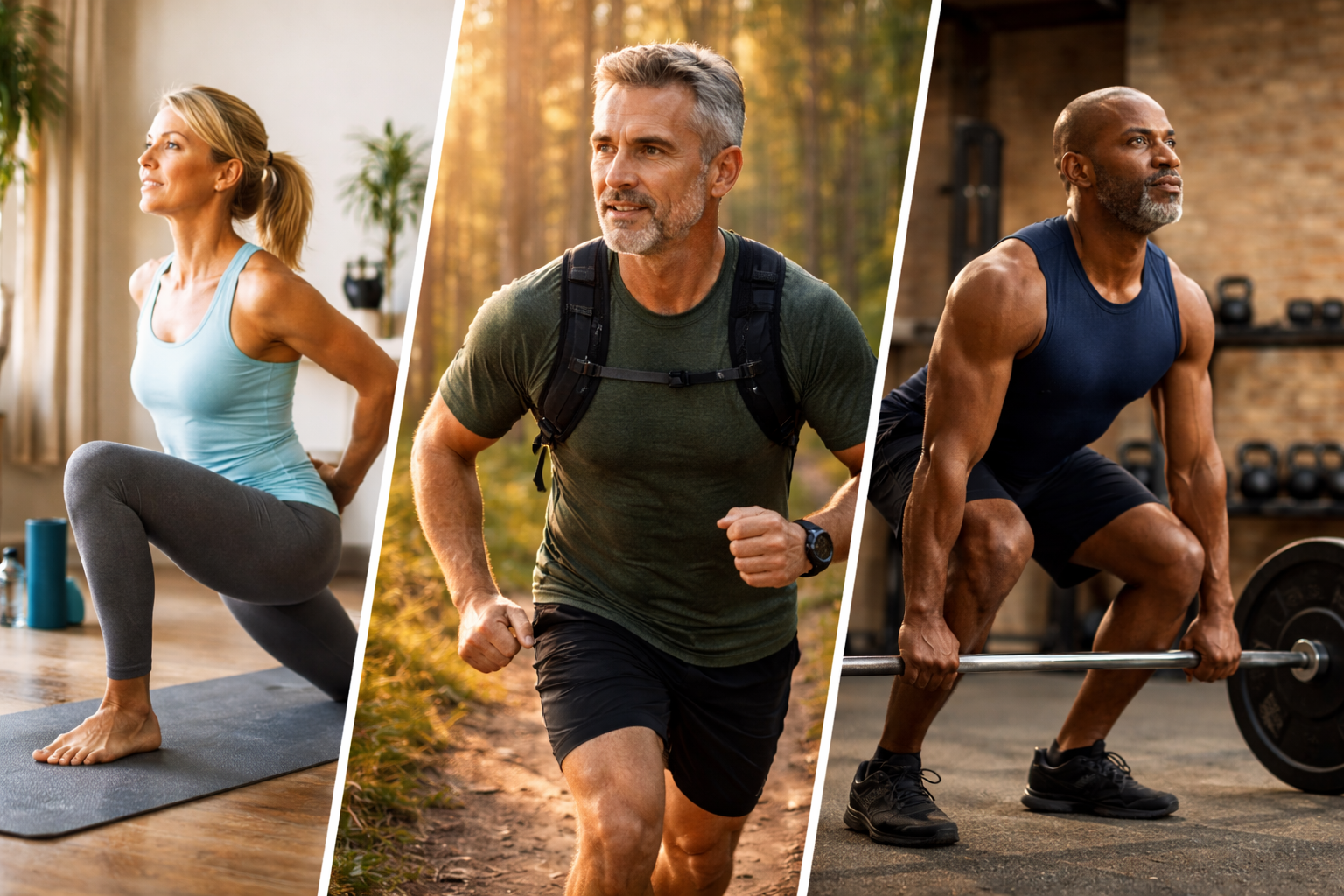
If you want your body to perform well decades from now — not just today — you must train differently than you did in your 20s or 30s. Rather than fixating on short-term performance alone, longevity fitness prioritizes mobility, strength, VO₂ capacity, stress resilience, recovery, and functional independence across the lifespan.
Scientific evidence shows that regular, multidimensional exercise can slow physiological aging, preserve physical capacity, and enhance quality of life well into older adulthood.
Why Longevity Fitness Matters
As we age, the body undergoes predictable changes:
Decline in cardiovascular capacity
Loss of muscle mass and strength (sarcopenia)
Reduced joint mobility and balance
Increased risk of chronic diseases
But research shows that regular physical activity—not just occasional workouts—can modify aging trajectories, maintaining function and reducing risks of disease, disability, and mortality.
Longevity Isn’t Just Lifespan — It’s Healthspan
Longevity fitness is never just about living longer — it’s about staying capable, pain-free, and independent longer. Exercise can partially reverse age-related declines in physiological systems and preserve functional reserves, helping you retain physical and cognitive function over time.
Core Components of Longevity Fitness
1. Maintain and Build Strength
Strength training is one of the most potent tools for defending against age-associated muscle loss (sarcopenia), metabolic decline, and frailty. Resistance training enhances muscle mass, bone density, balance, and insulin sensitivity—all key to resilient aging.
2. Sustain Cardiovascular Capacity (VO₂ Performance)
Cardiorespiratory fitness (often measured as VO₂ max) isn’t just for athletes — it’s a powerful predictor of mortality and all-cause survival. Higher VO₂ max levels correlate with lower risk of cardiovascular disease, better metabolic health, and extended survival.
Regular aerobic training — whether continuous or interval-based — helps preserve aerobic capacity that naturally declines with age.
3. Prioritize Mobility and Functional Movement
Movement efficiency supports independence and reduces fall risk. Mobility training preserves joint range of motion, encourages proper mechanics, and helps maintain balance and gait function — all predictors of long-term functional independence.
4. Build Stress Resilience and Psychological Health
Exercise isn’t just physical — it is one of the most robust modifiers of stress response and mood regulation. Regular activity reduces symptoms of anxiety and depression, improves sleep quality, and strengthens psychological resilience, factors that impact long-term health.
5. Optimize Recovery
Recovery is where adaptation happens. Quality sleep, adequate protein intake, muscle repair strategies, and periodized training cycles reduce injury risk, regenerate tissue, and facilitate chronic adaptation. Research shows recovery is critical for maximizing long-term training benefits and durability.
Putting It Into Practice: A Longevity Fitness Template
Here’s how to structure your weekly plan with both short- and long-term resilience in mind:
Weekly Longevity Training Plan (Sample)
Strength (2–3× per week):
Compound lifts (squat, hinge, push, pull), functional strength (carries, lunges).Aerobic Conditioning (2–4× per week):
Mix moderate continuous (walking, cycling) and higher-intensity sessions (intervals).Mobility & Balance (3–5× per week):
Daily joint flows, balance drills, thoracic mobility, hip/ankle releases.Recovery & Stress Modulation:
Prioritize sleep, restorative sessions (yoga), mindfulness or breathwork.
This multidimensional approach supports cardiovascular health, muscular capacity, and neuromotor function — essential pillars of aging well.
Long-Term Benefits of Longevity Fitness
Slowed biological aging: Exercise may slow markers of cellular aging and inflammation, enhancing systemic health.
Reduced chronic disease risk: Active lifestyles lower risks of diabetes, cardiovascular disease, and certain cancers.
Improved mental health and cognition: Regular activity supports brain structure, executive function, and emotional well-being.
Functional independence: Better balance, mobility, and strength translate to safer, more capable aging.
Final Thought: Think Decades, Not Days
Longevity fitness is no fad — it’s a strategic, science-aligned blueprint that keeps your body adaptive and capable, whether you’re 40, 60, or 80. The decisions you make today — training consistently, prioritizing mobility, preserving strength, and tuning your recovery — aren’t just preparing you for tomorrow’s workout… they’re setting the stage for decades of thriving movement and meaningful life.
References
Exercise improves psychological health, functional mobility, and reduces frailty. (2025). Meta-analysis summary. Finds exercise reduces depression, anxiety, enhances mobility, and lowers fall risk.
Exercise NZ media release (2025) summarizing research on exercise and biological aging markers. Exercise.org.nz. Provides context on biological aging and regular activity.
Lam, D. (2025). The effect of lifelong exercise on aging and physical performance. Journal of Aging Science, 13, Article 407. Open access summary shows exercise preserves muscle, cardiovascular, and metabolic health.
Lee, I.-M., Shiroma, E. J., Lobelo, F., Puska, P., Blair, S. N., & Katzmarzyk, P. T. (2012). Effect of physical inactivity on major non-communicable diseases worldwide: An analysis of burden of disease and life expectancy. The Lancet, 380(9838), 219–229.
Muscle condition in older adults improved by exercise and antioxidant synergy: Meta-analysis. Scientific Reports. (2025). Shows exercise enhances muscle mass and function in aging populations.
Protocol for enhancing active aging through HIIT vs continuous training. PubMed. (2025). Systematic comparative RCT evidence on VO₂ max, strength, cognition, and mood improvements in older adults.
Resistance exercise training improves cardiorespiratory fitness in older adults. Age and Ageing. (2022). Evidence supports strength training’s role in preserving aerobic function and strength with aging.
U.S. Department of Health and Human Services. (2023). Physical activity recommendations for older adults and adults. Government report summarizing strength and aerobic training benefits.