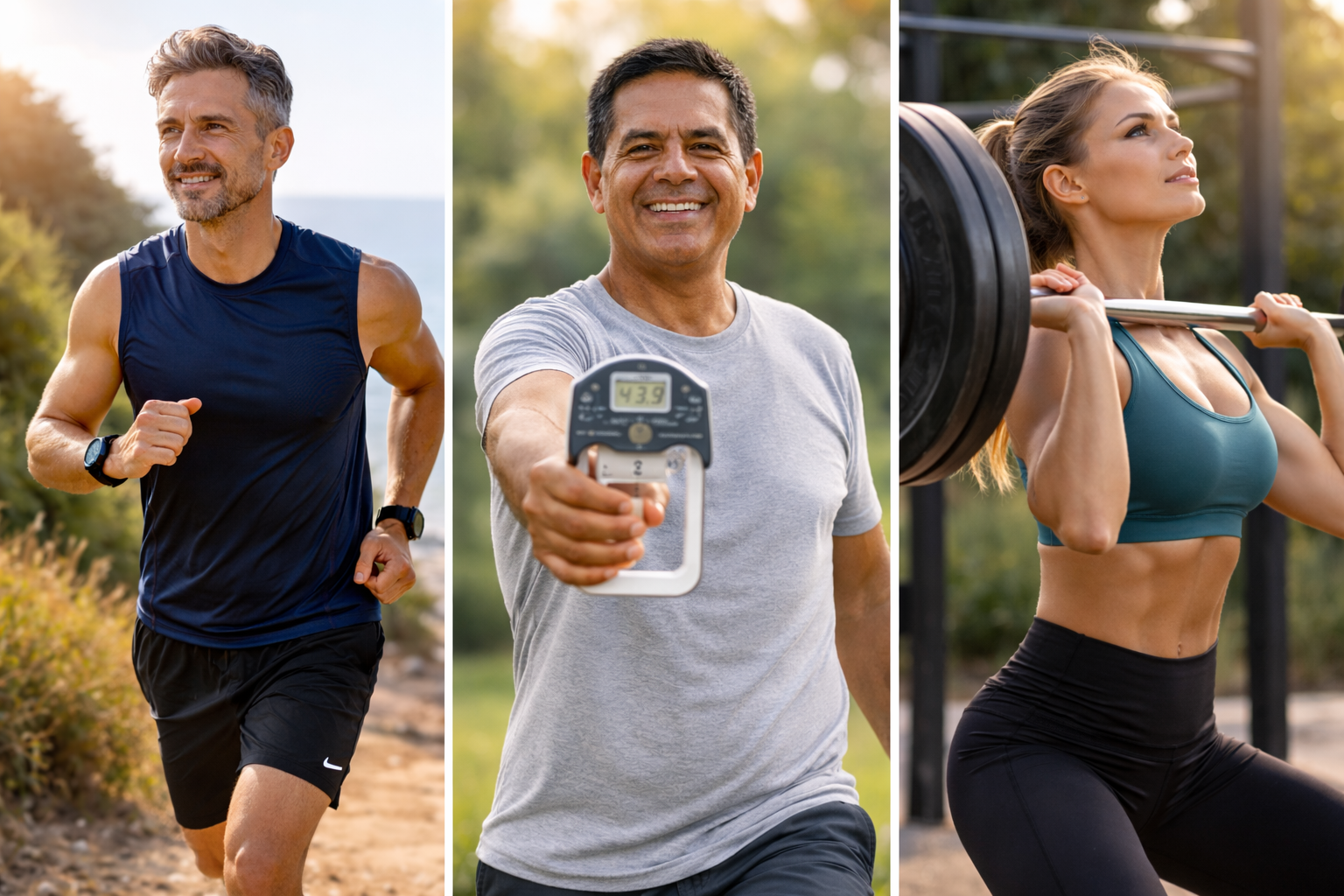
When it comes to living longer — and living better — traditional health markers like cholesterol and blood pressure only tell part of the story. Emerging science highlights three physical metrics that consistently predict lifespan and healthy aging: VO₂max, grip strength, and muscle mass. These markers are not just about performance — they reflect the body’s resilience, functional reserve, and aging trajectory.
Why These Metrics Matter for Longevity
1. VO₂max: Your Cardiovascular Fitness Engine
VO₂max (maximal oxygen uptake) measures how effectively your body can take in, transport, and utilize oxygen during intense exercise. It’s widely recognized as a robust indicator of cardiorespiratory fitness — and a powerful predictor of lifespan. Higher VO₂max scores are associated with significantly lower all-cause mortality and reduced cardiovascular risk, even after adjusting for traditional risk factors like smoking and diabetes.
Research shows that people with higher cardiorespiratory fitness have a lower risk of premature death, with incremental increases in VO₂max correlating with proportional reductions in mortality risk.
➡️ Cardiorespiratory Fitness and Mortality
2. Grip Strength: A Simple but Powerful Biomarker
Grip strength — typically measured with a hand dynamometer — might seem like a narrow test, but it’s one of the strongest physical predictors of mortality. Multiple large cohort studies demonstrate that greater grip strength is associated with lower rates of all-cause, cardiovascular, and cancer mortality, independent of body composition or activity level.
Grip strength serves as a proxy for overall muscle strength and neuromuscular health, and declines with age signal processes like sarcopenia (age-related muscle loss) and frailty that are powerful drivers of disability and mortality risk.
Participating in regular strength training not only boosts overall muscle strength but preserves grip strength — both critical elements for healthy aging.
3. Muscle Mass: Your Metabolic Safeguard
Muscle mass itself matters for longevity: it supports metabolic health, improves glucose regulation, buffers against injury and illness, and preserves independence as we age. Research on aging populations shows that loss of muscle mass is directly linked to reduced VO₂max and declining functional capacity — compounding risks for early mortality.
Maintaining muscle mass through resistance training not only improves strength but enhances insulin sensitivity and systemic inflammation profiles, key factors in chronic disease prevention and longevity.
➡️ Strength Training for Longevity
How These Markers Work Together
While each metric individually predicts longevity, their predictive power increases when combined. A major prospective study from the UK Biobank found that adults with both high cardiorespiratory fitness (VO₂max) and high grip strength had substantially lower all-cause and cardiovascular mortality compared with those low in both metrics.
Together, these metrics indicate:
- Efficient oxygen transport and utilization
- Strong musculoskeletal and neuromuscular systems
- Better metabolic and systemic resilience
These outcomes map closely to what researchers identify as healthspan — not just years lived, but years lived well.
Practical Ways to Improve These Metrics
Boost VO₂max
- Structured aerobic training such as interval training and sustained moderate-intensity exercise
- Increasing weekly cardiovascular volume with activities like running, cycling, rowing
Increase Grip Strength
- Compound lifts (deadlifts, farmer’s carries, rows)
- Isolated grip work (dynamometer, hangs, pinches)
Build & Preserve Muscle Mass
- Progressive resistance training with compound and accessory movements
- Adequate protein intake to support muscle protein synthesis
➡️ Importance of Protein to Achieving Your Goals
Balanced recovery including sleep and stress management
➡️ The Power of a Good Night’s Sleep
Takeaway
VO₂max, grip strength, and muscle mass aren’t just performance statistics — they’re biological markers of aging and robustness. Prioritizing cardiorespiratory health, muscular strength, and lean muscle mass equips your body with the resilience it needs to thrive across decades.
References
Blair, S. N., Kohl, H. W., Paffenbarger, R. S., Clark, D. G., Cooper, K. H., & Gibbons, L. W. (1989). Physical fitness and all-cause mortality: A prospective study of healthy men and women. JAMA, 262(17), 2395–2401.
Kim, Y., White, T., Wijndaele, K., Westgate, K., Sharp, S. J., Helge, J. W., Wareham, N. J., & Brage, S. (2018). The combined effects of cardiorespiratory fitness and grip strength on mortality: A prospective cohort study. European Journal of Epidemiology, 33(10), 953–964.
Newman, A. B., Kupelian, V., Visser, M., Simonsick, E. M., Goodpaster, B., Nevitt, M., Kritchevsky, S. B., Tylavsky, F. A., Rubin, S. M., & Harris, T. B. (2006). Strength, but not muscle mass, is associated with mortality in the Health, Aging and Body Composition Study cohort. The Journals of Gerontology: Series A, 61(1), 72–77.
Ruiz, J. R., Sui, X., Lobelo, F., Morrow, J. R., Jackson, A. W., Sjöström, M., & Blair, S. N. (2008). Association between muscular strength and mortality in men: Prospective cohort study. BMJ, 337, a439.
Strasser, B., & Burtscher, M. (2018). Survival of the fittest: VO₂max, muscle mass, and mortality risk. European Journal of Preventive Cardiology, 25(13), 1429–1437.