
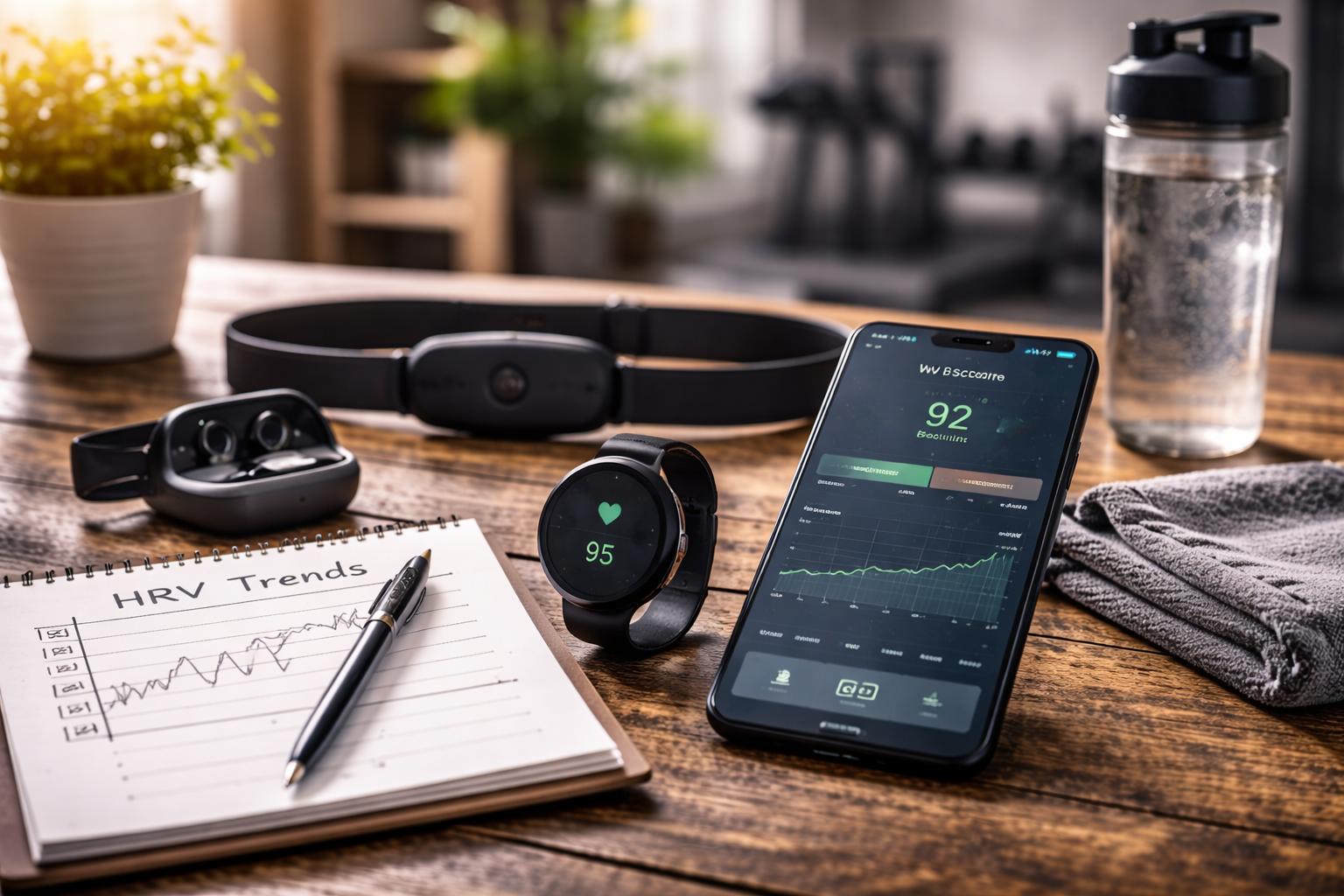
Heart rate variability (HRV) has become one of the most discussed metrics in fitness, sport performance, and longevity circles. From elite endurance athletes to recreational exercisers wearing smartwatches, HRV is often presented as a daily window into recovery, stress, and training readiness.
But does HRV truly deliver on its promise—or has it become another overinterpreted data point?
Let’s break down what HRV actually measures, where it shines, where it falls short, and how to use it intelligently rather than obsessively.
What HRV Actually Measures
HRV refers to the variation in time between successive heartbeats, typically measured in milliseconds. Contrary to popular belief, a perfectly steady heartbeat is not ideal. A healthy heart responds dynamically to internal and external demands.
HRV reflects the balance between the two branches of the autonomic nervous system (ANS):
- Parasympathetic (“rest and digest”)
- Sympathetic (“fight or flight”)
Why HRV Became So Popular
HRV gained traction because it:
- Is non-invasive
- Responds quickly to training stress
- Correlates with recovery status
- Can be tracked daily using wearables
Research shows that HRV can reflect accumulated training load and autonomic fatigue, particularly in endurance athletes.
This made HRV appealing as a potential real-time decision-making tool for training intensity and volume.
Where HRV Is Genuinely Useful
1. Tracking Recovery Trends Over Time
HRV is most valuable when assessed as a trend, not a single data point. Sustained drops over several days may indicate:
- Inadequate recovery
- Excessive training load
- Poor sleep or elevated life stress
This aligns closely with concepts discussed in recovery-focused programming and overtraining prevention.
➡️ Why Recovery Is the Missing Variable in Most Fat-Loss Programs
2. Monitoring Nervous System Stress
HRV captures stress beyond training—sleep deprivation, psychological stress, illness, and caloric restriction can all suppress HRV.
This is especially relevant for:
- Fat-loss phases
- High-volume endurance blocks
- Plant-forward or calorie-restricted diets
➡️ The Weight Loss and Wellness Connection
3. Long-Term Health & Longevity Context
Lower HRV has been associated with increased cardiovascular and all-cause mortality risk.
While HRV alone does not determine health outcomes, it may serve as a general resilience marker, especially when paired with aerobic fitness metrics like VO₂max
Where HRV Becomes Overhyped
1. Daily Training Decisions Based on One Number
Using HRV alone to decide whether to train or rest can backfire. Day-to-day HRV fluctuates due to:
- Hydration status
- Alcohol intake
- Sleep position
- Measurement timing
A single low reading does not automatically mean you should skip training.
2. Wearable Accuracy Limitations
While chest straps remain the gold standard, wrist-based devices rely on optical sensors, which introduce variability—especially during sleep or movement.
HRV data should be interpreted as directional, not diagnostic.
3. Confusing Readiness With Performance
High HRV does not guarantee a great workout, just as low HRV does not ensure poor performance. Psychological readiness, fueling, biomechanics, and training specificity still matter.
This mirrors similar misconceptions seen with Zone 2 training debates
➡️ Zone 2: Helpful or Overhyped?
HRV vs. Simpler Metrics
For many individuals, resting heart rate trends, perceived exertion, sleep quality, and motivation provide equal—or greater—insight than HRV alone.
This reinforces an important coaching principle:
Metrics should inform behavior—not dictate it.
Who Benefits Most From HRV Monitoring?
HRV tends to be most useful for:
- Endurance athletes with high training volumes
- Individuals managing heavy life stress
- Athletes prone to overreaching or burnout
- Those intentionally monitoring recovery during fat-loss phases
For beginners or casual exercisers, HRV adds little value beyond foundational habits.
Practical Guidelines for Using HRV Wisely
- Measure at the same time daily, ideally upon waking
- Track 7–14-day trends, not single readings
- Pair HRV with subjective feedback (sleep, soreness, mood)
- Avoid reacting emotionally to daily fluctuations
- Use HRV as a conversation starter, not a command
Final Verdict: Useful, But Not Magical
Heart rate variability is neither useless nor revolutionary.
When used correctly, HRV can:
- Enhance recovery awareness
- Improve long-term training sustainability
- Provide insight into systemic stress
When overemphasized, it becomes noise.
True progress still comes from:
- Smart programming
- Adequate recovery
- Consistent nutrition
- Long-term adherence
Metrics should support those fundamentals—not replace them.
References
Buchheit, M. (2014). Monitoring training status with HR measures: Do all roads lead to Rome? Frontiers in Physiology, 5, 73.
Hernando, D., Roca, S., Sancho, J., Alesanco, A., & Bailón, R. (2018). Validation of the Apple Watch for heart rate variability measurements during relax and mental stress. Sensors, 18(8), 2619.
Plews, D. J., Laursen, P. B., Stanley, J., Kilding, A. E., & Buchheit, M. (2013). Training adaptation and heart rate variability in elite endurance athletes. European Journal of Applied Physiology, 113(4), 919–927.
Shaffer, F., & Ginsberg, J. P. (2017). An overview of heart rate variability metrics and norms. Frontiers in Public Health, 5, 258.
Task Force of the European Society of Cardiology and the North American Society of Pacing and Electrophysiology. (1996). Heart rate variability: Standards of measurement, physiological interpretation, and clinical use. Circulation, 93(5), 1043–1065. https://doi.org/10.1161/01.CIR.93.5.1043
Thayer, J. F., Yamamoto, S. S., & Brosschot, J. F. (2010). The relationship of autonomic imbalance, heart rate variability and cardiovascular disease risk factors. International Journal of Cardiology, 141(2), 122–131.