How biometrics, wearables, and individualized programming can unlock better performance and longevity
The fitness world is waking up to a simple truth: what worked for “the masses” doesn’t always work for you. Advances in wearables, biomarker science, and data-driven coaching let us move beyond cookie-cutter programs toward truly personalized training — programs that improve performance, reduce injury risk, and support long-term health. Below I explain the evidence, the tools, real-world implementation steps, and the limits you need to know.
Why one-size-fits-all programming is losing its edge
Traditional prescription methods (e.g., “do X minutes of cardio and Y sets of strength”) assume a uniform response to the same load. But individual responses to identical training stimuli vary widely because of genetics, current fitness, sleep and stress, gut microbiome, prior training history, and daily load/recovery status. That variability explains why two people doing the same workout can get very different results.
Clinical and applied research shows that tailoring exercise to the individual — via performance testing, biomarkers, and adaptable programming — improves outcomes for diverse populations (from cardiac rehab and cancer survivors to athletes). In short: personalization isn’t just trendy — it can produce measurably better health and performance.
What “personalized training” actually means (practical definition)
Personalized training integrates three things:
Baseline profiling — lab/field tests (VO₂max or submax tests, strength assessments, movement screens) plus simple biomarkers and history.
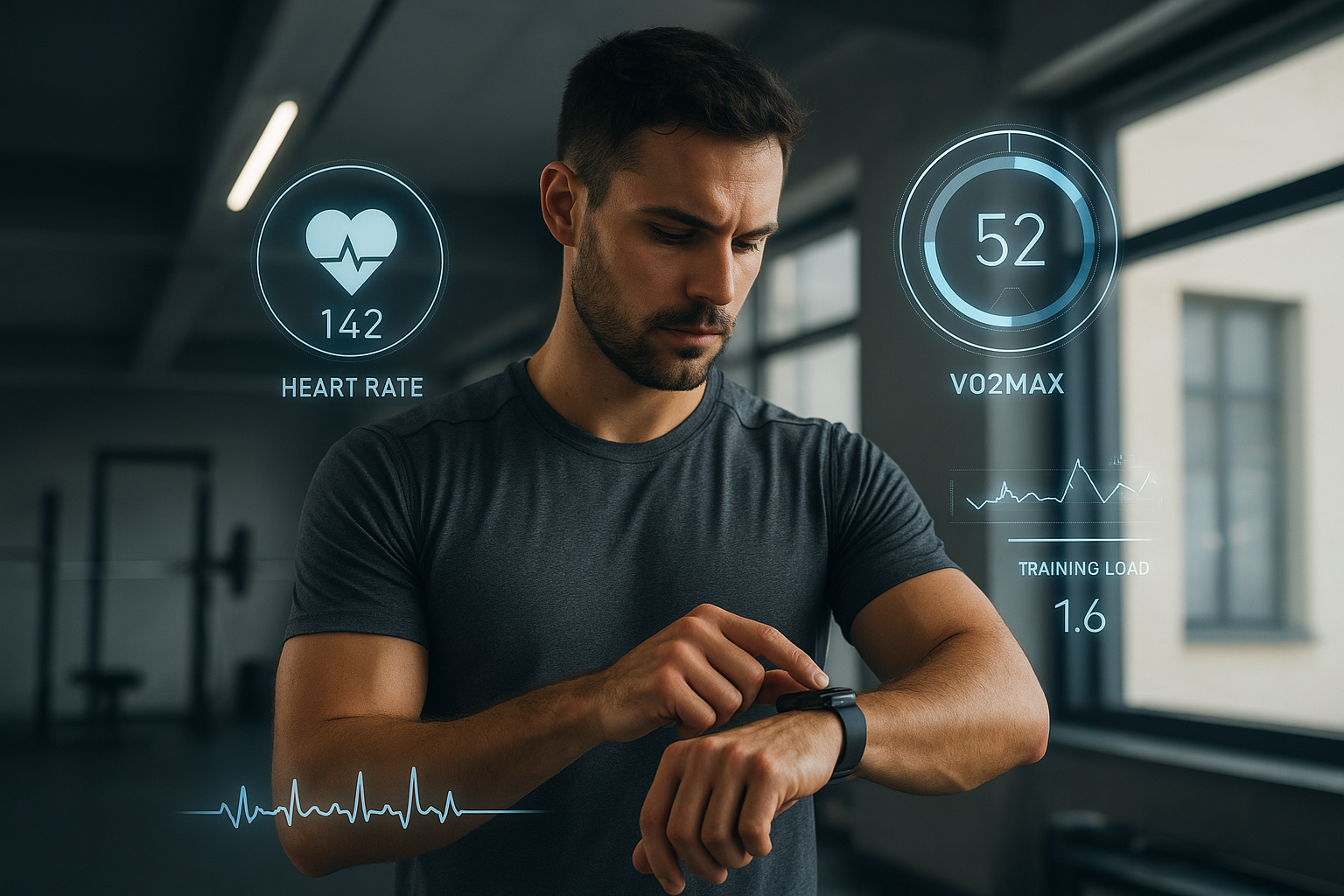
Continuous monitoring — wearables and subjective data (sleep, perceived exertion, mood, HR variability) to track load and recovery in real time.
Adaptive programming — rules that adjust intensity, volume, or recovery based on the profile and ongoing data (e.g., lower intensity after poor sleep; push intensity when recovery looks strong).
The evidence: Do personalized approaches outperform generic plans?
Yes — and the literature is growing.
A randomized/controlled body of work demonstrates that personalized dietary interventions, when built on individual glycemic responses, can reduce postprandial glucose and improve metabolic markers compared with one-size-fits-all advice. This supports the idea that personalization (including microbiome-informed guidance) changes meaningful physiology.
Trials and programs using individualized exercise prescriptions (including app-based and biomarker-informed approaches) have produced bigger improvements in adherence, enjoyment, and some health outcomes compared with standard exercise advice in multiple populations.
Cardiorespiratory fitness (VO₂max) remains one of the strongest predictors of long-term mortality, but how people improve VO₂max varies widely — personalized training can better target what helps each person improve.
Taken together, these lines of evidence indicate personalization increases efficacy and relevance for individuals — especially for metabolic health, adherence, and targeted performance goals.
The role of wearables & biometrics — powerful, but with limits
Modern wearables (wrist devices, rings, chest straps) let us continuously monitor heart rate, sleep, step counts, and estimations of VO₂-derived fitness. They’re a practical bridge between the lab and daily life. However, device accuracy varies by metric and by device model — heart rate tends to be reasonably good at rest and steady cardio, but VO₂max, energy expenditure, and lactate estimates are still imperfect in many consumer devices (and can be less reliable in very highly trained athletes). Use wearables for trends and flags, not as perfect measurements.
Research has shown that biomarkers (resting HR, heart-rate variability, simple blood markers, or targeted inflammatory markers) can help identify when someone is recovering, at risk for maladaptation, or primed for a heavy session — but they’re most useful when combined with context (symptoms, sleep, training load).
How to implement personalized training — a practical 5-step framework
This is a reproducible workflow you can use with clients or implement on your own.
Baseline profile (Week 0)
Simple field tests (20-minute FTP test, submax VO₂ estimate, 1RM or strength proxies, mobility screens) and a brief health/history intake.
Set clear goals & success metrics
Performance (FTP, race times), health (fasted glucose, blood pressure), or longevity markers (muscle mass, mobility). Choose 1–3 primary markers.
Deploy continuous monitoring
Wearables for HR and sleep, daily subjective ratings (RPE, sleep quality, mood), and periodic biomarker checks if available (e.g., resting HR, fasting glucose, CRP). Use device trends rather than single readings.
Program with adaptive decision rules
Create simple rules: e.g., if HRV drops X% and sleep <6 hrs → reduce intensity / add active recovery. If recovery markers are good and progressive overload tolerated → add a higher-intensity block.
Iterate & re-test every 6–12 weeks
Reassess VO₂ or performance metrics, re-profile biomarkers, and adjust the plan based on what changed. Personalization is a cycle, not a single test.
Examples (quick, real-world)
The busy professional: uses a ring/wrist device + weekly time-efficient interval sessions. Program reduces intensity when sleep <6 hrs and shifts to high-quality mobility and strength micro-sessions on high-stress weeks. Wearables flag recovery; rules preserve consistency.
The master athlete chasing longevity: focuses on strength, mobility, and moderate VPA; uses quarterly lab tests to track bone density and glucose control; adjusts volume across seasons to prioritize durability and joint health. Evidence links both fitness and muscle mass to long-term health.
Pitfalls & cautions
Overreliance on raw device outputs. Devices are excellent trend tools but can misestimate metrics; validate important decisions with testing or clinical measures when possible.
Data overwhelm. Too many metrics can paralyze decisions. Pick a few high-value markers (sleep, resting HR/HRV trends, RPE, and one performance metric) and ignore the noise.
Equity and access. High-tech personalization can widen access gaps; inexpensive personalization (periodic field tests + subjective monitoring) still delivers major gains.
Bottom line
Personalized training is not a fad. When done well — combining profiling, smart monitoring, and adaptive programming — it produces better engagement, better targeted physiological changes, and stronger long-term outcomes than a generic plan. Use wearables and biomarkers as decision support, not gospel. Start small: build a baseline profile, track a few consistent metrics, and create uncomplicated decision rules that let training adapt in real time. Over months and years, that adaptability equals better performance and better longevity.
References
Bermingham, K. M., et al. (2024). Effects of a personalized dietary program on cardiometabolic health: randomized clinical trial. Nature Medicine.
Engel, F. A., et al. (2025). Validity of VO₂max estimates from consumer smartwatches. European Journal of Applied Physiology.
Jamieson, A., et al. (2025). A guide to consumer-grade wearables in cardiovascular monitoring. Frontiers/PMC.
Mandsager, K., et al. (2018). Association of cardiorespiratory fitness with long-term mortality. JAMA Network Open, 1(6), e183605.
Nasb, M., et al. (2024). Unraveling precision exercise: from efficacy to implementation. Trends in Exercise Science.
Ross, R., et al. (2019). Understanding inter-individual variability and frameworks for individualized exercise prescription. British Journal of Sports Medicine, 53, 1141–1152.
Song, E. J., et al. (2022). Personalized diets based on the gut microbiome: State of the evidence and practical applications. Nutrients (review).
Zeevi, D., et al. (2015). Personalized Nutrition by Prediction of Glycemic Responses. Cell, 163(5), 1079–1094.