
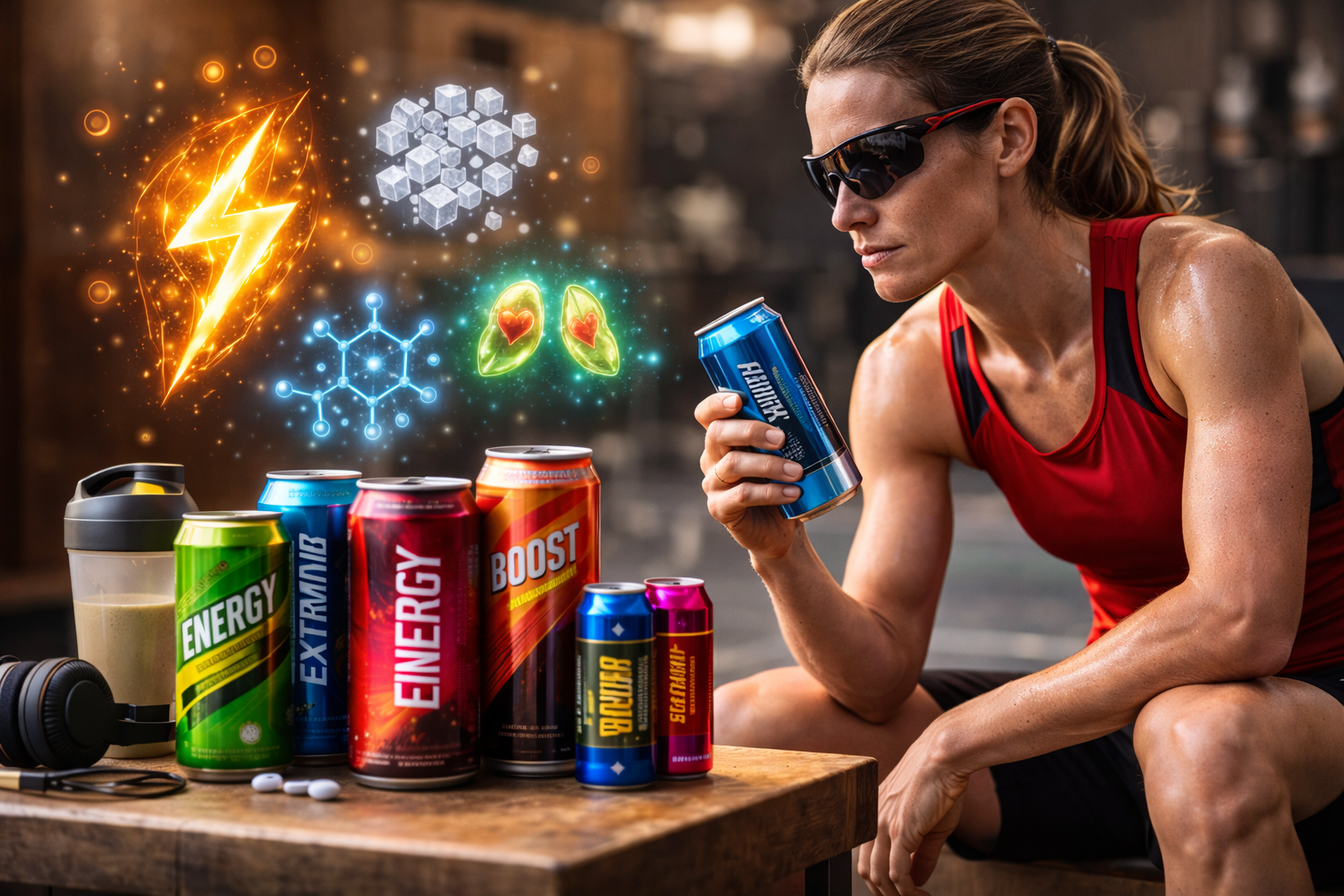
In the fast-paced landscape of 2026, energy drinks have evolved from neon-colored “sugar bombs” into sophisticated “functional tonics.” But with this evolution comes a significant amount of noise. Are these cans providing genuine metabolic fuel, or are they simply high-interest loans on your future energy?
To achieve the Double Win—maximizing your output while protecting your long-term health—you must understand the “software” interaction between caffeine, synthetic additives, and your unique physiology.
The Benefits: More Than Just a Jolt
When used strategically, the right energy drink can be a potent tool for Athletic Processing Speed and cognitive endurance.
Cognitive Sharpening: Low-dose caffeine combined with nootropics like L-theanine can improve focus without the “jitters.”
Reaction Time: For athletes, the primary benefit is a reduction in perceived exertion. Research shows that caffeine significantly enhances performance in tasks requiring rapid visual processing and motor-unit recruitment.
The Downsides: The Hidden “Metabolic Debt”
The primary danger isn’t always the caffeine—it’s the delivery system and your personal genetic makeup.
The Insulin Spike: Drinks loaded with high-fructose corn syrup cause a massive insulin surge. This doesn’t just stall fat loss; it leads to “reactive hypoglycemia,” leaving you more tired than before.
Nutrigenetic Interference: Depending on your genetic profile, specifically the CYP1A2 gene, you may be a “slow metabolizer” of caffeine. For these individuals, a single drink can disrupt sleep architecture for hours.
Toxic Load: Many legacy drinks contain contaminants or additives that disrupt chronic disease prevention efforts by causing oxidative stress.
➡️ Why Maintenance Calories Matter More Than Fat-Loss Calories
The “Healthiest” vs. The Most Harmful
| Feature | The Healthy Choice (Functional Tonics) | The Harmful Choice (Legacy Soda-Style) |
| Sweetener | Stevia, Monk Fruit, or Erythritol | High Fructose Corn Syrup / Sucrose |
| Caffeine Source | Green Tea, Guayusa, or Coffee Fruit | Synthetic Caffeine Anhydrous |
| Additives | Electrolytes, L-Theanine | Artificial Dyes (Red 40) |
—–
Who are they best for?
Energy drinks are a “context-dependent” tool.
Best For: High-performance athletes during peak training blocks or professionals needing a 2-hour window of deep work.
Worst For: Individuals with high anxiety, those with a history of heart palpitations, or anyone using them to mask a chronic lack of sleep.
➡️ Training Intensity, Not Volume, Is Often the Real Recovery Issue
Ranking the “Best to Worst” Energy Drinks
1. The Gold Standard: GUAYAKI (Yerba Mate)
Why it’s #1: It is the ultimate “clean” fuel. Yerba Mate contains xanthines (like caffeine) but also theobromine (found in chocolate), which provides a smoother, vasodilating effect. It offers a “Double Win” by being organic and often fair-trade, supporting both your brain and the planet.
Best for: Sustained focus without the “crash.”
2. The Functional Favorite: CELSIUS (Essentials/Original)
Why it’s #2: Celsius paved the way for “fitness-focused” drinks. They use a proprietary blend of green tea, ginger, and guarana. Most importantly, they are sugar-free and skip the artificial dyes like Red 40 that can disrupt the gut-brain axis.
Best for: Pre-workout metabolic boosting.
3. The Modern Contender: GHOST ENERGY
Why it’s #3: Ghost is the “Science-Forward” brand. They are one of the first to provide full label transparency (no “proprietary blends”). They include Alpha-GPC and NeuroFactor, which directly support the Athletic Processing Speed we discussed in our previous post.
Best for: Gamers and athletes needing intense cognitive clarity.
4. The Legacy Standard: RED BULL (Sugar-Free)
Why it’s #4: While it lacks the fancy nootropics of modern brands, the 80mg caffeine dose is actually quite modest and manageable for “slow metabolizers” (those with the CYP1A2 gene variant). However, the use of synthetic caffeine and taurine keeps it lower on the functional list.
Best for: A predictable, low-dose “pinch hitter.”
5. The Progress Staller: MONSTER (Original/Sugar-Loaded)
Why it’s #5: This is the most harmful of the major brands due to the massive 54g of sugar per can. This creates a violent insulin spike that stalls fat loss and creates systemic inflammation. Even their “Ultra” (sugar-free) lines rely heavily on artificial colors and flavors that don’t align with a high-performance biological software approach.
Best for: Avoid if your goal is long-term health optimization.
Verdict
Assessments of “harmful” vs “healthy” are subjective and depend on your unique goals and genetic tolerance. If you have a high sensitivity to stimulants, even a “rank #1” drink might be a poor choice for your HRV.
References
Azhdari, M., & Talepour Ardakani, H. (2025). Nutrigenomics and food safety in chronic disease prevention: From bioactive nutrients to contaminants. Iranian Journal of Diabetes and Obesity, 17(4), 283–290.
Parekh, R., Hammond, B. R., Jr., & Chandradhara, D. (2024). Lutein and zeaxanthin supplementation improves dynamic visual and cognitive performance in children: A randomized, double-blind, parallel, placebo-controlled study. Advances in Therapy, 41(4), 1496–1511.
Singar, S., Nagpal, R., Arjmandi, B. H., & Akhavan, N. S. (2024). Personalized nutrition: Tailoring dietary recommendations through genetic insights. Nutrients, 16(16), 2673.
Wu, S., Menut, P., Miao, S., & Turchiuli, C. (2025). Algae protein creates sustainable alternatives for various food matrices: From function to nutrition. Comprehensive Reviews in Food Science and Food Safety, 24(5), 70264.