
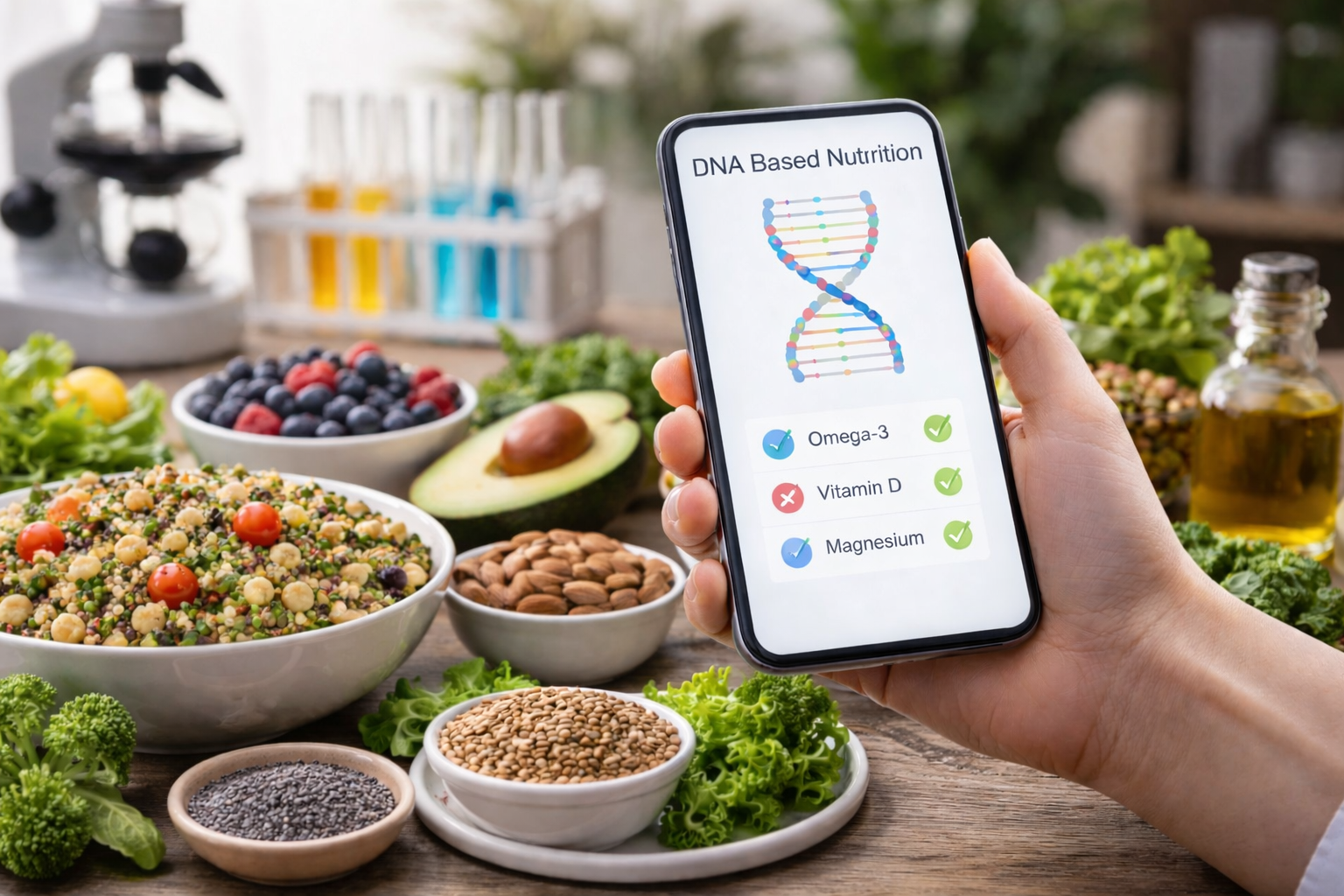
In 2026, the era of generic diet plans is officially ending. We now have the capability to map our biological software down to single nucleotide polymorphisms (SNPs) to understand exactly how our bodies respond to specific foods. This is the realm of DNA-based nutrition—and it holds the key to personalizing your plant-based performance.
Generic dietary advice assumes everyone processes nutrients the exact same way. However, emerging multi-perspective research has unlocked the science of precision nutrition, showing that your genetic profile heavily dictates your need for specific plant nutrients.
The Science: Nutrigenomics vs. Nutrigenetics
To understand this paradigm shift, we must divide the field into two distinct methodologies:
Nutrigenomics: This examines how the foods you eat influence your gene expression. For example, specific plant polyphenols can actively “silence” chronic inflammatory pathways.
Nutrigenetics: This looks at the flip side—how your specific genetic variations (your SNPs) dictate how your body responds to dietary nutrients.
If you have a specific genetic polymorphism, your body might be sluggish or highly efficient at utilizing a plant bioactive.
How Your Genes Dictate Plant Nutrient Needs
Several well-documented genetic markers show us exactly why plant-based athletes need to tailor their plates to their biological software:
The MTHFR Gene and Folate: This is the most famous example of nutrigenetics. The catalytic action of the MTHFR enzyme metabolizes folate (rich in leafy greens) into its active form. Genetic variations like the C677T polymorphism do not activate this metabolism properly, causing folate deficiency and a buildup of homocysteine. If you carry this variant, generic recommendations fail you; you require higher, active doses of methylfolate.
The CD36 Gene and Healthy Fats: New 2025 research indicates that variants in the CD36 gene—which is heavily implicated in fat taste perception and metabolism—change anthropometric and metabolic outcomes among individuals. This dictates how aggressively you should utilize plant fats like avocados and nuts in your macronutrient splits.
Polyphenol Metabolism: Master programmers like resveratrol (in grapes), curcumin (in turmeric), and EGCG (in green tea) operate on specific histone deacetylation pathways to lower oxidative stress. Depending on your genetic profile, your ability to extract this anti-inflammatory protective barrier varies significantly.
➡️ Heart Rate Variability (HRV): Useful Tool or Overhyped Metric?
The Mental Win: Transition From Obsession to Alignment
While accessing a detailed map of your genetic software is fascinating, the golden rule of 2026 is avoiding hyper-fixation. Knowing your DNA isn’t about finding an excuse to stress or sacrifice—it is about finding the frictionless path to your Double Win (simultaneously protecting personal health and planetary stability).
➡️ Why Consistency Beats Optimization Every Time
Your DNA isn’t your destiny; it’s simply the blueprint of your starting hardware. Whole-food, plant-based nutrition is the active programming language you use to control it.
References
Azhdari, M., & Talepour Ardakani, H. (2025). Nutrigenomics and food safety in chronic disease prevention: From bioactive nutrients to contaminants. Iranian Journal of Diabetes and Obesity, 17(4), 283–290.
Singar, S., Nagpal, R., Arjmandi, B. H., & Akhavan, N. S. (2024). Personalized nutrition: Tailoring dietary recommendations through genetic insights. Nutrients, 16(16), 2673.
St Germain, M. M., Mortazavi, A., & Bakovic, M. (2025). Advancing Personalized Nutrition Through Genetic Nutritional Insights. Nutrients, 17(13), 2166.