
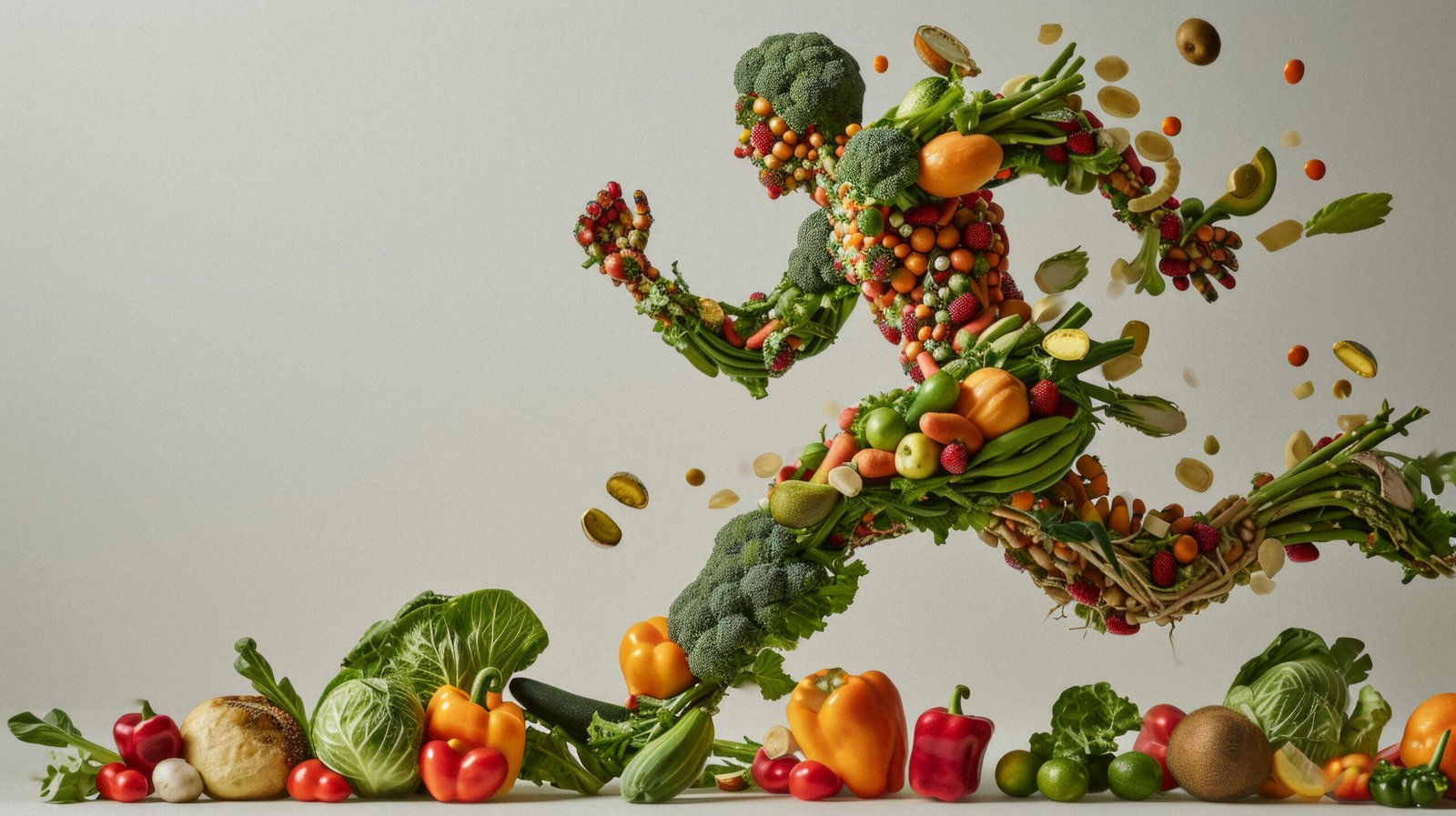
As plant-based diets rise in popularity among athletes seeking performance, recovery, and long-term health benefits, one often overlooked but powerful nutrient stands out: dietary fiber. While athletes typically focus on protein and carbohydrates, mounting evidence suggests that fiber — especially from whole plant foods — plays a crucial role in gut health, metabolism, and even athletic output.
Dietary fiber refers to nondigestible carbohydrates found in plant foods that resist digestion in the small intestine and reach the colon largely intact. Once in the colon, many fibers are fermented by gut bacteria, producing short-chain fatty acids (SCFAs) such as acetate, propionate, and butyrate.
These metabolites play a central role in:
- Maintaining intestinal barrier integrity
- Modulating immune and inflammatory responses
- Influencing glucose and lipid metabolism
Fiber, the Gut Microbiome, and Athletic Performance
Microbiome Diversity and Adaptation
Higher fiber diets are consistently associated with greater gut microbial diversity and functionality. This matters because the gut microbiome helps regulate inflammation, immune defense, and metabolic flexibility — all critical for athletes under high training loads.
In athletes specifically, nutrition strategies that support microbiome health have been linked to improved recovery, reduced gastrointestinal symptoms, and enhanced training tolerance.
➡️ Fuel Your Fall Workouts with Plants
Short-Chain Fatty Acids and Metabolism
SCFAs produced from fiber fermentation influence muscle and liver metabolism, insulin sensitivity, and mitochondrial function. While SCFAs are not a primary fuel source during exercise, they help create an internal environment that supports consistent energy availability and metabolic efficiency over time.
Research also highlights that gut-derived metabolites may play an indirect but meaningful role in performance adaptation by improving metabolic health and reducing systemic stress.
Fiber Intake, Body Composition, and Plant-Based Athletes
Fiber intake is strongly associated with improved body composition outcomes, including lower body fat and better weight regulation. Mechanisms include:
- Increased satiety
- Improved glycemic control
- Reduced energy density of the diet
For plant-based athletes seeking to optimize power-to-weight ratio or maintain lean mass while managing body fat, fiber-rich foods provide volume, micronutrients, and metabolic support without excessive caloric load.
Importantly, fiber works with adequate protein — not against it — when total energy intake is sufficient.
➡️ How Much Protein Do You Need to Achieve Your Fitness Goal?
How Much Fiber Do Athletes Need?
The Institute of Medicine recommends:
- 38 g/day for men
- 25 g/day for women
However, plant-based athletes often exceed these values naturally due to higher intakes of legumes, whole grains, fruits, and vegetables. Research suggests higher habitual fiber intake is generally beneficial, provided increases are gradual and individualized.
Fiber Timing: Avoiding GI Issues Without Avoiding Fiber
One legitimate concern among athletes is gastrointestinal discomfort. This is rarely caused by fiber itself, but rather by:
- Sudden increases in intake
- Poor hydration
- Inappropriate timing around high-intensity sessions
Practical Guidelines
- Pre-workout: Favor lower-fiber, easily digestible carbohydrates
- Post-workout: Emphasize higher-fiber whole foods for recovery
- Daily intake: Spread fiber evenly across meals
Gradual adaptation allows the gut microbiome to adjust, reducing symptoms over time.
Key High-Fiber Foods for Plant-Based Athletes
Evidence-supported fiber sources include:
- Legumes: Lentils, chickpeas, black beans
- Whole grains: Oats, barley, brown rice
- Fruits: Berries, apples, pears
- Vegetables: Broccoli, artichokes, leafy greens
- Seeds: Chia, flax, hemp
Fermentable fibers such as inulin and oligofructose have been shown to selectively stimulate beneficial gut bacteria.
Do Athletes Need Fiber Supplements?
Whole foods should be the foundation. However, targeted supplementation (e.g., inulin, psyllium) may be useful in cases of:
- Low dietary variety
- Travel or competition constraints
- Clinical digestive issues
Supplementation should complement — not replace — a diverse, plant-rich diet.
Big Picture: Fiber as a Performance Enabler
Fiber does not directly make you faster or stronger in the moment. Instead, it creates the physiological conditions that allow training to work:
- Better gut health
- Reduced inflammation
- Improved metabolic regulation
- More consistent recovery
For plant-based athletes, fiber is not just a health nutrient — it’s a performance asset when applied strategically.
➡️ Plant-Based Protein Myths: Can Plants Really Build Muscle?
References
Clark, A., Mach, N., & Jäger, R. (2023). Nutrition strategies for optimizing gut microbiota composition and function in athletes. Frontiers in Sports and Active Living, 5, 1180674.
Holscher, H. D. (2017). Dietary fiber and prebiotics and the gastrointestinal microbiota. Gut Microbes, 8(2), 172–184.
Hughes, R. L., & Holscher, H. D. (2021). Fueling gut microbes: A review of the interaction between diet, exercise, and the gut microbiota in athletes. Advances in Nutrition, 12(6), 2190–2215.
Institute of Medicine. (2005). Dietary reference intakes for energy, carbohydrate, fiber, fat, fatty acids, cholesterol, protein, and amino acids. National Academies Press.
Meyer, D., & Stasse-Wolthuis, M. (2009). The bifidogenic effect of inulin and oligofructose and its consequences for gut health. Journal of Nutrition, 139(11), 2375S–2380S.
Thomas, D. T., Erdman, K. A., & Burke, L. M. (2016). Position of the Academy of Nutrition and Dietetics, Dietitians of Canada, and the American College of Sports Medicine: Nutrition and athletic performance. Journal of the Academy of Nutrition and Dietetics, 116(3), 501–528.
Zhang, N., Ju, Z., & Zuo, T. (2018). Time for food: The impact of diet on gut microbiota and human health. Nutrition, 51–52, 80–85.