
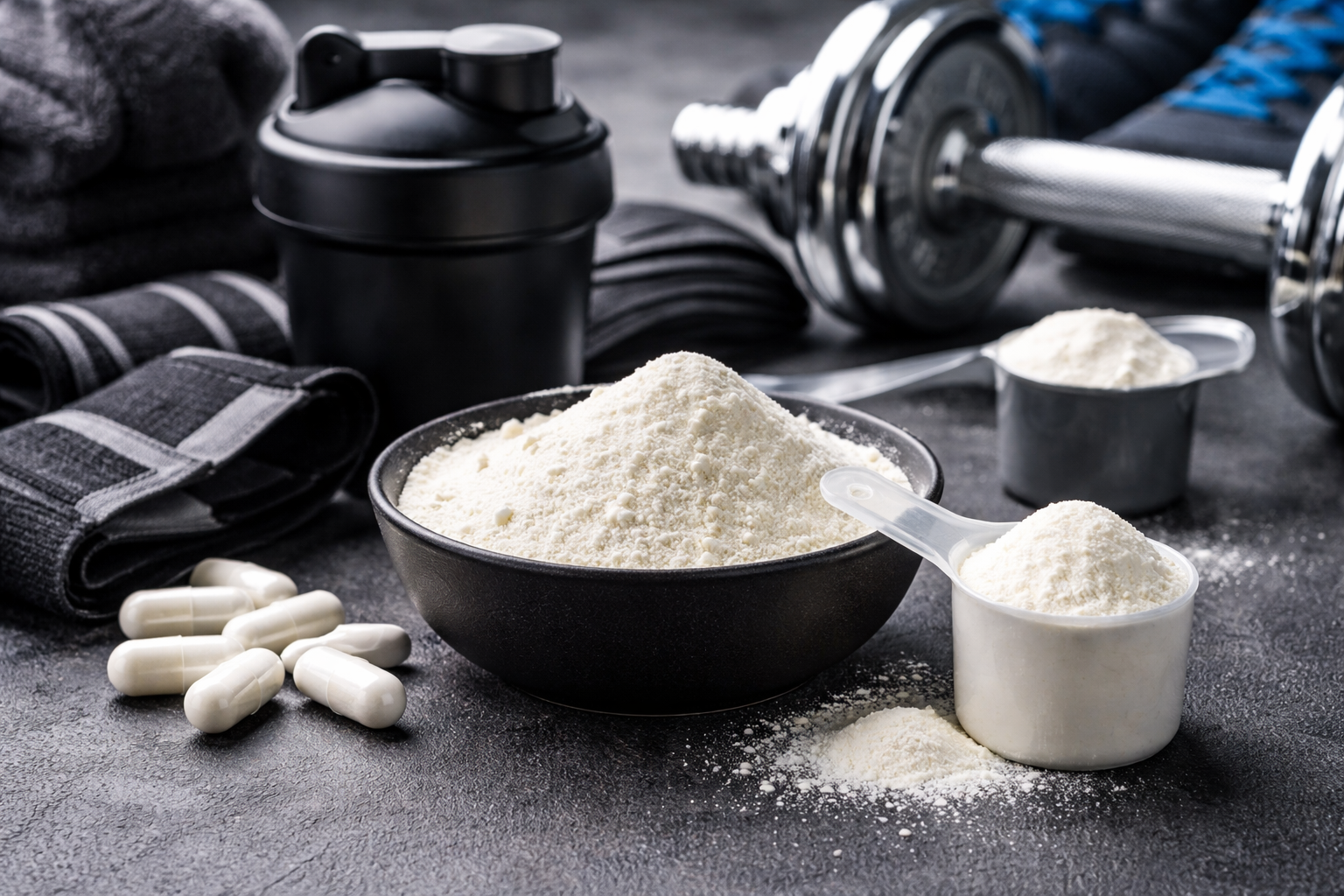
Creatine Benefits, How It Works, Safety, Dosage, and Who Should Use It
Creatine is one of the most popular and rigorously studied dietary supplements in sports nutrition and beyond — widely used in strength, power, and fitness circles but also explored for health benefits in non-athletes. Unlike fleeting trends, creatine benefits are backed by decades of research showing measurable improvements in exercise performance, strength, muscle mass, recovery, and even cognitive and metabolic outcomes.
Below breaks down how creatine works, who may benefit most, what the research says about safety and drawbacks, and practical dosing guidance.
What Is Creatine?
Creatine is a naturally occurring compound synthesized in the liver and kidneys from the amino acids arginine, glycine, and methionine and stored primarily in skeletal muscle. Though often described as an amino acid or protein, it is technically not one of the 20 standard amino acids but a high-energy phosphate reservoir that helps regenerate ATP — your cells’ primary energy currency during short, intense activities.
Your body makes a baseline amount of creatine daily (about 1–2 g), and it’s also found in small amounts in animal foods. Supplementation increases intramuscular creatine stores, allowing muscles to sustain high-intensity work longer.
Benefits for Athletes
Strength, Power, and High-Intensity Performance
Creatine is a well-established ergogenic aid — meaning it helps improve physical performance in specific exercise contexts. Most research shows that creatine supplementation enhances strength, power, and repeated high-intensity efforts in sports like sprinting, weightlifting, and team athletics. The improvements range on average from ~1% to 15% in performance measures such as sprint speed and power output.
Resistance Training & Lean Body Mass
When combined with resistance training, creatine reliably increases lean muscle mass and strength more than training alone. A 2017 position stand from the International Society of Sports Nutrition confirms its effectiveness and safety, noting enhanced anaerobic capacity and lean body mass with regular use over weeks to months.
Endurance Athletics?
Traditional wisdom suggested creatine mainly benefits short, explosive efforts, but studies in endurance contexts (e.g., cycling or mixed aerobic/anaerobic events) demonstrate benefits for repeated sprints, lactate handling, and interval work — although pure aerobic capacity (like VO₂ max) isn’t significantly altered.
➡️ Improve Endurance Performance With Three Supplements
Benefits for Non-Athletes and General Health
Creatine’s effects extend beyond elite athletes:
Muscle preservation in aging: Supplementation with resistance training appears to slow sarcopenia (age-related muscle loss).
Metabolic and cellular health: Research hints at potential benefits for glucose tolerance and mitochondrial protection.
Cognitive effects: Some evidence suggests modest improvements in memory and mental fatigue, particularly in older adults or individuals under sleep restriction.
Drawbacks and Misconceptions
Water Retention & Weight Changes
Creatine increases intramuscular water content, which can lead to short-term weight gain — not fat, but added fluid inside muscle cells. This is most common during higher-dose “loading” phases and often subsides with a maintenance dose.
Digestive Issues
Some individuals experience bloating, nausea, or GI discomfort — especially when taking larger doses alone or during loading.
Kidney Health Myths
Despite persistent myths, well-designed research and meta-analyses find no convincing evidence that standard creatine doses harm kidney function in healthy adults. Effects on people with preexisting kidney disease are less clear and warrant medical consultation.
Other Side Effects
Rare reports mention muscle cramps, cramps, or dehydration, but clinical evidence doesn’t support these as common outcomes at regular doses when hydration is adequate.
How to Take Creatine
Standard Dosing
Maintenance Dose: 3–5 g per day is effective and safe for most people.
Loading Phase (Optional): Some protocols use ~20 g/day split into smaller doses for 5–7 days to saturate muscle creatine faster — but it is not necessary for long-term benefits.
Creatine monohydrate remains the best-studied and most recommended form.
Who Should (and Shouldn’t) Consider Creatine
Good candidates:
✔ Strength and power athletes
✔ Recreational lifters and fitness enthusiasts
✔ People concerned about age-related muscle decline
✔ Individuals needing enhanced recovery capacity
Use with caution (or consult a professional):
⚠ Individuals with kidney disease, liver conditions, or those taking medications that affect renal function
⚠ Pregnant or breastfeeding individuals
⚠ People with specific metabolic disorders
When in doubt, talk to a healthcare professional or registered dietitian before starting supplementation.
Practical Takeaways
Creatine is one of the most evidence-supported supplements available, offering measurable benefits for strength, power, lean mass, and recovery while being generally safe for healthy adults when taken responsibly. Whether you’re an elite athlete or a recreational exerciser, creatine can be a valuable addition — but it’s not magic. Pair it with consistent training, proper nutrition, and recovery to maximize results.
➡️ Strength Training for Longevity: Why Muscle Is the New Vital Sign
References
Buford, T. W., Kreider, R. B., Stout, J. R., Greenwood, M., Campbell, B., Spano, M., Ziegenfuss, T. N., Lopez, H. L., Landis, J., Antonio, J., & Smith, A. (2007). International Society of Sports Nutrition position stand: Creatine supplementation and exercise. Journal of the International Society of Sports Nutrition, 4(1), 6.
Candow, D. G., Forbes, S. C., Chilibeck, P. D., Cornish, S. M., Antonio, J., & Kreider, R. B. (2019). Effectiveness of creatine supplementation on aging muscle and bone: Focus on falls prevention and inflammation. Journal of Clinical Medicine, 8(4), 488.
Gualano, B., Roschel, H., Lancha, A. H., Brightbill, C. E., & Rawson, E. S. (2012). In sickness and in health: The widespread application of creatine supplementation. Amino Acids, 43(2), 519–529.
Harvard Health Publishing. (2024, March 20). What is creatine? Potential benefits and risks of this popular supplement.
Kreider, R. B., Kalman, D. S., Antonio, J., Ziegenfuss, T. N., Wildman, R., Collins, R., Candow, D. G., Kleiner, S. M., Almada, A. L., & Lopez, H. L. (2017). International Society of Sports Nutrition position stand: Safety and efficacy of creatine supplementation in exercise, sport, and medicine. Journal of the International Society of Sports Nutrition, 14, Article 18.
National Institutes of Health, Office of Dietary Supplements. (2024). Dietary supplements for exercise and athletic performance.
Rawson, E. S., & Volek, J. S. (2003). Effects of creatine supplementation and resistance training on muscle strength and weightlifting performance. Journal of Strength and Conditioning Research, 17(4), 822–831.
van der Merwe, J., Brooks, N. E., & Myburgh, K. H. (2009). Three weeks of creatine monohydrate supplementation affects dihydrotestosterone to testosterone ratio in college-aged rugby players. Clinical Journal of Sport Medicine, 19(5), 399–404.