When Recovery Becomes Another Stressor
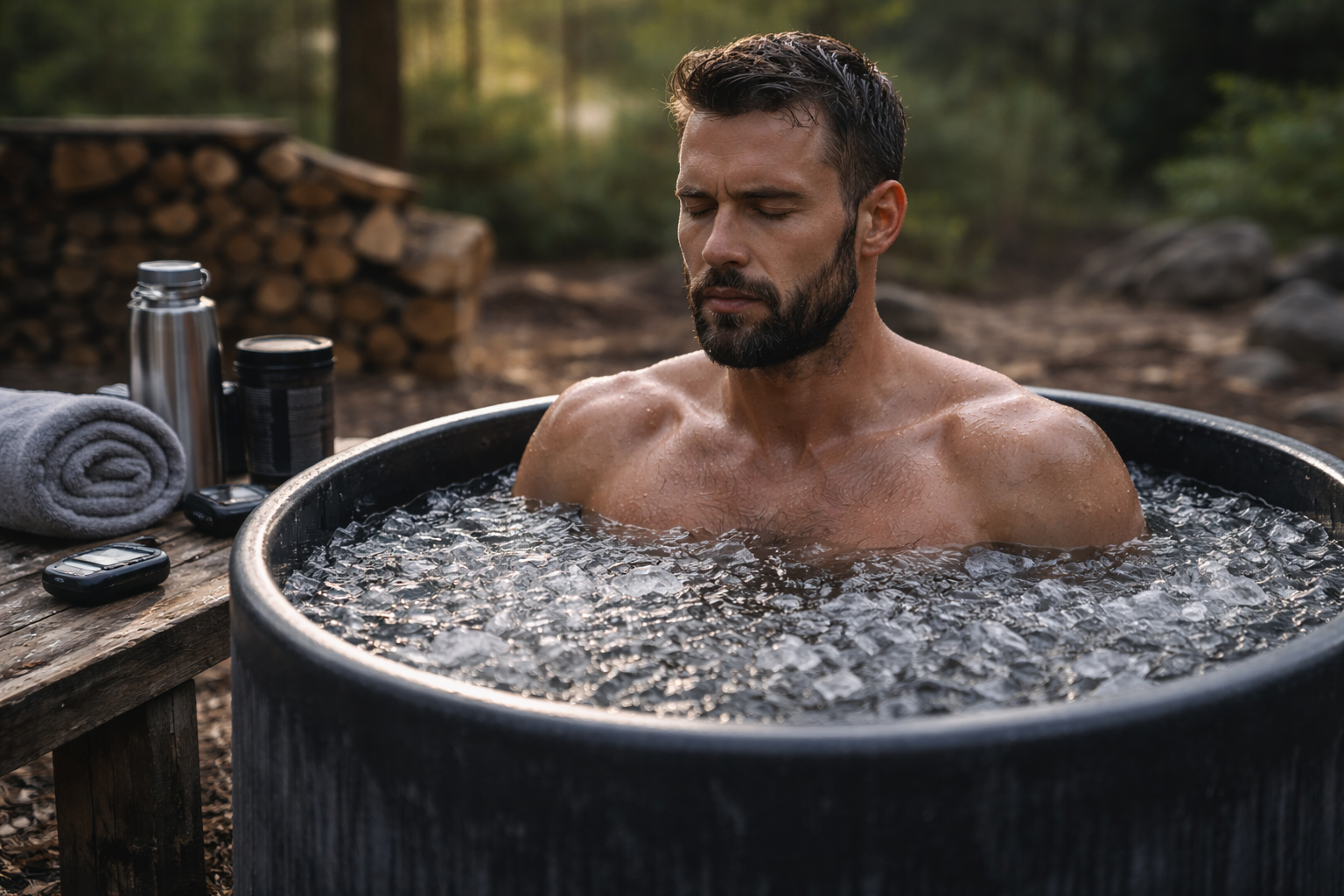
Cold plunges, ice baths, cryotherapy chambers—cold exposure has become synonymous with “elite recovery.” From professional locker rooms to wellness influencers, the promise is compelling: reduced soreness, faster recovery, and improved resilience.
But there’s a problem.
Cold exposure is not recovery in the traditional sense. It is a physiological stressor—a hormetic input that can either support adaptation or interfere with it, depending on context, timing, and goals. Understanding when cold exposure helps—and when it harms—requires separating mechanistic hype from performance reality.
What Cold Exposure Actually Does Physiologically
Cold exposure triggers a rapid sympathetic nervous system response. Core mechanisms include:
- Peripheral vasoconstriction, reducing blood flow to working tissues
- Acute inflammation suppression, lowering pain and swelling
- Catecholamine release, increasing alertness and perceived energy
These effects explain why cold exposure feels restorative. However, reduced inflammation is not inherently beneficial. Inflammation is a key driver of training adaptation, particularly for strength and hypertrophy.
A landmark meta-analysis by Roberto Peake and colleagues demonstrated that regular post-exercise cold-water immersion blunted muscle protein synthesis and long-term strength gains when used chronically after resistance training.
Short-Term Relief vs. Long-Term Adaptation
Cold exposure excels at symptom management, not adaptation.
Research consistently shows reduced delayed onset muscle soreness (DOMS) following cold-water immersion. However, symptom reduction does not equal improved recovery capacity.
When inflammation is suppressed too aggressively:
- Satellite cell activation decreases
- mTOR signaling is dampened
- Structural remodeling slows
In endurance athletes, the tradeoff is less severe—but still context-dependent. Occasional cold exposure during high-volume competition blocks may help manage soreness without meaningfully impairing aerobic adaptations.
Hormesis: The Dose Makes the Difference
Cold exposure fits squarely within the concept of hormesis—a stressor that produces beneficial effects only within a narrow dose range.
Low dose → adaptive signal
High dose → cumulative stress
For already stressed athletes—low energy availability, poor sleep, high cognitive load—adding cold exposure may increase allostatic burden, not reduce it. This aligns with broader stress-recovery models showing diminished returns when multiple stressors stack without adequate recovery bandwidth.
When Cold Exposure Makes Sense
Cold exposure may be appropriate when:
- Between events in multi-day competitions
- During tournament-style endurance blocks
- When soreness—not adaptation—is the limiting factor
- As a psychological reset, not a primary recovery tool
➡️ The Anti-Inflammatory Athlete: Foods and Habits That Boost Recovery Naturally
When Cold Exposure Likely Hurts Progress
Avoid routine cold exposure when:
- Primary goal is strength or hypertrophy
- Training frequency is moderate and recovery capacity is adequate
- Sleep, nutrition, and energy availability are suboptimal
Cold exposure should not replace fundamentals. It cannot compensate for inadequate calories, insufficient carbohydrate intake, or poor sleep quality.
➡️ The Importance of Rest and Recovery: Why Smart Rest Fuels Better Fitness Progress
A Smarter Recovery Hierarchy
Before reaching for the ice bath, prioritize:
- Adequate energy intake
- Carbohydrate availability
- Sleep quantity and quality
- Load management
- Psychological stress regulation
Cold exposure belongs after these variables—not before them.
➡️ Why Maintenance Calories Matter More Than Fat-Loss Calories
The Takeaway
Cold exposure isn’t useless—but it’s often misused.
It’s a tool, not a foundation. A stressor, not a shortcut. When applied strategically and sparingly, it can support performance. When used habitually and indiscriminately, it may quietly undermine adaptation—the very thing training is meant to improve.
References
Hohenauer, E., Taeymans, J., Baeyens, J. P., Clarys, P., & Clijsen, R. (2015). The effect of post-exercise cryotherapy on recovery characteristics: A systematic review and meta-analysis. PLOS ONE, 10(9), e0139028.
Leeder, J., Gissane, C., van Someren, K., Gregson, W., & Howatson, G. (2012). Cold water immersion and recovery from strenuous exercise: A meta-analysis. British Journal of Sports Medicine, 46(4), 233–240.
Meeusen, R., Duclos, M., Foster, C., Fry, A., Gleeson, M., Nieman, D., Raglin, J., Rietjens, G., Steinacker, J., & Urhausen, A. (2013). Prevention, diagnosis, and treatment of the overtraining syndrome. European Journal of Sport Science, 13(1), 1–24.
Peake, J. M., Roberts, L. A., Figueiredo, V. C., Egner, I., Krog, S., Aas, S. N., Suzuki, K., Markworth, J. F., Coombes, J. S., & Cameron-Smith, D. (2017). The effects of cold water immersion on inflammation, muscle damage and repair following exercise. Journal of Physiology, 595(3), 695–711.