
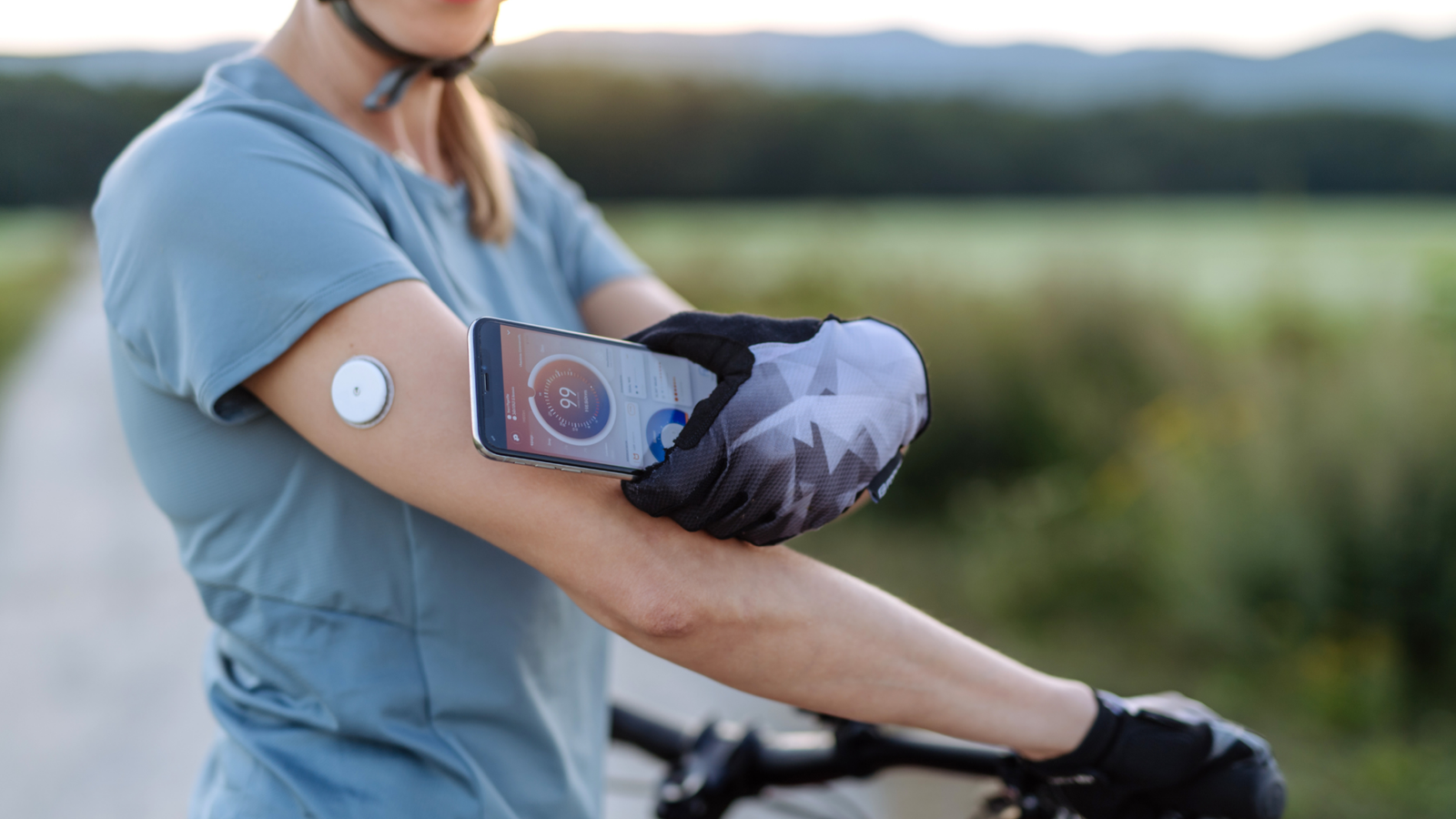
Continuous glucose monitors (CGMs) were originally developed to help individuals with diabetes track blood sugar in real time. Recently, however, they’ve gained popularity among athletes and health enthusiasts looking for metabolic insights beyond standard glucose testing.
In this article, we examine whether CGM use benefits non-diabetic athletes, how they work, what the current evidence says, and real-world considerations for fitness-focused individuals.
What Is a Continuous Glucose Monitor (CGM)?
A CGM is a small wearable sensor that measures interstitial glucose levels — an approximation of blood glucose — every few minutes throughout the day and night. Unlike occasional finger-stick tests, CGMs provide continuous data on glucose trends and variability.
In people with diabetes, CGMs are clinically validated tools used to guide insulin dosing and reduce hypoglycemia. Their use in otherwise healthy populations remains more experimental.
Why Athletes Are Interested in CGMs
Athletes often seek metabolic feedback to refine nutrition timing, fueling strategies, recovery, and energy availability. In endurance sports — especially long events — maintaining stable glucose levels may help sustain performance. CGMs can show how glucose changes in response to:
- Meals (carbohydrate type and timing)
- Training sessions
- Exercise intensity
- Recovery and sleep cycles
For example, CGM data can reveal patterns like post-exercise dips or spikes after high-glycemic meals, which may inform personalized fueling strategies.
What the Evidence Says (Non-Diabetic & Athlete Context)
Limited but Growing Research
A recent systematic review of CGM use outside diabetes identified possible improvements in behavioral adherence and short-term glucose patterns, but found mixed benefits for normoglycemic individuals and emphasized that CGM is best seen as a biofeedback tool within structured lifestyle programs rather than a standalone solution.
In endurance athlete cohorts, glucose levels typically remain within expected physiological ranges (euglycemia) over 24 hours, even with significant training loads. CGM results do show variability during exercise — sometimes above typical “normal” glucose ranges — but the performance implications of this glucose variability remain unclear.
Accuracy and Interpretation Challenges
Some research examining CGM performance in normoglycemic runners found discrepancies between sensor readings and traditional blood glucose measurements during steady-state exercise, highlighting accuracy limitations during dynamic physiological states like exercise.
No Strong Evidence of Performance Gains
Despite anecdotal reports and popular use, there is currently no robust evidence that CGM use directly improves athletic performance in non-diabetic individuals or meaningfully alters long-term health outcomes. Most benefits reported in studies relate to insights and behavioral change, not guaranteed performance enhancement.
Practical Ways Athletes Use CGM
While scientific evidence is still evolving, athletes (and sports nutritionists) use CGMs for:
- Testing how meals affect glucose trends pre- and post-training
- Fueling strategy experimentation during prolonged exercise
- Identifying glucose dips that could correspond to fatigue
- Monitoring recovery patterns and overnight glucose responses
These data can inform adjustments to nutrition timing, carbohydrate type, and overall fueling strategy — but interpretation requires caution and context.
Limitations & Risks for Non-Diabetic Athletes
1. Physiological Variation Is Normal
Athletes may have glucose fluctuations well outside standard ranges (e.g., <70 or >140 mg/dL) during exercise without adverse health effects.
2. CGM Data Isn’t a Performance Guarantee
While trends can be insightful, there’s no solid evidence that CGM use directly improves race outcomes or training adaptations in non-diabetics.
3. Potential for Misinterpretation
Over-monitoring glucose can lead to undue anxiety, overly restrictive eating patterns, or “glucorexia” — an obsession with glucose data that doesn’t reflect meaningful metabolic dysfunction.
4. Accuracy & Physiological Lag
CGM sensors measure interstitial glucose, which can lag behind real blood glucose — especially during rapid exercise changes — limiting precision during high-intensity efforts.
Should Non-Diabetic Athletes Use CGMs?
CGMs aren’t necessary for everyone, and for most healthy, well-trained athletes, traditional markers (performance metrics, training load, recovery, sleep, energy availability, and subjective feedback) remain key indicators.
CGMs may be useful as a metabolic awareness tool for individuals curious about how their body responds to food and training — particularly those experimenting with fueling strategies for prolonged efforts or optimizing nutrition timing — but users must interpret data within context and avoid over-interpreting normal glucose swings.
References
Gibala, M. J., Gillen, J. B., & Percival, M. E. (2014). Physiological and health-related adaptations to low-volume interval training: Influences of nutrition and sex. Sports Medicine, 44(2), 127–137.
Mejía, D. V., Jeukendrup, A. E., & Highton, J. (2025). Application potential of continuous glucose monitoring in endurance athletes without diabetes: What do physiology and current evidence tell us? Performance Nutrition, 1(1), 1–11.
Riddell, M. C., Skroce, K., Turner, L. V., Zignoli, A., Zisser, H. C., & Hinkley, J. M. (2023). Continuous glucose monitoring use in athletes without diabetes. Sports Science Exchange, 36(244), 1–7.
van Hout, G. C., Pepping, F. J., & Hopman, M. T. E. (2024). Validity of continuous glucose monitoring in non-diabetic recreational runners during exercise. Journal of Sports Sciences, 42(2), 145–153.
Zeevi, D., Korem, T., Zmora, N., Israeli, D., Rothschild, D., Weinberger, A., Ben-Yacov, O., Lador, D., Avnit-Sagi, T., Lotan-Pompan, M., Suez, J., Mahdi, J. A., Matot, E., Malka, G., Kosower, N., Rein, M., Zilberman-Schapira, G., Dohnalová, L., … Segal, E. (2015). Personalized nutrition by prediction of glycemic responses. Cell, 163(5), 1079–1094.