
Why This Question Still Matters
Plant-based athletes are no longer a niche population. From recreational lifters to endurance competitors and tactical professionals, more athletes are relying on plant-forward or fully plant-based diets for performance, recovery, and long-term health. Yet one question persists:
Is a blend of plant proteins actually superior to single-source plant proteins for muscle and performance outcomes?
The supplement industry confidently says “yes.” Marketing often implies that combining pea, rice, hemp, and other sources creates a “complete” or even “optimized” protein profile. But scientific reality is more nuanced. The answer depends less on novelty and more on amino acid thresholds, digestibility, and total intake.
This article breaks down what the evidence actually says — and where most advice oversimplifies the science.
Understanding the Core Issue: Amino Acids, Not Labels
Muscle protein synthesis (MPS) is driven primarily by essential amino acids (EAAs) — particularly leucine, which acts as a trigger for initiating muscle-building pathways via mTOR signaling.
Animal proteins naturally contain:
- Higher leucine density
- Greater digestibility
- More favorable EAA profiles per gram
Most individual plant proteins fall short in at least one of these areas — not because they’re inferior, but because their amino acid distribution differs.
This is where the idea of blending comes from.
➡️ Plant-Based Protein Myths: Can Plants Really Build Muscle?
Why Blending Plant Proteins Became Popular
The logic behind protein blending is sound in theory:
- Pea protein → relatively high lysine, lower methionine
- Rice protein → higher methionine, lower lysine
When combined, the amino acid profiles complement each other, improving overall EAA availability.
This concept originates from classic nutrition science on protein complementation, not supplement marketing. However, modern protein needs for athletes differ from basic adequacy — they revolve around dose, timing, and anabolic signaling.
➡️ Where Do Vegans Get Their Protein?
What the Research Actually Shows
Blended vs. Single-Source Plant Proteins
Research comparing blended plant proteins to isolated plant proteins shows small but meaningful advantages, primarily when:
- Total protein intake is moderate (not high)
- Leucine intake is near, but below, optimal thresholds
- Protein doses are on the lower end per meal
A randomized research trial demonstrated that larger doses of plant protein can compensate for lower digestibility and leucine content. When protein intake is sufficient, differences between blended and single-source proteins largely disappear.
In other words:
Blending helps most when protein intake is marginal — not when it’s already adequate.
Leucine Thresholds Matter More Than Protein Variety
For most athletes, stimulating MPS requires approximately:
- 2–3 g of leucine per meal
- 20–40 g of high-quality protein, depending on body size and training status
Many single-source plant proteins can meet this threshold — if the dose is sufficient.
Example:
- Pea protein isolate at ~35–40 g can reach leucine targets
- Soy protein isolate often reaches leucine thresholds at lower doses due to higher EAA density
Blends do not magically outperform these options unless they help the athlete reach leucine sufficiency more efficiently or comfortably.
➡️ Leucine Threshold on a Plant-Forward Diet
Digestibility and the “Plant Protein Penalty”
Plant proteins typically score lower on digestibility metrics such as:
- PDCAAS
- DIAAS
This does not mean they are ineffective — but it does mean that total dose matters.
Blending can slightly improve digestibility by:
- Reducing anti-nutritional factors
- Improving amino acid absorption kinetics
However, these improvements are incremental, not transformative.
➡️ Plant-Based Protein Quality: Why PDCAAS & DIAAS Miss the Bigger Picture
Practical Implications for Athletes
When Blended Proteins Make Sense
Blended plant proteins may be beneficial when:
- Athletes struggle to consume larger protein doses
- GI tolerance is an issue with single isolates
- Protein intake per meal is inconsistent
- Diet variety is limited
When Single-Source Proteins Are Enough
Single-source plant proteins are sufficient when:
- Total daily protein intake is adequate (≥1.6 g/kg)
- Meals are evenly distributed
- Leucine thresholds are met consistently
- Energy availability is sufficient
From a performance perspective, consistency beats complexity.
Whole-Food Context Still Matters
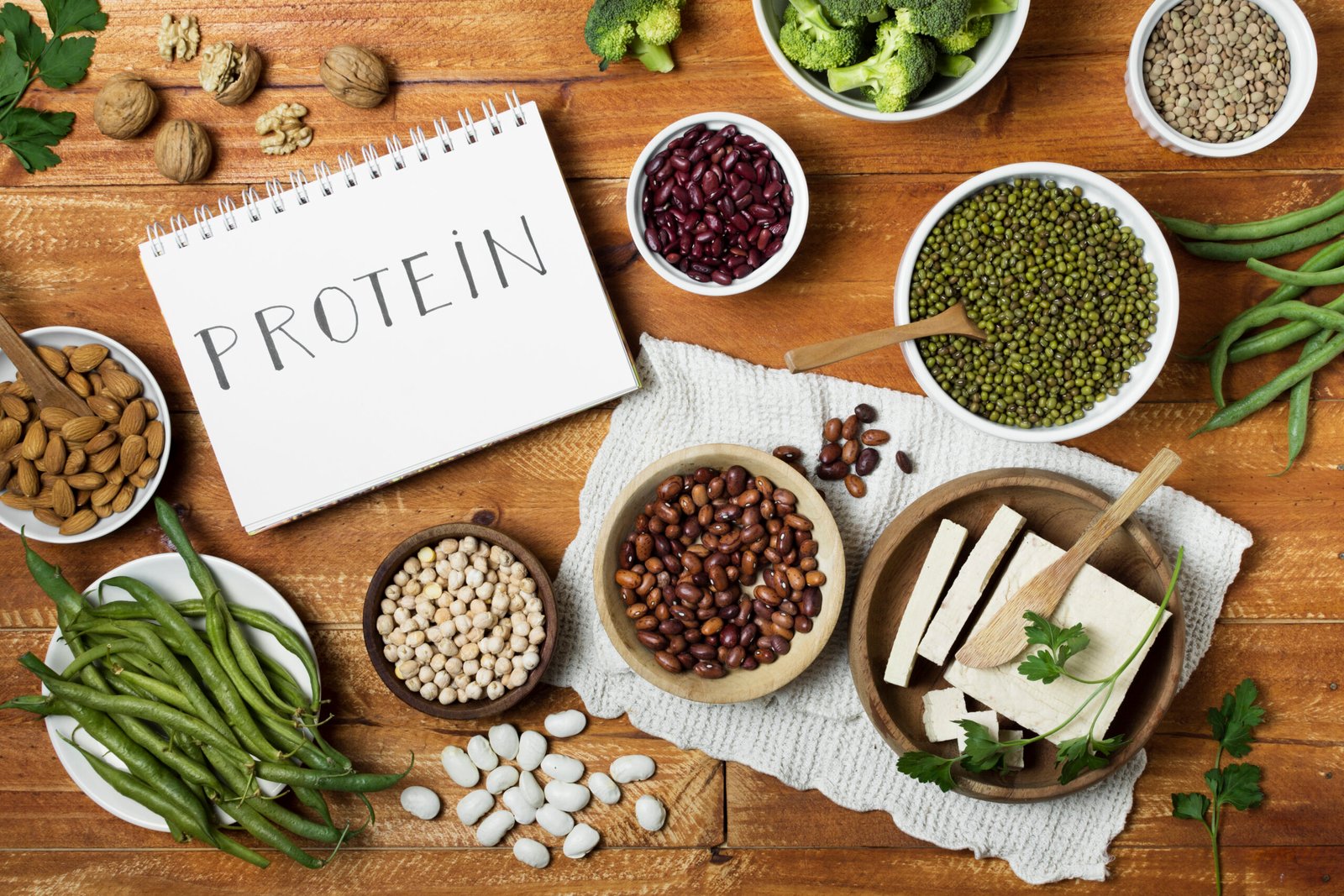
Protein powders — blended or not — should support, not replace, whole-food protein sources such as:
- Lentils
- Tofu and tempeh
- Beans and legumes
- Whole grains
- Nuts and seeds
Whole foods provide:
- Fiber
- Micronutrients
- Phytochemicals
- Improved metabolic health markers
These factors indirectly support training quality, recovery, and longevity.
➡️ What Is Balanced Nutrition? A Practical, Plant-Forward Framework
The Bottom Line
Blended plant proteins are not hype, but they are also not magic.
They can:
- Improve amino acid completeness
- Slightly enhance digestibility
- Reduce reliance on high single-protein doses
They do not:
- Replace adequate total protein intake
- Override poor training or recovery habits
- Automatically outperform well-dosed single-source proteins
For most athletes, hitting total protein and leucine targets consistently matters more than the number of protein sources in a scoop.
References
Gorissen, S. H. M., Horstman, A. M. H., Franssen, R., Kouw, I. W. K., Wall, B. T., & van Loon, L. J. C. (2016). Ingestion of wheat protein increases in vivo muscle protein synthesis rates in healthy older men in a dose-dependent manner. Journal of Nutrition, 146(9), 1651–1659.
Gorissen, S. H. M., et al. (2018). Protein content and amino acid composition of commercially available plant-based protein isolates. Amino Acids, 50(12), 1685–1695.
Morton, R. W., Murphy, K. T., McKellar, S. R., Schoenfeld, B. J., Henselmans, M., Helms, E., … Phillips, S. M. (2018). A systematic review, meta-analysis and meta-regression of the effect of protein supplementation on resistance training-induced gains. British Journal of Sports Medicine, 52(6), 376–384.
Phillips, S. M., & Van Loon, L. J. C. (2011). Dietary protein for athletes: From requirements to metabolic advantage. Applied Physiology, Nutrition, and Metabolism, 36(5), 647–654.
van Vliet, S., Burd, N. A., & van Loon, L. J. C. (2015). The skeletal muscle anabolic response to plant- versus animal-based protein consumption. Journal of Nutrition, 145(9), 1981–1991.