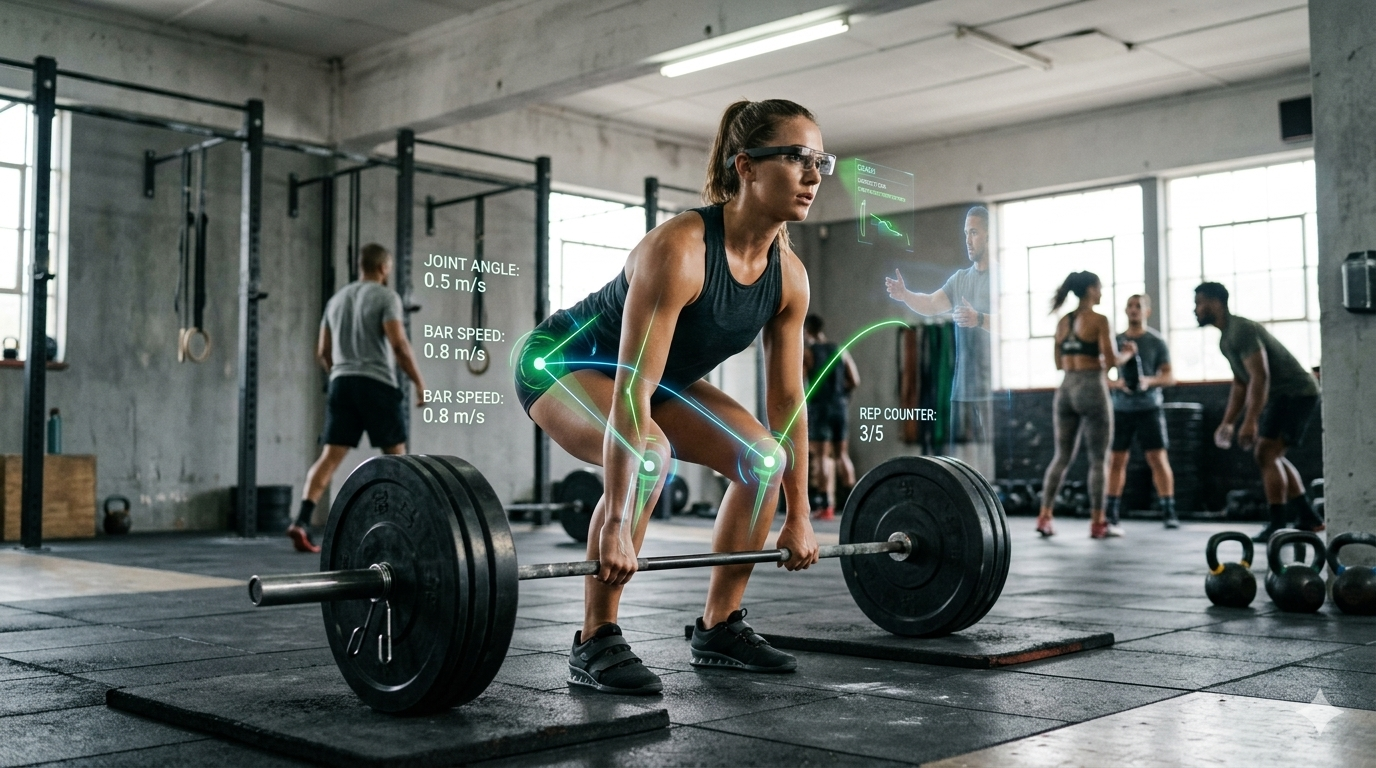
The fitness landscape in 2026 is unrecognizable compared to just a few years ago. Walk into any gym, and you’ll see lifters receiving real-time form cues through their smart glasses or adjusting their daily training loads based on an algorithm’s interpretation of their last night’s sleep. AI coaching tools have moved from “tech-bro” novelties to mainstream staples.
But as these tools become more pervasive, a critical question remains: can an algorithm truly replace the seasoned eye and empathetic ear of a human coach? While AI offers unprecedented scalability and data processing, it often stumbles exactly where humans shine—in the nuance of the “non-data” parts of life.
The Power of Precision: Where AI Wins
AI excels at tasks that human brains find tedious or overwhelming. If you are looking for a data-driven “smart assistant” for your training, AI tools provide three primary benefits:
Adaptive Programming at Scale: Unlike a PDF plan, AI-driven apps like Fitbod or Alpha Progression can adjust your weights and reps in real-time based on your performance history and available equipment.
Recovery-Aware Intensity: By syncing with wearables (Apple Watch, Oura, Whoop), AI can identify patterns in your Heart Rate Variability (HRV) and sleep to suggest a “deload” day before you even realize you’re overreaching.
24/7 Technical Accessibility: If you’re training at 2:00 AM, a human coach isn’t answering your text about a squat modification. AI-powered computer vision can analyze your joint angles via your phone camera and offer instant corrections.
➡️ Training Intensity, Not Volume, Is Often the Real Recovery Issue
The Nuance Gap: Where AI Falls Short
Despite the “intelligence” in the name, AI is essentially a high-speed pattern recognition engine. It lacks context. Research indicates that while AI can generate safety-conscious plans, it often prioritizes “excessive safety” over effective, individualized progression.
The Empathy Deficit: An AI can see that your “steps are down,” but it doesn’t know you’re grieving a loss or struggling with a high-stress week at work. It might send a “Stay disciplined!” notification when what you actually need is permission to rest (ISSA, 2025).
The “Black Box” Problem: Algorithms often operate without transparent reasoning. If an AI tells you to drop your calories by 500, it can’t explain the metabolic “why” or pivot based on your history of disordered eating unless specifically programmed—and even then, it lacks the intuition to spot red flags in your tone.
Form vs. Function: AI can track the path of a barbell, but it cannot feel the “sticking point” in your nervous system or see the subtle grimace that signals a potential injury before the form actually breaks down.
➡️ Why Consistency Beats Optimization Every Time
The Hybrid Future: AI as a Superpower, Not a Substitute
The most successful athletes in 2026 aren’t choosing between a human and a bot—they are using both. This is known as the Hybrid Coaching Model.
In this setup, the AI handles the “boring” stuff: tracking sets, adjusting rep ranges, and summarizing wearable data. This frees up the human coach to focus on behavior change, psychological barriers, and high-level strategy. As the saying goes, “AI can give you the map, but a coach helps you navigate the storm.”.
Key Takeaway: Use AI for the data, but trust your gut—and your coach—for the decisions. Data without context is just noise.
References
Dergaa, I., Saad, H. B., El Omri, A., Glenn, J. M., Clark, C. C. T., Washif, J. A., Guelmami, N., Hammouda, O., Al-Horani, R. A., Reynoso-Sánchez, L. F., Romdhani, M., Paineiras-Domingos, L. L., Vancini, R. L., Taheri, M., Mataruna-Dos-Santos, L. J., Trabelsi, K., Chtourou, H., Zghibi, M., Eken, Ö., . . . Chamari, K. (2024). Using artificial intelligence for exercise prescription in personalised health promotion: A critical evaluation of OpenAI’s GPT-4 model. Biology of Sport, 41(2), 221–241.
Fitbod. (2026, January 20). Best AI fitness apps 2026: The complete guide to muscle building apps.
IDEA Health & Fitness Association. (2025, August 11). Don’t let AI be your only coach: Understanding the risks of AI-designed fitness plans.
ISSA. (2025, December 5). The human advantage: How AI is reshaping – not replacing – personal training.
OnGraph. (2026, February 4). AI in fitness industry (2026): Use cases, benefits & challenges.
TrueCoach. (2025, April 2). AI vs. human trainers: The power of both in coaching.
Wellness Living. (2025, December 11). How an AI personal trainer can transform your business in 2026.